



One claim can close a Utah restaurant. Don't let that be yours.
Utah's 2024 dram shop amendment, its 70 percent food revenue rule, and the Wasatch Fault combine to create a coverage picture no generic policy template addresses. Under Utah Code § 32B-15-301, dram shop damages are capped at $1 million per person and $2 million per occurrence — the same figure DABS requires as your minimum liquor liability limit. The USGS puts the odds of a magnitude 6.75+ Wasatch Front earthquake at 43 percent within 50 years, an event standard commercial property policies simply exclude.
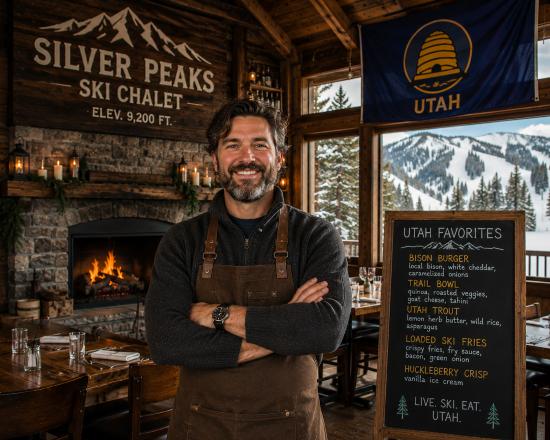
What does your Utah restaurant actually need protection against?
Answer a few questions and we'll show you which coverage lines typically matter most for your Utah operation — no quote form required to see it.
Coverage Finder
Select every option that applies to your business
Coverage lines that address Utah's specific exposures
Utah's dram shop reform, DABS licensing conditions, and Wasatch Fault seismic risk create a specific set of exposures standard commercial policies aren't built to handle — the coverage lines below address each one directly.
General Liability Insurance
Covers bodily injury and property damage claims — the customer who slips near the host stand or a food allergy reaction traced to your kitchen. Ski resort corridor restaurants face substantially elevated premises liability from November through March from wet entries and icy exterior surfaces.
Commercial Property Insurance
Standard commercial property excludes earthquake entirely, and Wasatch Front locations carry premium surcharges of 40 to 80 percent for separate earthquake endorsements. A Difference in Conditions (DIC) policy bundling earthquake, flood, and mudslide is the standard fix in Utah.
Workers' Compensation Insurance
Utah Code § 34A-2-201 requires coverage for every employer with no minimum headcount. The Workers Compensation Fund of Utah holds approximately 57 percent of the market, and full-service restaurants file under NCCI Class Code 9082.
Liquor Liability Insurance
The 2024 HB 304 prima facie evidence rule shifted Utah's dram shop burden of proof, and the statutory damages cap of $1 million per person and $2 million per occurrence matches your DABS-required minimum coverage exactly.
Business Interruption Insurance
Ski resort corridor restaurants generate 60 to 70 percent of annual revenue from November through March, and BI limits must reflect that peak-season concentration rather than a 12-month average. An earthquake or flood closure pays nothing without a policy that covers those perils specifically.
Cyber Liability Insurance
Utah's data breach notification law carries civil fines up to $2,500 per affected consumer and up to $100,000 for multi-consumer breaches, with ransomware and card skimming as the leading non-weather claim type for restaurants running POS systems.
Why Utah's licensing rules and seismic risk change what your policy needs to do
This isn't generic small-business risk — Utah's specific compliance conditions and geology create exposures that only apply here.
Your DABS license and your liquor liability limits are calibrated to the same number
Utah Code § 32B-15-301 caps dram shop damages at $1 million per person and $2 million per occurrence — exactly the minimum liquor liability limit DABS requires on your license certificate. That alignment means your mandated minimum coverage is also your statutory ceiling on damages, but it doesn't cover defense costs, which erode the available limit before a judgment is even reached.
The 70 percent food revenue rule is a license condition, not paperwork
Every Utah DABS restaurant license requires food and non-alcoholic beverages to represent at least 70 percent of gross revenue as a continuing condition, not just an initial qualification. If a dram shop claim arises and the carrier discovers the restaurant was out of compliance at the time of service, the carrier has a coverage argument — track the ratio quarterly and correct for drift before a high-volume weekend turns into a licensing and coverage problem at once.
What might Utah restaurant coverage cost you?
A rough range based on your setup — not a quote, just a starting point before you talk to an agent.
How a Wasatch Fault earthquake actually plays out
A major Wasatch Front seismic event is one of the most credibly modeled urban earthquake risks in the western United States — here's how an uninsured gap unfolds.
A magnitude 7.0+ Wasatch Front earthquake damages your dining room and forces a multi-month closure.
- The exclusion: Your standard commercial property policy excludes earthquake damage entirely — no separate earthquake or DIC endorsement means zero payout on the structural claim.
- The BI gap: Business interruption only pays when the underlying closure is caused by a covered peril. Since the property form excludes earthquake, a three-month forced closure produces zero BI payout regardless of your BI limits.
- The compliance check: If your restaurant serves alcohol, carriers reviewing any related claim will also check whether you were in compliance with the 70 percent food revenue rule at the time of the loss.
- The fix: A Difference in Conditions (DIC) policy bundling earthquake, flood, and mudslide — purchased before the event, not after — closes both the property and BI gap in one form.
This is exactly why the Wasatch Front's near-majority earthquake probability needs a policy built around Utah's actual geology, not a generic property form that quietly excludes the state's most material risk.
Frequently asked questions
What does HB 304 actually change for Utah restaurants serving alcohol?
HB 304, effective May 1, 2024, added a prima facie evidence standard to Utah's dram shop law. If a plaintiff can show that your establishment directly provided the last drink an injured person consumed before the incident, and that drink was consumed at your location, courts will treat that as prima facie evidence of dram shop liability. The defendant then bears the burden of rebutting it. For bar establishment licensees, HB 304 also requires maintaining a purchase record for each alcoholic beverage sold, and those records can be subpoenaed in litigation.
Is the $1 million per person dram shop cap the same as my required liquor liability limit?
Yes, and the alignment is intentional. Utah Code § 32B-15-301 caps dram shop damages at $1 million per person and $2 million per occurrence. DABS expects liquor liability coverage at those same limits on your license certificate. However, it does not cover defense costs, which reduce the available indemnity limit as litigation proceeds. Umbrella coverage above the primary liquor liability limits protects the indemnity pool from being eroded by defense spend before a judgment is reached.
Does my standard property policy cover an earthquake on the Wasatch Fault?
No. Standard commercial property policies exclude earthquake damage. They also do not pay business interruption losses from earthquake-related closures, because BI coverage only applies to perils covered by the underlying property form. A standalone earthquake policy or a Difference in Conditions (DIC) policy covering earthquake, flood, and mudslide is required to fill the gap. Wasatch Front locations carry earthquake premium surcharges of 40 to 80 percent compared to non-fault zones.
What is the 70 percent food revenue rule and can it affect my insurance?
Every Utah DABS restaurant license requires that at least 70 percent of gross revenue comes from food and non-alcoholic beverages, as a continuing license condition. If a carrier receives a dram shop claim and discovers you were out of compliance with your license at the time of service, the carrier has a potential coverage argument based on license non-compliance. Track the ratio quarterly — special events and festival weekends can push the alcohol percentage up without you noticing.
Utah expanded tip pooling in 2023 — what does that mean for EPLI?
SB 73 (2023) expanded tip pool eligibility to include back-of-house employees including cooks, dishwashers, and prep staff, provided the arrangement is in writing and given to employees at hire or before implementation. Operators who include kitchen staff in a tip pool without a written documented agreement have created a wage claim exposure. EPLI covers defense costs and judgments from tip pooling disputes, but verify that your form covers wage and hour claims, since many standard policies exclude them or apply a sublimit.
My restaurant is in Moab — do I need flood insurance if I'm not in a FEMA flood zone?
Yes, and the FEMA designation understates the risk. More than 70 percent of Utah's flooding in recent years has occurred outside designated Special Flood Hazard Areas. Canyon country flash floods originate miles away and move faster than FEMA mapping cycles. Private flood coverage is available with shorter waiting periods, higher limits, and broader business interruption coverage than the NFIP's standard 30-day wait.
Utah Cities We Serve
Neighborhood-specific restaurant insurance guidance for Utah's largest restaurant markets, real local risk, not a statewide template.
Salt Lake City Restaurant Insurance
Neighborhood-level coverage guidance built specifically for Salt Lake City restaurant owners.
Park City Restaurant Insurance
Neighborhood-level coverage guidance built specifically for Park City restaurant owners.
Provo Restaurant Insurance
Neighborhood-level coverage guidance built specifically for Provo restaurant owners.
Ogden Restaurant Insurance
Neighborhood-level coverage guidance built specifically for Ogden restaurant owners.
Get your Utah restaurant covered today.
Tell us about your restaurant and we'll find the right coverage at the right price — no pressure, no obligation.
Get Your Free Quote →