




Restaurant Insurance in Salt Lake City, Utah
If you're a Salt Lake City restaurant owner searching for insurance that actually understands the state's real 70/30 liquor rule, the true history behind the "Zion Curtain," and neighborhoods from Sugar House to the Granary District, Insurance Kitchen builds coverage around that reality. The 2020 Magna earthquake caused a documented $629 million in economic losses and even knocked the trumpet off the Angel Moroni statue downtown, a real reminder of what the Wasatch Fault can do. We build Salt Lake City restaurant coverage around your actual neighborhood and licensing structure.
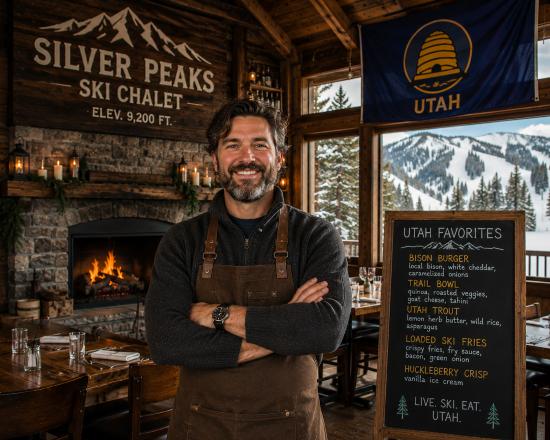
We know Salt Lake City's restaurant scene block by block
Salt Lake City's restaurant scene runs through converted warehouses, historic hillside homes, and a downtown built around Temple Square's real tourist draw. Here's what we watch for across its neighborhoods.
Sugar House
A walkable commercial strip with a dense mix of restaurants, bars, and breweries, including a food hall that opened in 2026. High bar-to-restaurant density in shared-wall buildings raises liquor liability and fire-spread exposure.
9th and 9th
A charming, walkable strip of small independent restaurants and coffee shops in residential-adjacent buildings. Owner-operator restaurants at this scale are commonly underinsured on business personal property and business interruption.
Marmalade
A hillside historic district near the State Capitol with restaurants operating out of converted historic homes. Older residential-to-commercial conversions raise real building-code and renovation-risk considerations.
Granary District
A former industrial and warehouse district being converted into a food destination. Warehouse-to-restaurant conversions raise grease-trap, ventilation, and fire-suppression compliance considerations.
Downtown / Temple Square area
Anchored by Temple Square's real, sustained tourist draw. Downtown restaurants are also the ones actively using the city's parklet and sidewalk-dining permit system, with its own specific insurance requirements.
Core coverage lines every Salt Lake City restaurant should evaluate
Restaurant insurance in Salt Lake City is a tailored bundle built around Utah law, local licensing, and your lease. Here's what actually protects Salt Lake City food service businesses.
General Liability Insurance
Protects against third-party bodily injury and property damage claims. Responds when guests slip, suffer foodborne illness, or get injured during delivery. Most landlords require $1M/$2M before lease signing.
Commercial Property Insurance
Covers your kitchen equipment, refrigeration and HVAC, tenant improvements, inventory, and business personal property against fire, equipment breakdown, and theft.
Business Owner's Policy (BOP)
Bundles general liability, commercial property, and business interruption into one package. Works best for single-unit restaurants with annual revenue under $3 million.
Liquor Liability Insurance
Protects restaurants serving alcohol from dram shop claims. Restaurants with liquor licenses typically must carry liquor liability coverage to maintain their permit.
Workers' Compensation Insurance
Covers medical expenses and lost wages for work-related injuries. Coverage requirements are set at the state level and apply to restaurants with employees.
Business Interruption Insurance
Replaces lost income and covers ongoing expenses when covered events force shutdowns or reduced capacity. Limits should reflect 3 to 6 months of net income plus fixed expenses.
What restaurant insurance typically costs in Salt Lake City
A rough range based on real Utah market data. Not a quote, just a starting point before you talk to an agent about your specific Salt Lake City location.
| Coverage Type | Typical Annual Range | Why It Varies in Salt Lake City |
|---|---|---|
| General Liability Insurance | $600–$1,800/yr | Scales with your landlord's required limits and Utah's dram shop cap under Utah Code § 32B-15-301. |
| Commercial Property w/ Earthquake Endorsement | $1,200–$4,000/yr | The 2020 Magna earthquake, a magnitude 5.7 event, caused a documented $629 million in economic losses along the Wasatch Front, a real benchmark for why an earthquake endorsement matters here specifically. |
| Liquor Liability Insurance | $1,000–$3,500/yr | Utah's DABS restaurant license requires at least 70% of revenue from food sales, with liquor liability limits matching the state's $1 million per person / $2 million per occurrence dram shop damages cap. |
| Workers' Compensation | Payroll-class rated | Mandatory for Utah employers, priced by payroll and job classification rather than location. |
| Business Interruption / Seasonal Revenue | Rated by exposure | Resort and ski-corridor locations face real seasonal revenue concentration and winter-storm business-interruption exposure worth building into your coverage plan. |
| Full-Service w/ Alcohol, Bundled | $6,000–$15,000/yr | Wasatch Front and resort-corridor locations run higher given earthquake surcharges of 40 to 80 percent and seasonal business interruption exposure. |
Why Salt Lake City's liquor laws and earthquake risk both shape your coverage
Salt Lake City restaurant coverage has to account for a genuinely specific liquor licensing structure and real, documented earthquake history, on top of the Utah Department of Alcoholic Beverage Services's own rules.
The real history behind the "Zion Curtain"
Utah's 2009 law required new restaurants to build a solid, opaque partition between dining areas and where drinks were mixed, while older restaurants were grandfathered in. A 2017 law (HB 442) let restaurants replace that partition with a 10-foot buffer zone, nicknamed the "Zion Moat," where minors can't sit near the drink-prep area, though restaurants can still choose to keep a physical curtain instead. Confirm which system your space follows before finalizing your buildout.
Salt Lake City's outdoor dining permit has a specific insurance requirement
The city's parklet and sidewalk-dining program requires proof of general liability insurance at $2 million aggregate and $1 million per occurrence, naming the City of Salt Lake City as an additional insured, on top of DABS's own 70% food-revenue rule for restaurant liquor licenses. Confirm both requirements before building an outdoor dining program.
How the 2020 Magna earthquake changed what property coverage should actually look like here
Salt Lake City's real, documented earthquake history is a specific factor that a generic Utah policy doesn't fully account for.
You're operating a restaurant along the Wasatch Front, in a region the USGS models at a 43% probability of a magnitude 6.75-plus quake within 50 years.
- The record: The March 2020 Magna earthquake, magnitude 5.7, caused a documented $629 million in economic losses and damaged buildings across Salt Lake County, even dislodging the trumpet from the Angel Moroni statue downtown.
- The gap: A standard commercial property policy excludes earthquake coverage entirely, leaving a real gap most owners don't discover until a claim.
- The fix: A separate earthquake endorsement is reviewed against your building's actual construction and the real, modeled Wasatch Fault probability, not a generic assumption.
- The result: Coverage that reflects what a real Salt Lake City earthquake has already done, not a hypothetical one.
This is exactly why Salt Lake City-specific coverage matters. A generic Utah policy doesn't automatically account for seismic risk this well documented.
Frequently asked questions
What insurance is required to open a restaurant in Salt Lake City, Utah?
Utah requires workers' compensation and general liability to meet most lease agreements, plus a food establishment permit through Salt Lake County Health Department. A restaurant liquor license through DABS requires at least 70% of revenue from food sales and carries a mandatory minimum liquor liability limit matching the state's dram shop damages cap.
What was the actual 'Zion Curtain' law, and is it still in effect?
The original 2009 law required a solid, opaque partition between dining areas and drink-prep areas in new restaurants. A 2017 law let restaurants replace that partition with a 10-foot buffer zone instead, nicknamed the 'Zion Moat,' though the original curtain option still exists for restaurants that prefer it.
How bad was the 2020 Magna earthquake, really?
Genuinely significant. The magnitude 5.7 quake caused a documented $629 million in economic losses, damaged government buildings across Salt Lake County, and even knocked the trumpet off the Angel Moroni statue downtown, a real benchmark for earthquake-related property risk here.
How much does restaurant insurance cost in Salt Lake City, Utah?
Comprehensive Salt Lake City restaurant insurance typically runs $3,000 to $10,000 a year, with general liability premiums trending roughly 40% higher than standard retail given slip-and-fall risk on wet kitchen and dining floors. A real trap for new owners: a restaurant liquor license from Utah DABS requires at least 70% of revenue from food, and falling below that ratio reclassifies the business as a bar/lounge, which can double liquor liability premiums. Because Salt Lake City sits on the Wasatch Fault, a standard property policy won't cover seismic damage, so most owners add a separate earthquake endorsement.
Did Utah really require bar memberships before 2009?
Yes. For roughly four decades starting in the late 1960s, Utah required patrons to pay a fee and formally apply for membership at each individual bar, with memberships that didn't transfer between locations. That system ended July 1, 2009, under a package of state alcohol law reforms.
Get Salt Lake City restaurant coverage built around your actual neighborhood and licensing structure.
Tell us your concept and your Salt Lake City neighborhood. We'll put together the coverage that actually applies.
Get Your Free Quote →