




Coverage built for the kitchen with no dining room
and no way to see the customer.
Ghost kitchen insurance shifts the coverage priority from customer foot traffic to digital and delivery risk — cyber liability becomes essential rather than optional once every transaction runs through a screen and every plate leaves through a stranger's car. General liability typically runs ~$146/month ($1,753/year), but cyber exposure is the coverage most delivery-only operators underweight.
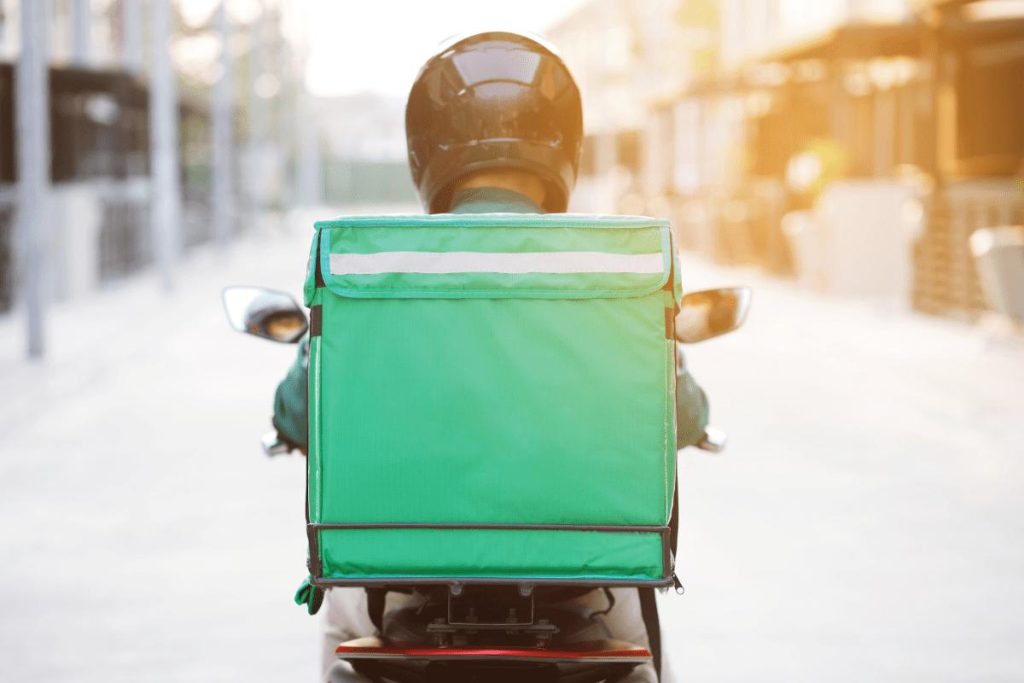
What does your delivery-only operation look like?
Answer a few questions and we'll show you which coverages typically apply to your specific operation — no quote form required to see it.
Coverage Finder
Select every option that applies to your business
Coverage most ghost kitchens carry
Every delivery-only operation's mix looks slightly different, but these six coverages come up again and again for digital-first, no-dining-room operations.
General Liability
Remains foundational despite reduced foot traffic — protects against foodborne illness and product contamination claims, since product liability stays critical once food leaves your control at handoff.
Cyber Liability
Covers data breach notification costs, forensic investigation, legal fees, and regulatory fines — critical now that PCI DSS v4.0 compliance became mandatory in March 2025.
Commercial Property
Typically lower than full-service restaurants since ghost kitchens operate in smaller leased spaces with lower property values — still covers equipment, inventory, and business personal property.
Workers' Compensation
Lower than full-service restaurants due to no front-of-house staff, but still legally required in most states for kitchen burn, cut, and workplace injury protection.
Product Liability & Food Contamination
Delivery-only concepts face heightened contamination risk since food quality depends partially on third-party handling and temperature control during transport.
Commercial Auto / HNOA
Company-owned delivery vehicles need commercial auto; operations relying exclusively on third-party platforms need Hired & Non-Owned Auto instead for personal-vehicle use.
Why cyber risk matters more here than anywhere else in food service
A ghost kitchen has almost no in-person customer exposure — but it has 100% digital transaction exposure, which flips the usual restaurant-insurance priority list.
No dining room means no walk-in liability, but full digital liability
Ghost kitchens process every transaction digitally and transmit customer data to third-party delivery services — that dependency creates real exposure to data breaches, ransomware, and payment card theft that a full-service restaurant with mostly in-person, cash-adjacent transactions doesn't carry to the same degree.
Delivery handoff is where control ends
Once food leaves your kitchen through a delivery driver, temperature control and handling are partially out of your hands — product liability coverage needs to account for that gap explicitly.
What might your ghost kitchen pay?
A rough range based on delivery model and payment volume — not a quote, just a starting point before you talk to an agent.
How a claim actually plays out
A digital payment breach is the risk most unique to ghost kitchens — here's how it typically unfolds.
Your online ordering platform suffers a data breach exposing customer payment information.
- Duty: Any business processing digital payments owes customers a duty to maintain reasonable data security, now formalized further by mandatory PCI DSS v4.0 compliance as of March 2025.
- Breach: A gap in payment processing security or an unpatched vulnerability is the most common failure point behind a breach.
- Causation: The exposure of customer payment data is traced directly back to the security gap in your digital ordering system.
- Damages: Data breach notification costs, forensic investigation, legal fees, and potential regulatory fines — this is exactly what Cyber Liability coverage is built to respond to, and general liability alone won't reach it.
This is the risk category a traditional restaurant policy was never built to cover — cyber liability isn't optional once your entire order flow lives online.
Frequently asked questions
How much does ghost kitchen insurance cost?
General liability for delivery-only operations averages about $146/month ($1,753/year). Commercial property runs $150-$180/month depending on whether it's bundled into a BOP.
Why is cyber liability essential for a ghost kitchen specifically?
Ghost kitchens process all transactions digitally and transmit customer data to third-party delivery services — this digital dependency creates significant exposure to data breaches, ransomware, and payment card theft that's less central to a traditional dine-in restaurant.
Do I need commercial auto if I only use DoorDash and Uber Eats?
Not necessarily commercial auto — but you likely need Hired & Non-Owned Auto (HNOA) coverage if any staff use personal vehicles for business purposes, since third-party platforms maintain their own insurance for their drivers.
Is workers’ comp cheaper for a ghost kitchen than a full restaurant?
Often yes — delivery-only operations typically average $600-$1,168 annually, benefiting from lower costs since there's no front-of-house staff, though it remains legally required in most states.
Does my property coverage cost less with a smaller kitchen space?
Usually — ghost kitchens typically operate in smaller leased spaces with lower property values, which generally results in reduced premiums compared to full-service restaurants with dining rooms.
What compliance requirement changed for payment processing in 2025?
PCI DSS v4.0 compliance became mandatory in March 2025, making cyber liability coverage more critical than ever for protecting payment processing operations.
Get coverage built around how your ghost kitchen actually operates.
Tell us your delivery model, your payment platform, and your team size — and we'll put together the coverage that actually applies.
Get Your Free Quote →