




Restaurant Insurance in Charleston, West Virginia
If you're a Charleston restaurant owner searching for insurance that actually understands the real flash-flood history along the Kanawha River, mandatory mine subsidence coverage in a genuine coal county, and a downtown mall that went from the largest east of the Mississippi to zero anchor stores, Insurance Kitchen builds coverage around that reality. The July 19, 1961 Charleston flash flood killed 22 people after more than 5 inches of rain fell in under 4 hours. We build Charleston restaurant coverage around your actual neighborhood and real local risk.
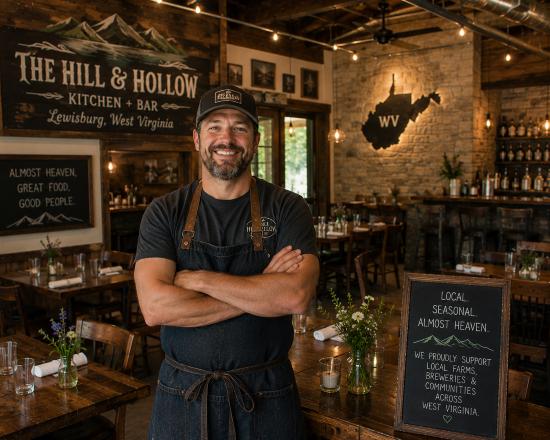
We know Charleston's restaurant scene block by block
Charleston's restaurant scene runs from a Late Victorian capitol-district corridor to a collapsed downtown mall, with real Kanawha River flood history and mandatory coal-county coverage to plan around. Here's what we watch for across its neighborhoods.
Capitol Street Historic District
Listed on the National Register on March 24, 2006, with buildings dating from 1877 onward, real, checkable historic-building age and construction risk for restaurants in this downtown corridor.
East End Historic District
Listed on the National Register on April 20, 1978 with a 2014 boundary increase, covering nearly a full square mile of genuine Queen Anne, Italianate, and Romanesque architecture. The oldest structure, Holly Grove Mansion, dates to 1815.
Elk City Historic District
Listed on the National Register on November 6, 2008, covering a real, dated commercial corridor on Charleston's West Side.
Charleston Town Center
Opened in November 1983 as the largest downtown-based mall east of the Mississippi. Real, documented decline followed, receivership in January 2018, and its last anchor store closed May 25, 2025, leaving only 27 tenants and no anchors, a real, checkable foot-traffic-collapse story for any restaurant tied to that corridor.
Core coverage lines every Charleston restaurant should evaluate
Restaurant insurance in Charleston is a tailored bundle built around West Virginia law, local licensing, and your lease. Here's what actually protects Charleston food service businesses.
General Liability Insurance
Protects against third-party bodily injury and property damage claims. Responds when guests slip, suffer foodborne illness, or get injured during delivery. Most landlords require $1M/$2M before lease signing.
Commercial Property Insurance
Covers your kitchen equipment, refrigeration and HVAC, tenant improvements, inventory, and business personal property against fire, equipment breakdown, and theft.
Business Owner's Policy (BOP)
Bundles general liability, commercial property, and business interruption into one package. Works best for single-unit restaurants with annual revenue under $3 million.
Liquor Liability Insurance
West Virginia's judge-made dram shop framework holds licensees civilly liable for serving a visibly intoxicated patron, with no statutory damages cap.
Workers' Compensation Insurance
Covers medical expenses and lost wages for work-related injuries. West Virginia's workers' comp market has been fully competitive under NCCI since 2008.
Business Interruption Insurance
Replaces lost income and covers ongoing expenses when covered events force shutdowns or reduced capacity. Limits should reflect 3 to 6 months of net income plus fixed expenses.
What restaurant insurance typically costs in Charleston
A rough range based on real West Virginia market data. Not a quote, just a starting point before you talk to an agent about your specific Charleston location.
| Coverage Type | Typical Annual Range | Why It Varies |
|---|---|---|
| General Liability Insurance | $700–$2,000/yr | Scales with your landlord's required limits and your building's age, especially in Victorian-era districts like the East End. |
| Liquor Liability Insurance | $1,200–$4,000/yr | West Virginia's judge-made dram shop framework carries no statutory damages cap, and Charleston's own WVABCA has real, documented enforcement history, including a 2021 liquor license suspension at a Charleston pub. |
| Commercial Property w/ Mine Subsidence & Flood Endorsement | $1,500–$5,000/yr | Kanawha County is a real coal county, not on the state's 15-county exempt list, so mine subsidence coverage is automatic on your policy unless waived. Standard property policies still exclude flood damage; the 1961 flash flood killed 22 people and caused real, documented Kanawha Valley damage. |
| Workers' Compensation | Payroll-class rated | West Virginia's workers' comp market has been fully competitive under NCCI since 2008, with loss costs down more than 78% since 2006. |
| Business Interruption Insurance | Rated by exposure | Covers lost revenue during flood or extended closures tied to Charleston's documented Kanawha River flash-flood history. |
| Full-Service w/ Liquor License, Bundled | $7,000–$16,000/yr | Restaurants in flood-prone river corridors or older historic districts should budget toward the higher end. |
Why Charleston's flash-flood history and mine subsidence mandate change what your policy needs to do
Charleston restaurant coverage has to account for real, documented Kanawha River flash-flood risk and a genuine coal-county mine subsidence mandate, on top of West Virginia's statewide dram shop framework.
The 1961 flash flood is a real, documented benchmark distinct from the 2016 Greenbrier disaster
On the evening of July 19, 1961, more than 5 inches of rain fell on Charleston in under 4 hours, killing 22 people and causing real, documented Kanawha Valley damage, with 200-plus residents displaced, per documented local history of the flood. Standard commercial property policies exclude flood damage entirely, a separate, distinct risk from the state's better-known 2016 Greenbrier County disaster.
Charleston Town Center's real collapse shows how fast foot traffic can disappear
Charleston Town Center opened in November 1983 as the largest downtown-based mall east of the Mississippi, per documented history of the mall. It entered receivership in January 2018, and its last anchor closed May 25, 2025, leaving no anchor stores and only 27 tenants. A restaurant's real estate decision should account for foot-traffic risk this documented, not assume yesterday's anchor tenant guarantees tomorrow's customers.
A summer flash flood inundates your Kanawha River-adjacent Charleston restaurant with minimal warning.
A closer look at how Charleston's real, documented risk factors actually play out.
A summer flash flood inundates your Kanawha River-adjacent Charleston restaurant with minimal warning.
- The history: The July 1961 Charleston flash flood killed 22 people after more than 5 inches of rain fell in under 4 hours, real, documented proof that a Kanawha Valley flood can develop and strike fast.
- The exclusion: Standard commercial property policies exclude flood damage entirely, regardless of FEMA flood zone designation.
- The subsidence question: If your location also sits in a coal-mining area of Kanawha County, confirm mine subsidence coverage is intact and not waived, since flood and subsidence are two distinct, unrelated property gaps.
- The fix: NFIP or private flood coverage, confirmed and in place before flood season, is the only mechanism that responds to a flood loss.
This is exactly why Charleston-specific coverage matters. A generic West Virginia policy doesn't automatically account for flash-flood risk this fast-developing or a downtown this exposed to foot-traffic collapse.
Frequently asked questions
How bad was Charleston's 1961 flood?
Genuinely severe. On the evening of July 19, 1961, more than 5 inches of rain fell on Charleston in under 4 hours, killing 22 people and displacing more than 200 residents, a distinct, earlier disaster from the state's better-known 2016 Greenbrier County flood.
Does Kanawha County require mine subsidence insurance?
Yes. Kanawha is a real coal-mining county and is not on West Virginia's 15-county exempt list, so mine subsidence coverage under WV Code § 33-30 is automatic on every commercial property policy unless waived in writing.
Does a Charleston restaurant need Commercial Auto insurance for delivery?
Yes, if you use your own vehicles or staff-owned vehicles for delivery or catering runs. Commercial Auto coverage for a Charleston restaurant typically runs $110 to $170 per month, and it's a separate policy from general liability, since a personal auto policy generally excludes accidents that happen while an employee is delivering food or hauling catering equipment on the clock.
Does Charleston require liquor liability insurance for restaurants serving alcohol?
Yes. Any Charleston restaurant holding a state ABCC alcohol license must carry active liquor liability coverage, typically $41 to $85 per month, to protect against claims arising from over-served or intoxicated patrons. It's a separate, mandatory policy layered on top of general liability, not something a standard restaurant policy automatically includes.
What insurance does Charleston require for street vending or outdoor food service?
The City of Charleston's Street Vending Permit requires $1,000,000 in aggregate liability insurance naming the City of Charleston as additional insured, a signed Hold Harmless Agreement, and a current Kanawha County Health Permit for prepared food.
Get Charleston restaurant coverage built around your actual neighborhood and real local risk.
Tell us your concept and your Charleston neighborhood. We'll put together the coverage that actually applies.
Get Your Free Quote →