




Restaurant Insurance in Columbia, South Carolina
If you're a Columbia restaurant owner searching for insurance that actually understands what Act 42 has really done to local liquor liability premiums, USC game-day crowds, and the Vista's converted-warehouse building stock, whether you're in Five Points or downtown, Insurance Kitchen builds coverage around that reality. Columbia bars have been hit by the same dramatic Act 42 premium increases documented on the coast, not spared from them. We build Columbia restaurant coverage around your actual venue and liquor program.
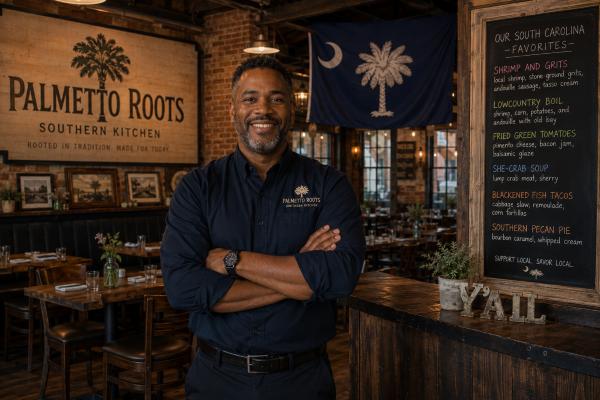
We know Columbia's restaurant scene block by block
Columbia is South Carolina's capital and a genuine college-town restaurant market in its own right. Here's what we watch for across its districts.
The Vista (Congaree Vista)
A roughly 800-acre former railroad and textile-mill district, now 45+ restaurants and bars in converted brick warehouses. Older converted-industrial structures raise property risk alongside dense liquor liability.
Five Points
Columbia's original village neighborhood, adjacent to USC, with a dense late-night bar scene. College-crowd density raises liquor liability and overservice exposure.
Devine Street
A boutique, eclectic dining strip between historic residential neighborhoods. Residential-adjacent dining carries a different liability profile, noise, parking, mixed foot traffic, than entertainment-district bars.
Main Street
Home to the weekly Soda City Market, with street closures for roughly 150 vendors. Regular event-driven foot traffic and sidewalk-café exposure apply here.
Rosewood
A growing restaurant area near the SC State Fairgrounds and Williams-Brice Stadium. Standard general liability applies, with event-day surges tied to USC football and the State Fair.
Core coverage lines every Columbia restaurant should evaluate
Restaurant insurance in Columbia is a tailored bundle built around South Carolina law, local licensing, and your lease. Here's what actually protects Columbia food service businesses.
General Liability Insurance
Protects against third-party bodily injury and property damage claims. Responds when guests slip, suffer foodborne illness, or get injured during delivery. Most landlords require $1M/$2M before lease signing.
Commercial Property Insurance
Covers your kitchen equipment, refrigeration and HVAC, tenant improvements, inventory, and business personal property against fire, equipment breakdown, and theft.
Business Owner's Policy (BOP)
Bundles general liability, commercial property, and business interruption into one package. Works best for single-unit restaurants with annual revenue under $3 million.
Liquor Liability Insurance
Protects restaurants serving alcohol from dram shop claims. Restaurants with liquor licenses typically must carry liquor liability coverage to maintain their permit.
Workers' Compensation Insurance
Covers medical expenses and lost wages for work-related injuries. Coverage requirements are set at the state level and apply to restaurants with employees.
Business Interruption Insurance
Replaces lost income and covers ongoing expenses when covered events force shutdowns or reduced capacity. Limits should reflect 3 to 6 months of net income plus fixed expenses.
What restaurant insurance typically costs in Columbia
A rough range based on real South Carolina market data. Not a quote, just a starting point before you talk to an agent about your specific Columbia location.
| Coverage Type | Typical Annual Range | Why It Varies in Columbia |
|---|---|---|
| General Liability Insurance | $500–$1,800/yr | Scales with your landlord's required limits and coastal proximity, not a flat statewide number. |
| Commercial Property (hurricane/flood-rated) | $1,200–$5,000/yr | South Carolina ranks 4th nationally for NFIP flood policy count, and coastal locations carry a real hurricane premium over inland ones. |
| Liquor Liability Insurance | $1,500–$5,000+/yr | Columbia bars have reported liquor liability premium increases of the same order of magnitude documented on the coast, in some cases higher, under Act 42. |
| Workers' Compensation | Payroll-class rated | Priced by payroll and job classification rather than location. |
| Core Program, No Alcohol | $3,000–$8,000/yr | A baseline for a smaller operation before full liquor service is added. |
| Core Program w/ Alcohol (Act 42-affected), Bundled | $7,000–$15,000/yr | Coastal Grand Strand locations run about 25% higher due to hurricane exposure, on top of Act 42's liquor liability floor. |
Why Act 42 hit Columbia bars just as hard as the coast
Columbia restaurant coverage has to account for real, locally documented Act 42 premium increases and USC's game-day crowd scale, on top of South Carolina's statewide alcohol licensing framework.
Real Columbia bars have reported dramatic premium increases under Act 42
Local news reporting has documented Columbia liquor liability premiums rising from the thousands into six figures at multiple named Five Points and Vista establishments since Act 42 took effect. This isn't a coastal-only story. Confirm your current premium and coverage options directly with your agent given how quickly this market has moved.
South Carolina food service permitting moved agencies in 2024
The South Carolina Department of Agriculture took over retail food establishment permitting statewide from DHEC as of July 1, 2024, under Regulation 61-25. Alcohol licensing runs separately through the SC Department of Revenue.
How South Carolina's old minibottle law still echoes in today's liquor liability landscape
South Carolina has a real, unusual liquor history that shapes how seriously the state now treats alcohol-service risk.
You're opening a bar in Five Points and reviewing your liquor liability options under the current Act 42 landscape.
- The history: From 1973 to January 1, 2006, South Carolina required every mixed drink in the state to be poured from a sealed 1.7-ounce minibottle rather than free-poured, the last state in the country to require this.
- The shift: Since free-pour was legalized in 2006, pour control and overservice risk have become the restaurant's direct responsibility in a way the old minibottle system didn't require.
- The fix: Liquor liability coverage, staff training documentation, and any risk-mitigation steps like ID scanners are reviewed together, since Act 42 offers real premium credits for documented mitigation.
- The result: A liquor liability program that reflects both your actual pour practices and the credits available to reduce your required coverage floor.
This is exactly why Columbia-specific coverage matters. A generic South Carolina policy doesn't automatically account for how much the state's own liquor-liability landscape has shifted in the last twenty years.
Frequently asked questions
How much does restaurant insurance cost in Columbia, South Carolina?
A comprehensive Columbia restaurant insurance package typically runs $3,000 to $10,000 a year. Because Columbia is inland, commercial property premiums run lower here than in coastal Charleston or Myrtle Beach, which face hurricane and flood exposure Columbia doesn't. Liquor liability is the biggest variable cost: a quiet daytime cafe with minor alcohol sales might pay only a couple thousand dollars a year for it, but a full-service restaurant or late-night spot in downtown Columbia or the Vista can see liquor liability alone run $5,000 to over $20,000 annually.
Have Columbia bars really been affected by Act 42's premium increases?
Yes. Local news reporting has documented specific Columbia bars and restaurants, particularly in Five Points and the Vista, seeing liquor liability premiums rise dramatically since Act 42 took effect, in some cases into six figures annually. Columbia was not spared the same crisis documented on the coast.
Is South Carolina's minibottle law still in effect?
No. South Carolina required all mixed drinks to be poured from sealed 1.7-ounce minibottles from 1973 until free-pour was legalized on January 1, 2006. It was the last state in the country to require minibottles, a real piece of the state's distinctive liquor history.
Does a Vista restaurant in a converted warehouse need different property coverage?
Yes. The Vista's roughly 800-acre footprint of converted railroad and textile-mill buildings carries older-structure property risk, aging electrical and plumbing behind historic brick facades, that a generic newer-construction estimate wouldn't reflect.
Can I reduce my required liquor liability coverage under Act 42?
Yes. Act 42 allows documented risk-mitigation steps, such as ending alcohol sales by midnight, completing server training, keeping alcohol under a set share of revenue, or installing ID scanners, to reduce the required coverage floor. Ask your agent which credits your Columbia restaurant actually qualifies for.
Get Columbia restaurant coverage built around your actual venue and liquor program.
Tell us your concept and your Columbia neighborhood. We'll put together the coverage that actually applies.
Get Your Free Quote →