




Restaurant Insurance in Frederick, Maryland
If you're a Frederick restaurant owner searching for insurance that actually understands a real $60 million flood-control system built after downtown flooded repeatedly, a genuine historic-district signage review process, and neighborhoods from the Golden Mile to Carroll Creek, Insurance Kitchen builds coverage around that reality. Roughly 11% of Frederick sits in or near a 100-year floodplain, and the city's own history includes a 1976 flood that left parts of downtown under three feet of water. We build Frederick restaurant coverage around your actual location and historic-district requirements.
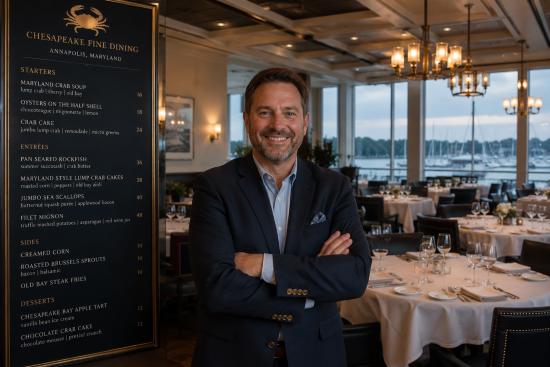
We know Frederick's restaurant scene block by block
Frederick's restaurant scene runs through one of the largest historic districts on the East Coast, built above a flood-control system installed after real, repeated flooding. Here's what we watch for across its districts.
Downtown Frederick Historic District
An 825-acre National Register district, one of the largest contiguous historic districts on the East Coast, with buildings dating from the late 18th century through 1941 along Market, Patrick, and Church Streets. Nearly every restaurant building here falls under Historic Preservation Commission exterior-work review.
Carroll Creek / Linear Park corridor
A real flood-control-then-park district built directly above underground conduits engineered after the city's worst floods, including a 1976 event that left parts of downtown under three feet of water. Restaurants along the creek promenade sit above genuine flood-control infrastructure.
Everedy Square & Shab Row
A two-block district of more than 30 specialty shops and restaurants inside restored 19th-century buildings on N. East Street, Downtown Frederick's largest adaptive-reuse retail and dining cluster outside the main Market Street corridor.
Baker Park area
A real city park engineered to double as flood-overflow storage, with 580,000 cubic feet of capacity, as part of the same flood-control system protecting downtown. Restaurants near the park sit adjacent to this genuine, functioning flood infrastructure.
Core coverage lines every Frederick restaurant should evaluate
Restaurant insurance in Frederick is a tailored bundle built around Maryland law, local licensing, and your lease. Here's what actually protects Frederick food service businesses.
General Liability Insurance
Protects against third-party bodily injury and property damage claims. Responds when guests slip, suffer foodborne illness, or get injured during delivery. Most landlords require $1M/$2M before lease signing.
Commercial Property Insurance
Covers your kitchen equipment, refrigeration and HVAC, tenant improvements, inventory, and business personal property against fire, equipment breakdown, and theft.
Business Owner's Policy (BOP)
Bundles general liability, commercial property, and business interruption into one package. Works best for single-unit restaurants with annual revenue under $3 million.
Liquor Liability Insurance
Protects restaurants serving alcohol from dram shop claims. Restaurants with liquor licenses typically must carry liquor liability coverage to maintain their permit.
Workers' Compensation Insurance
Covers medical expenses and lost wages for work-related injuries. Coverage requirements are set at the state level and apply to restaurants with employees.
Business Interruption Insurance
Replaces lost income and covers ongoing expenses when covered events force shutdowns or reduced capacity. Limits should reflect 3 to 6 months of net income plus fixed expenses.
What restaurant insurance typically costs in Frederick
A rough range based on real Maryland market data. Not a quote, just a starting point before you talk to an agent about your specific Frederick location.
| Coverage Type | Typical Annual Range | Why It Varies in Frederick |
|---|---|---|
| General Liability Insurance | $700–$2,000/yr | Scales with your landlord's required limits and your building's age, especially in Maryland's historic waterfront and rowhouse districts. |
| Liquor Liability Insurance | $1,200–$4,000/yr | Maryland liquor licensing runs through 23 separate county boards plus Baltimore City's own state-appointed board, so requirements and costs vary significantly by jurisdiction. |
| Commercial Property w/ Flood Endorsement | $1,500–$5,000/yr | Roughly 11% of Frederick sits in or near a 100-year floodplain, and the city's own flood history includes a 1976 event that left parts of downtown under three feet of water, a real, documented factor behind its $60 million underground flood-control system. |
| Workers' Compensation | Payroll-class rated | Required for virtually all Maryland employers, priced by payroll and job classification. |
| Business Interruption / Named-Storm Coverage | Rated by exposure | Coastal and tidal Maryland cities face real named-storm and flooding closure risk most inland restaurants don't carry. |
| Full-Service w/ Liquor License, Bundled | $7,000–$16,000/yr | Waterfront or historic-district locations should budget toward the higher end given documented flood history and historic-building renovation review requirements. |
Why Frederick built a $60 million flood-control system under its own downtown
Frederick restaurant coverage has to account for real, documented flood history and a genuine historic-district review process, on top of the Frederick County Board of License Commissioners's liquor licensing rules.
Frederick's flood history is real, repeated, and it built a $60 million system
Frederick's worst recorded flood struck in 1868, and a 1976 flood left parts of downtown under three feet of water and damaged the Tivoli Theater, whose Wurlitzer organ reportedly floated onto the stage. The city responded with an underground flood-control system of four concrete conduits, built 1985 to 1993 at a documented cost of $60 million, with Baker Park engineered to hold 580,000 cubic feet of overflow.
Frederick's historic district adds a real buildout step
Any exterior sign, awning, or facade change in the Frederick Historic District requires Historic Preservation Commission approval. Signs can't project more than 30 inches from the building face, and awnings must be traditional canvas or fabric, not vinyl or plastic, a genuine buildout-timeline factor. Confirm your food establishment licensing directly with the Frederick County Health Department's Food Control Office.
How Frederick's historic-district review affects your restaurant's buildout timeline
Frederick's genuine historic-district signage and facade review process is a specific factor a generic Maryland policy doesn't fully account for.
You're opening a restaurant inside the Frederick Historic District and planning your signage and facade work.
- The rule: Any exterior sign, awning, or facade change inside the 825-acre Frederick Historic District requires Historic Preservation Commission approval, with specific rules on sign projection, pedestrian clearance, and awning materials.
- The gap: A generic buildout timeline and business-interruption plan may not reflect this added review step before you can legally open.
- The fix: Your buildout timeline and coverage start date are confirmed against the Historic Preservation Commission's actual current requirements.
- The result: A launch plan and coverage program that reflect how a Frederick Historic District buildout actually works.
This is exactly why Frederick-specific coverage matters. A generic Maryland policy doesn't automatically account for a historic-district review process this specific.
Frequently asked questions
How much does restaurant insurance cost in Frederick, Maryland?
Restaurant insurance in Frederick typically costs $3,000 to $6,000 per year for a small cafe with no alcohol sales, while full-service restaurants or venues with alcohol sales run $12,000 to $30,000 per year. A Business Owner's Policy runs $1,100 to $10,500 per year; general liability runs $900 to $1,500 per year; commercial property runs $740 to $830 per year. Workers' compensation, mandatory in Maryland from your very first employee, runs $550 to $1,500 per year. Liquor liability runs $600 to $3,500 per year and stays comparatively affordable because Maryland has no statutory dram shop liability for serving adults. Frederick rates overall run 10% to 15% above the national average due to proximity to the Washington D.C. metro area, though still cheaper than closer-in Montgomery or Prince George's County restaurants.
Did downtown Frederick really flood that badly in 1976?
Yes. A flood in October 1976 brought over 7 inches of rain in under 16 hours, leaving parts of downtown under three feet of water and damaging buildings including the Tivoli Theater, whose Wurlitzer organ reportedly floated onto the stage.
Does Frederick's historic district really require approval for restaurant signage?
Yes. Any exterior sign, awning, or facade change inside the Frederick Historic District requires Historic Preservation Commission approval, with specific rules governing sign projection distance, pedestrian clearance, and awning materials, a real buildout-timeline factor.
How much of Frederick is actually at flood risk today?
Roughly 11% of Frederick sits in or near a 100-year floodplain, according to the city's own flood-information page, even after the $60 million flood-control system built between 1985 and 1993 significantly reduced downtown flooding.
Is Baker Park really part of Frederick's flood-control system?
Yes. Baker Park was engineered to double as flood-overflow storage, with a documented capacity of 580,000 cubic feet, as part of the same system of underground conduits that protects downtown Frederick today.
Get Frederick restaurant coverage built around your actual location and historic-district requirements.
Tell us your concept and your Frederick neighborhood. We'll put together the coverage that actually applies.
Get Your Free Quote →