




Restaurant Insurance in Baltimore, Maryland
If you're a Baltimore restaurant owner searching for insurance that actually understands a genuinely unusual state-run liquor board, Old Bay's real local origin story, and neighborhoods from Fell's Point to Hampden, Insurance Kitchen builds coverage around that reality. The Board of Liquor License Commissioners for Baltimore City is legally an agency of the State of Maryland, not the city, with commissioners appointed by the Governor, a genuinely rare regulatory structure most Maryland jurisdictions don't have. We build Baltimore restaurant coverage around your actual neighborhood and licensing reality.
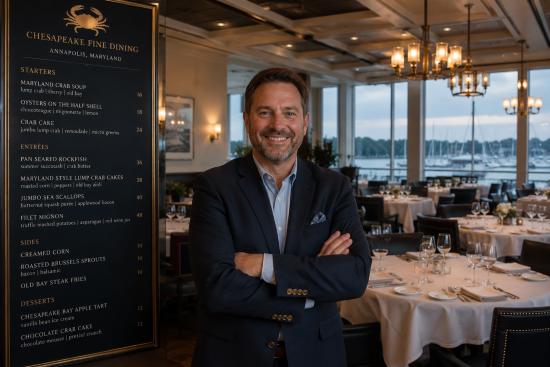
We know Baltimore's restaurant scene block by block
Baltimore's restaurant scene runs through 18th-century rowhouse blocks and a converted mill district, under a licensing structure most cities don't have. Here's what we watch for across its neighborhoods.
Fell's Point
Maryland's first National Register historic district, listed in 1969, with 18th-century Flemish-bond brick rowhouses still standing. Over 120 bars line cobblestone Thames Street, combining historic-building renovation risk with real, dense liquor liability exposure.
Federal Hill
Two separate National Register historic districts with Federal and Greek Revival rowhouses dating to 1780. A dense tavern and restaurant strip along Light and Charles Streets hosts street festivals several times a year, a real driver of concentrated liquor liability.
Little Italy
An Italian-American enclave since the early 20th century, anchored by St. Leo the Great Church, established 1881. Long-tenured, family-owned restaurants here carry a different succession and property-continuity risk profile than newer operations.
Hampden
Originated in 1802 as mill-worker housing along the Jones Falls. Today's independent dining and retail scene along "The Avenue" operates inside converted Federal and Greek Revival mill-town buildings, a genuine older-building renovation factor.
Inner Harbor
Sits where tidal Chesapeake Bay waters meet the harbor. During Hurricane Isabel in 2003, storm surge flooded the district and filled the Baltimore World Trade Center's basement with roughly 3,000,000 gallons of water, closing the building for over a month and displacing about 60 tenant businesses.
Core coverage lines every Baltimore restaurant should evaluate
Restaurant insurance in Baltimore is a tailored bundle built around Maryland law, local licensing, and your lease. Here's what actually protects Baltimore food service businesses.
General Liability Insurance
Protects against third-party bodily injury and property damage claims. Responds when guests slip, suffer foodborne illness, or get injured during delivery. Most landlords require $1M/$2M before lease signing.
Commercial Property Insurance
Covers your kitchen equipment, refrigeration and HVAC, tenant improvements, inventory, and business personal property against fire, equipment breakdown, and theft.
Business Owner's Policy (BOP)
Bundles general liability, commercial property, and business interruption into one package. Works best for single-unit restaurants with annual revenue under $3 million.
Liquor Liability Insurance
Protects restaurants serving alcohol from dram shop claims. Restaurants with liquor licenses typically must carry liquor liability coverage to maintain their permit.
Workers' Compensation Insurance
Covers medical expenses and lost wages for work-related injuries. Coverage requirements are set at the state level and apply to restaurants with employees.
Business Interruption Insurance
Replaces lost income and covers ongoing expenses when covered events force shutdowns or reduced capacity. Limits should reflect 3 to 6 months of net income plus fixed expenses.
What restaurant insurance typically costs in Baltimore
A rough range based on real Maryland market data. Not a quote, just a starting point before you talk to an agent about your specific Baltimore location.
| Coverage Type | Typical Annual Range | Why It Varies in Baltimore |
|---|---|---|
| General Liability Insurance | $700–$2,000/yr | Scales with your landlord's required limits and your building's age, especially in Maryland's historic waterfront and rowhouse districts. |
| Liquor Liability Insurance | $1,200–$4,000/yr | Maryland liquor licensing runs through 23 separate county boards plus Baltimore City's own state-appointed board, so requirements and costs vary significantly by jurisdiction. |
| Commercial Property w/ Flood Endorsement | $1,500–$5,000/yr | Hurricane Isabel's 2003 storm surge flooded the Inner Harbor and filled the Baltimore World Trade Center's basement with roughly 3,000,000 gallons of water, a real, documented benchmark for waterfront property coverage in Baltimore. |
| Workers' Compensation | Payroll-class rated | Required for virtually all Maryland employers, priced by payroll and job classification. |
| Business Interruption / Named-Storm Coverage | Rated by exposure | Coastal and tidal Maryland cities face real named-storm and flooding closure risk most inland restaurants don't carry. |
| Full-Service w/ Liquor License, Bundled | $7,000–$16,000/yr | Waterfront or historic-district locations should budget toward the higher end given documented flood history and historic-building renovation review requirements. |
Why Baltimore's liquor board answers to the state, not the city
Baltimore restaurant coverage has to account for a genuinely unusual state-run liquor licensing structure, whose statutory basis runs through the Alcoholic Beverages Article of Maryland law, and real, documented flood history.
Baltimore's liquor board is legally a state agency
The Board of Liquor License Commissioners for Baltimore City is explicitly described on its own official page as an agency of the State of Maryland, not a city department, with commissioners appointed by the Governor and confirmed by the Senate. Roughly 1,150 licensed alcohol establishments currently operate under this board, a genuinely rare structure compared to most Maryland county liquor boards, which are chosen locally.
Old Bay's Baltimore origin is real, and it says something about this market
Old Bay Seasoning was created in 1939 by Gustav Brunn, a German-Jewish immigrant who survived imprisonment at Buchenwald before fleeing to Baltimore and founding the Baltimore Spice Company. It's a genuine local origin story behind the crab-house culture driving much of this city's restaurant demand. Confirm your food establishment licensing directly with the Baltimore City Health Department's Food Control section.
How Baltimore's state-run liquor board affects your restaurant's licensing timeline
Baltimore's genuinely unusual state-agency liquor board is a specific factor a generic Maryland policy doesn't fully account for.
You're opening a restaurant in Baltimore City and applying for a liquor license for the first time.
- The structure: Unlike most Maryland counties, where the county government appoints local liquor board members, Baltimore City's Board of Liquor License Commissioners is legally a State of Maryland agency, with commissioners appointed by the Governor.
- The gap: A generic multi-state liquor liability policy may not reflect the specific compliance timeline and hearing process this state-run board requires.
- The fix: Your liquor liability coverage and licensing timeline are reviewed against this board's actual current process, not a generic county-board assumption.
- The result: Coverage and a launch timeline that reflect how Baltimore's licensing structure actually works.
This is exactly why Baltimore-specific coverage matters. A generic Maryland policy doesn't automatically account for a liquor board structure this unusual.
Frequently asked questions
What insurance is required to open a restaurant in Baltimore, Maryland?
Maryland requires workers' compensation for virtually all employers, general liability to meet most lease agreements, and a food service facility license through the Baltimore City Health Department's Food Control section. A liquor license through the Board of Liquor License Commissioners for Baltimore City is required separately if you serve alcohol.
Is Baltimore's liquor board really run by the state, not the city?
Yes. The Board of Liquor License Commissioners for Baltimore City is explicitly described on its own official page as an agency of the State of Maryland, with commissioners appointed by the Governor and confirmed by the Senate, a genuinely rare structure among Maryland jurisdictions.
How much does restaurant insurance cost in Baltimore, Maryland?
A comprehensive restaurant insurance package in Baltimore typically costs $3,500 to $7,500 per year for a standard independent establishment, though a small neighborhood cafe may pay closer to $4,000 while a large downtown venue with a full bar and high revenue can exceed $15,000. General liability runs $700 to $2,000 per year; commercial property runs $1,500 to $5,000 per year depending on equipment value and flood-zone risk; workers' compensation, mandatory in Maryland from your first employee with no small-team exemption, is priced against your total payroll. Liquor liability runs $1,200 to $4,000 per year, and stays somewhat lower than in neighboring Washington D.C. because Maryland common law generally does not impose strict dram shop liability on venues serving legally aged adults. Overall, Baltimore rates run 10% to 15% above the national average due to urban property values, coastal storm exposure, and strict local employment law.
Did the Inner Harbor really flood during Hurricane Isabel?
Yes. In September 2003, storm surge from Hurricane Isabel flooded the Inner Harbor and filled the Baltimore World Trade Center's basement with roughly 3,000,000 gallons of water, closing the building for more than a month and displacing about 60 tenant businesses.
Does operating out of one of Fell's Point's centuries-old rowhouses change a restaurant's property coverage?
Yes. Many Fell's Point restaurants operate out of genuine 18th-century Flemish-bond brick rowhouses, and insuring a building of that age means factoring in higher replacement-cost limits for period materials, older wiring and plumbing, and the cost of bringing the space up to current code after a fire or major loss, coverage a standard policy sized for newer construction doesn't automatically include at the right level. It's worth confirming your commercial property policy's stated replacement-cost basis actually reflects your building's real age and construction type rather than a generic square-footage estimate.
Get Baltimore restaurant coverage built around your actual neighborhood and licensing reality.
Tell us your concept and your Baltimore neighborhood. We'll put together the coverage that actually applies.
Get Your Free Quote →