




Restaurant Insurance in Annapolis, Maryland
If you're an Annapolis restaurant owner searching for insurance that actually understands City Dock's real, documented tidal flooding, a peer-reviewed study on lost restaurant foot traffic, and neighborhoods from the Historic District to Eastport, Insurance Kitchen builds coverage around that reality. A 2019 study published in Science Advances found that high-tide flooding cost City Dock 2,916 visitors in 2017 alone, a 1.7% decrease directly tied to flood days. We build Annapolis restaurant coverage around your actual location and documented flood exposure.
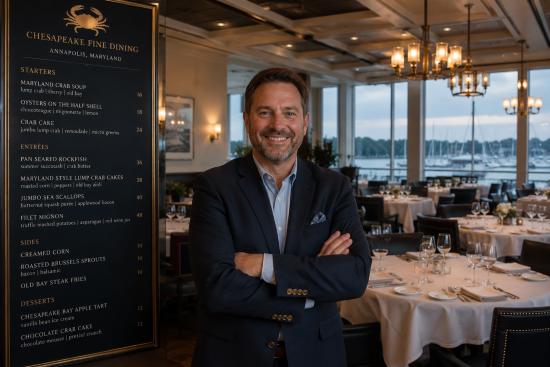
We know Annapolis's restaurant scene block by block
Annapolis's restaurant scene runs through one of the oldest state capitals in the country, with a harbor that floods more often every year. Here's what we watch for across its districts.
Downtown / Historic District
Centered on Main Street and State Circle inside the Colonial Annapolis National Historic Landmark District. Buildings here include the Hammond-Harwood House, built 1774, and the Old Treasury Building, built 1735, real, dateable structures that carry genuine older-building renovation risk.
Eastport
A nautically-inspired neighborhood across Spa Creek, home to the Annapolis Maritime Museum. Dockside dining and a boating-culture clientele bring a different waterfront exposure than the Historic District's landlocked storefronts.
City Dock / Harbor Area
Annapolis's own NOAA tide gauge (Station 8575512) has recorded a real, measured increase in high-tide flooding here, and a 2019 peer-reviewed study found this flooding cost City Dock 2,916 visitors in 2017 alone, a genuine, quantified business-loss factor.
Maryland Avenue / Naval Academy corridor
Home to the Maryland State House and a museum and dining row adjacent to the U.S. Naval Academy, which employs roughly 2,500 people and hosts about 4,500 midshipmen. Academy events like graduation create real, predictable surges in foot traffic and security activity.
Annapolis Arts District
An officially designated district combining restaurants, galleries, and artist studios distinct from Main Street's retail row, a genuine, separate concentration of small, owner-operated food and creative businesses.
Core coverage lines every Annapolis restaurant should evaluate
Restaurant insurance in Annapolis is a tailored bundle built around Maryland law, local licensing, and your lease. Here's what actually protects Annapolis food service businesses.
General Liability Insurance
Protects against third-party bodily injury and property damage claims. Responds when guests slip, suffer foodborne illness, or get injured during delivery. Most landlords require $1M/$2M before lease signing.
Commercial Property Insurance
Covers your kitchen equipment, refrigeration and HVAC, tenant improvements, inventory, and business personal property against fire, equipment breakdown, and theft.
Business Owner's Policy (BOP)
Bundles general liability, commercial property, and business interruption into one package. Works best for single-unit restaurants with annual revenue under $3 million.
Liquor Liability Insurance
Protects restaurants serving alcohol from dram shop claims. Restaurants with liquor licenses typically must carry liquor liability coverage to maintain their permit.
Workers' Compensation Insurance
Covers medical expenses and lost wages for work-related injuries. Coverage requirements are set at the state level and apply to restaurants with employees.
Business Interruption Insurance
Replaces lost income and covers ongoing expenses when covered events force shutdowns or reduced capacity. Limits should reflect 3 to 6 months of net income plus fixed expenses.
What restaurant insurance typically costs in Annapolis
A rough range based on real Maryland market data. Not a quote, just a starting point before you talk to an agent about your specific Annapolis location.
| Coverage Type | Typical Annual Range | Why It Varies in Annapolis |
|---|---|---|
| General Liability Insurance | $700–$2,000/yr | Scales with your landlord's required limits and your building's age, especially in Maryland's historic waterfront and rowhouse districts. |
| Liquor Liability Insurance | $1,200–$4,000/yr | Maryland liquor licensing runs through 23 separate county boards plus Baltimore City's own state-appointed board, so requirements and costs vary significantly by jurisdiction. |
| Commercial Property w/ Flood Endorsement | $1,500–$5,000/yr | A 2019 peer-reviewed study in Science Advances found that high-tide flooding at City Dock cost the area 2,916 visitors in 2017 alone, a real, documented, quantified flood-related business impact worth reflecting in flood and business-interruption coverage here. |
| Workers' Compensation | Payroll-class rated | Required for virtually all Maryland employers, priced by payroll and job classification. |
| Business Interruption / Named-Storm Coverage | Rated by exposure | Coastal and tidal Maryland cities face real named-storm and flooding closure risk most inland restaurants don't carry. |
| Full-Service w/ Liquor License, Bundled | $7,000–$16,000/yr | Waterfront or historic-district locations should budget toward the higher end given documented flood history and historic-building renovation review requirements. |
Why City Dock's flooding is a measured, worsening, quantified risk
Annapolis restaurant coverage has to account for real, peer-reviewed evidence of flood-driven lost business, on top of the Anne Arundel County Board of License Commissioners's liquor licensing rules.
City Dock's flooding is measured, not anecdotal
Annapolis's own NOAA tide gauge, Station 8575512, has recorded a documented, ongoing increase in high-tide flooding events at City Dock. A 2019 study published in the peer-reviewed journal Science Advances found this flooding cost City Dock 2,916 visitors in 2017 alone, a 1.7% decrease directly attributable to flood days, a genuinely rare level of quantified evidence for a local flood risk.
Annapolis is one of the oldest continuously used state capitals
Annapolis became Maryland's capital in 1694, and the Maryland State House, construction of which began in 1772, is documented as the oldest state capitol in continuous legislative use in the United States. Confirm your food establishment licensing directly with the Anne Arundel County Department of Health, which covers Annapolis restaurants.
How City Dock's documented flooding affects a downtown restaurant's coverage
Annapolis's real, peer-reviewed flood-loss data is a specific factor a generic Maryland policy doesn't fully account for.
You're opening a restaurant at or near City Dock, in an area with a measured, published record of flood-driven lost visitors.
- The evidence: A 2019 study published in Science Advances found that high-tide flooding at City Dock cost the area 2,916 visitors in 2017 alone, a real, peer-reviewed, quantified business impact.
- The gap: A property and business-interruption policy priced without accounting for this documented, worsening flood frequency may understate real risk for a City Dock-adjacent address.
- The fix: Coverage is reviewed against your building's actual flood-zone designation and this real, published flood-loss data.
- The result: Coverage that reflects what City Dock has actually, measurably experienced, not a generic assumption.
This is exactly why Annapolis-specific coverage matters. A generic Maryland policy doesn't automatically account for flood risk this well documented and this frequent.
Frequently asked questions
What insurance is required to open a restaurant in Annapolis, Maryland?
Maryland requires workers' compensation for virtually all employers, general liability to meet most lease agreements, and a food service facility license through the Anne Arundel County Department of Health. A liquor license through the Anne Arundel County Board of License Commissioners is required separately if you serve alcohol.
Does City Dock in Annapolis really flood that often?
Yes, and it's measured. Annapolis's own NOAA tide gauge has recorded a documented, worsening pattern of high-tide flooding at City Dock, and a 2019 peer-reviewed study in Science Advances found this flooding cost the area 2,916 visitors in 2017 alone.
How much does restaurant insurance cost in Annapolis, Maryland?
A comprehensive restaurant insurance package in Annapolis typically costs $3,500 to $7,500 per year for a standard mid-sized establishment, with small cafes closer to $1,100 per year and large, high-volume venues exceeding $10,500. A Business Owner's Policy runs $1,700 to $3,000 per year; general liability runs $900 to $1,800 per year; workers' compensation, mandatory from your first employee, runs $1,200 to $2,100 per year. Liquor liability runs a comparatively low $600 to $1,800 per year, since Maryland has no statutory dram shop liability for serving adults. Annapolis's coastal Chesapeake Bay location and premium historic real estate push overall premiums 10% to 15% above the national average.
How much does the Naval Academy really affect Annapolis restaurant demand?
Significantly. The U.S. Naval Academy employs roughly 2,500 people and hosts about 4,500 midshipmen, making it a major, documented driver of downtown foot traffic, with real predictable surges around events like graduation.
Does insuring a restaurant in one of Annapolis's historic downtown buildings cost more?
Yes. Many downtown Annapolis restaurants occupy genuinely historic structures, and insuring them requires higher property coverage limits to account for specialized period-appropriate repair materials and the cost of bringing an older space up to modern building code after a fire or other loss, on top of whatever a comparable new-construction building would cost to insure. Pairing that with proactive severe-weather and fire-prevention measures, like documented storm-prep protocols and automatic kitchen fire-suppression hoods, is one of the more effective ways downtown operators keep that added historic-building premium in check.
Get Annapolis restaurant coverage built around your actual location and documented flood exposure.
Tell us your concept and your Annapolis neighborhood. We'll put together the coverage that actually applies.
Get Your Free Quote →