




Restaurant Insurance in Milwaukee, Wisconsin
If you're a Milwaukee restaurant owner searching for insurance that actually understands the real flash-flood risk along the Kinnickinnic and Milwaukee Rivers, a documented brewing and tavern heritage running back to 1902, and neighborhoods from the Historic Third Ward to Bay View, Insurance Kitchen builds coverage around that reality. Milwaukee's Northwest Side recorded more than 14.5 inches of rain over two days in August 2025, the second-highest two-day total ever recorded in the city. We build Milwaukee restaurant coverage around your actual neighborhood and event-driven demand.
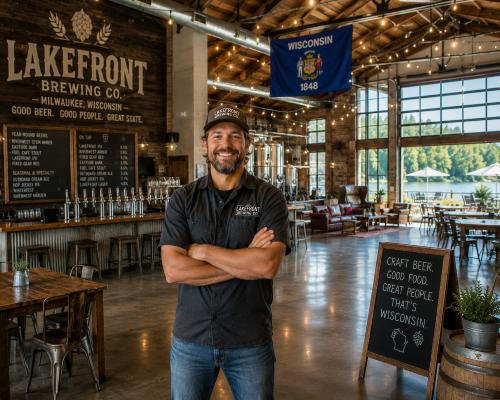
We know Milwaukee's restaurant scene block by block
Milwaukee's restaurant scene runs from a rebuilt 1890s fire district to a converted brewery and tannery corridor, with real river-corridor flood risk and a documented tavern heritage to plan around. Here's what we watch for across its neighborhoods.
Historic Third Ward
Devastated by the October 28, 1892 fire, an exploding oil barrel spread by 50 mph winds destroyed 440 buildings and caused $5 million in losses, the largest property loss in Milwaukee history at the time. Rebuilt within 30 years, 71 buildings were listed as a National Register historic district in 1984, real, older-building conversion risk in a now-dense restaurant corridor.
Bay View
Milwaukee's first suburb and Wisconsin's first company town, designated a National Historic District in 1982 (about 330 buildings, mostly 1870-1915). Its main commercial artery, S. Kinnickinnic Avenue, sits along the same river corridor where the August 2025 flood caused fatal flash flooding, a direct, documented tie between this neighborhood and real river-flood risk.
Walker's Point
Listed on the National Register on December 19, 1978, a mixed working-class district with buildings dating to 1849, including remnants of the Philip Best Brewery and Pfister & Vogel Tannery. Now one of Milwaukee's densest new-restaurant corridors, real historic-building and code-conversion risk for newer food-service tenants.
Brady Street
Listed on the National Register in 1990, emerged in the 1870s as a Polish immigrant commercial corridor anchored by St. Hedwig's Catholic Church (1886), later home to Italian immigrant businesses. Glorioso's Italian Market (1946) and Peter Sciortino's Bakery (1947) still operate today in buildings mostly dating 1875-1931.
Core coverage lines every Milwaukee restaurant should evaluate
Restaurant insurance in Milwaukee is a tailored bundle built around Wisconsin law, local licensing, and your lease. Here's what actually protects Milwaukee food service businesses.
General Liability Insurance
Protects against third-party bodily injury and property damage claims. Responds when guests slip, suffer foodborne illness, or get injured during delivery. Most landlords require $1M/$2M before lease signing.
Commercial Property Insurance
Covers your kitchen equipment, refrigeration and HVAC, tenant improvements, inventory, and business personal property against fire, equipment breakdown, and theft.
Business Owner's Policy (BOP)
Bundles general liability, commercial property, and business interruption into one package. Works best for single-unit restaurants with annual revenue under $3 million.
Liquor Liability Insurance
Wisconsin dram shop law grants broad immunity for serving visibly intoxicated adults, but liability remains for knowingly serving a minor.
Workers' Compensation Insurance
Covers medical expenses and lost wages for work-related injuries. Wisconsin requires coverage at 3 or more employees, or a single employee paid $500 or more in gross wages in any calendar quarter.
Business Interruption Insurance
Replaces lost income and covers ongoing expenses when covered events force shutdowns or reduced capacity. Limits should reflect 3 to 6 months of net income plus fixed expenses.
What restaurant insurance typically costs in Milwaukee
A rough range based on real Wisconsin market data. Not a quote, just a starting point before you talk to an agent about your specific Milwaukee location.
| Coverage Type | Typical Annual Range | Why It Varies |
|---|---|---|
| General Liability Insurance | $700–$2,000/yr | Scales with your landlord's required limits and your building's age, especially in converted-warehouse districts like Walker's Point and the Third Ward. |
| Liquor Liability Insurance | $1,200–$4,000/yr | Wisconsin's dram shop law grants broad immunity for serving adults, but liability remains for knowingly serving a minor, real exposure in Milwaukee's tavern-dense entertainment districts. |
| Commercial Property w/ Flood Endorsement | $1,500–$5,000/yr | Standard property policies exclude flood damage; Milwaukee's Northwest Side recorded 14.5+ inches of rain over two days in August 2025, with fatal flooding along the Kinnickinnic River, real exposure for river-corridor neighborhoods like Bay View. |
| Workers' Compensation | Payroll-class rated | Triggers at 3 or more Milwaukee employees, or a single employee paid $500 or more in gross wages in any calendar quarter, the wage threshold usually applies first. |
| Business Interruption Insurance | Rated by exposure, sized to festival season | Covers lost revenue during closures; Milwaukee's Summerfest drew 602,231 attendees in 2025, a real, documented seasonal demand driver worth sizing coverage around. |
| Full-Service w/ Liquor License, Bundled | $7,000–$16,000/yr | Restaurants in flood-prone river corridors or dense entertainment districts should budget toward the higher end. |
Why Milwaukee's river flooding and tavern heritage change what your policy needs to do
Milwaukee restaurant coverage has to account for real, documented river-corridor flood risk and a genuine tavern and brewing heritage, on top of Wisconsin's statewide dram shop immunity framework.
The August 2025 flood is a real, recent benchmark for river-corridor risk
Milwaukee's Northwest Side recorded more than 14.5 inches of rain over two days in August 2025, the second-highest two-day total ever recorded in the city, with at least two deaths amid Kinnickinnic River flooding and 65 water rescues in a single night, per documented coverage of the event. Standard commercial property policies exclude flood damage entirely, restaurants along the Kinnickinnic, Milwaukee, and Menomonee River corridors need a separate flood endorsement.
Milwaukee's tavern-district building stock carries real historic-fire risk
The Historic Third Ward's own origin traces to the October 28, 1892 fire that destroyed 440 buildings, per the district's documented history, and the neighborhood was rebuilt and later listed on the National Register in 1984. Restaurants occupying century-old warehouse and tannery buildings across the Third Ward and Walker's Point carry real, checkable property risk tied to that construction age.
Heavy summer rainfall along the Kinnickinnic River corridor floods your Bay View restaurant.
A closer look at how Milwaukee's real, documented risk factors actually play out.
Heavy summer rainfall along the Kinnickinnic River corridor floods your Bay View restaurant.
- The flood: Floodwater from the Kinnickinnic River corridor damages your dining room and kitchen, a loss standard commercial property excludes entirely and only a separate flood policy, with its own waiting period, covers.
- The scale: The August 2025 flood dropped more than 14.5 inches of rain over two days on Milwaukee's Northwest Side, a real, documented benchmark for how severe this river corridor's flooding can get.
- The closure: Cleanup and rebuild force a shutdown, business interruption coverage sized to your real revenue, not a flat annual average, replaces the lost income.
- The result: Coverage that reflects Milwaukee's real river-corridor flood history, not a generic Midwest assumption.
This is exactly why Milwaukee-specific coverage matters. A generic Wisconsin policy doesn't automatically account for flood risk this concentrated or this recent.
Frequently asked questions
How bad was Milwaukee's August 2025 flood?
Genuinely severe. Milwaukee's Northwest Side recorded more than 14.5 inches of rain over two days, the second-highest two-day total ever recorded in the city, with at least two deaths amid Kinnickinnic River flooding, 65 water rescues in a single night, and nearly 47,000 customers losing power.
How big is Summerfest's real impact on Milwaukee restaurants?
Substantial. Summerfest drew 602,231 attendees in 2025, an 8% increase over 2024, and a 2023 economic-impact study found the festival generated $160.3 million in impact for the City of Milwaukee alone.
Does Wisconsin's dram shop law apply differently in Milwaukee?
The same statewide standard applies. Wisconsin's Wis. Stat. § 125.035 grants broad immunity for serving visibly intoxicated adults, liability arises only for knowingly serving someone under 21 whose intoxication then injures a third party.
Do Milwaukee's harsh winters affect a restaurant's property insurance costs?
Yes. Wisconsin's severe freezing weather is a real, recurring driver of commercial property premiums in Milwaukee, and it's worth confirming your policy specifically includes endorsements for snow or ice-related roof collapse and food spoilage coverage in case a winter storm knocks out power to your walk-in coolers or freezers. A standard property policy doesn't always price these seasonal perils in at the same level a Milwaukee restaurant actually needs, so it's worth reviewing with your agent rather than assuming general coverage already accounts for it.
What insurance does Milwaukee require for city contracts and permits?
The City of Milwaukee's standard insurance requirements call for the city to be named as an additional insured on liability coverage, with a minimum of 30 days' written notice before any cancellation, non-renewal, or material change.
Get Milwaukee restaurant coverage built around your actual neighborhood and real local risk.
Tell us your concept and your Milwaukee neighborhood. We'll put together the coverage that actually applies.
Get Your Free Quote →