




Restaurant Insurance in Tacoma, Washington
If you're a Tacoma restaurant owner searching for insurance that actually understands a real, active volcanic hazard-zone warning system, a genuine Superfund-to-waterfront-dining redevelopment story, and neighborhoods from Sixth Avenue to Old Town, Insurance Kitchen builds coverage around that reality. Pierce County maintains 42 outdoor warning sirens across the Puyallup River Valley, tested monthly, specifically for a Mount Rainier lahar hazard zone that runs from Orting to the Port of Tacoma. We build Tacoma restaurant coverage around your actual location and hazard-zone exposure.
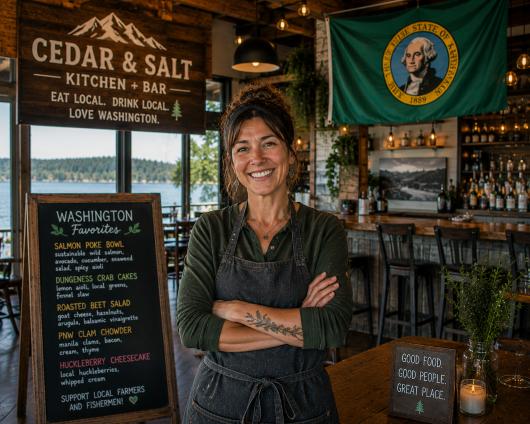
We know Tacoma's restaurant scene block by block
Tacoma's restaurant scene runs through a district built on a remediated smelter site and a valley floor that sits inside an active, siren-monitored volcanic hazard zone. Here's what we watch for across its districts.
Sixth Avenue District
Widely described as having the highest concentration of restaurants, bars, and coffee shops in the city. Extreme density of adjacent nightlife raises liquor liability and shared-wall fire-spread exposure.
Point Ruston / North Tacoma waterfront
Built on the site of the former ASARCO smelter, a Superfund cleanup site operated from 1890 to 1986, its smokestack imploded in 1993 before 100,000-plus spectators. Restaurants here sit on remediated land, a genuine environmental-liability and disclosure consideration.
Theater District / Downtown
Anchored by the 1918 Pantages Theater, with restaurants clustered for pre-show dining. Event-driven surge traffic tied to a fixed show schedule creates liquor liability spikes distinct from steady year-round traffic.
Old Town Tacoma
Home to The Spar Tavern, in continuous operation on the same site since the 1880s and rebuilt in 1917. Older building stock throughout Old Town raises real electrical and structural-age considerations.
Core coverage lines every Tacoma restaurant should evaluate
Restaurant insurance in Tacoma is a tailored bundle built around Washington law, local licensing, and your lease. Here's what actually protects Tacoma food service businesses.
General Liability Insurance
Protects against third-party bodily injury and property damage claims. Responds when guests slip, suffer foodborne illness, or get injured during delivery. Most landlords require $1M/$2M before lease signing.
Commercial Property Insurance
Covers your kitchen equipment, refrigeration and HVAC, tenant improvements, inventory, and business personal property against fire, equipment breakdown, and theft.
Business Owner's Policy (BOP)
Bundles general liability, commercial property, and business interruption into one package. Works best for single-unit restaurants with annual revenue under $3 million.
Liquor Liability Insurance
Protects restaurants serving alcohol from dram shop claims. Restaurants with liquor licenses typically must carry liquor liability coverage to maintain their permit.
Workers' Compensation Insurance
Covers medical expenses and lost wages for work-related injuries. Coverage requirements are set at the state level and apply to restaurants with employees.
Business Interruption Insurance
Replaces lost income and covers ongoing expenses when covered events force shutdowns or reduced capacity. Limits should reflect 3 to 6 months of net income plus fixed expenses.
What restaurant insurance typically costs in Tacoma
A rough range based on real Washington market data. Not a quote, just a starting point before you talk to an agent about your specific Tacoma location.
| Coverage Type | Typical Annual Range | Why It Varies in Tacoma |
|---|---|---|
| General Liability Insurance | $700–$2,200/yr | Scales with your landlord's required limits and Washington's dram shop standard, which sets a lower plaintiff threshold than most states with no statutory damages cap. |
| Commercial Property w/ Earthquake Endorsement | $1,500–$5,000/yr | Pierce County maintains 42 outdoor warning sirens across the Puyallup River Valley for a real, active Mount Rainier lahar hazard zone, a genuine factor for any restaurant sited on the valley floor near the Tideflats or Port of Tacoma. |
| Liquor Liability Insurance | $1,200–$4,000/yr | Washington's 'apparently under the influence' dram shop standard is a lower bar for plaintiffs than most states, and there is no statutory cap on damages. |
| Workers' Compensation (Stop-Gap Employer's Liability) | Rated by payroll | Washington runs a monopolistic workers' comp system through L&I, which leaves an employer's liability gap most owners never see coming. Stop-gap coverage closes it. |
| No-Tip-Credit Payroll Exposure | Rated by exposure | Washington allows no tip credit anywhere in the state, and several cities layer their own higher local minimum wage on top, a real factor in payroll-driven liability and EPLI underwriting. |
| Full-Service w/ Alcohol, Bundled | $7,500–$17,000/yr | Puget Sound and lahar-zone locations run higher given catastrophic peril exposure and Washington's no-tip-credit payroll structure. |
Why Tacoma's volcanic hazard zone is a real, government-run system
Tacoma restaurant coverage has to account for a genuinely active volcanic hazard-monitoring system and a real Superfund-to-redevelopment story, on top of Tacoma-Pierce County Health Department's food safety permitting.
Pierce County runs a real, active lahar warning siren system today
USGS confirms a lahar warning system covers cities and towns "from Orting to the Port of Tacoma," and Pierce County Emergency Management maintains 42 outdoor warning sirens across the Puyallup River Valley, tested monthly with a distinct chime tone. Any food business sited on the valley floor near the Tideflats or Port sits inside this active, siren-monitored hazard zone, a genuinely rare and checkable business-continuity consideration.
Point Ruston sits on a remediated Superfund site
The former ASARCO smelter operated on this waterfront site from 1890 to 1986 before a Washington Department of Ecology cleanup and its 1993 smokestack implosion. Today's Point Ruston dining district sits on that remediated land, worth understanding for property and environmental-liability coverage. Sidewalk cafe permits in Tacoma require liability insurance naming the City of Tacoma as an additional insured, per the city's own permit tip sheet.
How the Mount Rainier lahar zone affects a Tideflats-area restaurant
Tacoma's real, active volcanic hazard monitoring is a specific factor that a generic Washington policy doesn't fully account for.
You're opening a restaurant near the Port of Tacoma or Tideflats, inside the USGS-designated lahar warning zone.
- The system: Pierce County maintains 42 outdoor warning sirens across the Puyallup River Valley specifically for a Mount Rainier lahar hazard, tested monthly and covering the area from Orting to the Port of Tacoma.
- The gap: A property and business-interruption policy that doesn't account for this specific, active hazard-zone designation may not reflect your restaurant's real evacuation and continuity planning needs.
- The fix: Coverage is reviewed against your building's actual position within the lahar warning zone, not a generic Pacific Northwest assumption.
- The result: Coverage and a continuity plan that reflects what Pierce County's own siren system is actually there to warn about.
This is exactly why Tacoma-specific coverage matters. A generic Washington policy doesn't automatically account for a hazard-monitoring system this specific and this active.
Frequently asked questions
What insurance is required to open a restaurant in Tacoma, Washington?
Washington requires workers' compensation through the state's monopolistic L&I system, general liability to meet most lease agreements, and a food establishment permit through the Tacoma-Pierce County Health Department. A liquor license through the Washington State Liquor and Cannabis Board is required separately if you serve alcohol.
Is the Mount Rainier lahar warning system really active today?
Yes. USGS confirms a lahar warning system covers the area from Orting to the Port of Tacoma, and Pierce County Emergency Management maintains 42 outdoor warning sirens across the Puyallup River Valley, tested monthly with a distinct chime tone, a real, current, government-run system.
Is Point Ruston really built on a former smelter site?
Yes. The former ASARCO smelter operated on that waterfront site from 1890 to 1986, and its smokestack was imploded in 1993 before more than 100,000 spectators after a Washington Department of Ecology-led cleanup. Today's dining district sits on that remediated land.
Does Tacoma have its own city minimum wage?
No. Unlike Seattle, Tacoma follows the Washington state minimum wage rather than a separate city ordinance, a real distinction worth knowing when comparing payroll costs between the two cities.
How much does restaurant insurance cost in Tacoma, Washington?
Tacoma restaurant insurance typically runs $1,500 to $6,000 a year, generally 10%-15% lower than Seattle for a comparable concept. Washington's workers' compensation is a monopolistic state-run system: coverage is purchased directly from the Department of Labor & Industries rather than a private carrier, and for restaurant classification code 6504 the combined base rate is $0.86 per hour worked per employee, calculated on hours rather than payroll dollars. Liquor liability is mandatory to hold a Washington liquor license, and most local brokers recommend at least a $1 million per-occurrence, $2 million aggregate limit given the state's elevated litigation and medical costs.
Get Tacoma restaurant coverage built around your actual location and hazard-zone exposure.
Tell us your concept and your Tacoma neighborhood. We'll put together the coverage that actually applies.
Get Your Free Quote →