




Restaurant Insurance in Seattle, Washington
If you're a Seattle restaurant owner searching for insurance that actually understands the city's real 1889 fire history, a minimum wage that eliminated the tip credit entirely, and neighborhoods from Pike Place Market to Pioneer Square, Insurance Kitchen builds coverage around that reality. Seattle's minimum wage reached $21.30 an hour in 2026, and as of January 1, 2025, every employer regardless of size must pay that full rate in cash wages, with no tip or medical-benefit offset allowed anywhere in the city. We build Seattle restaurant coverage around your actual neighborhood and payroll structure.
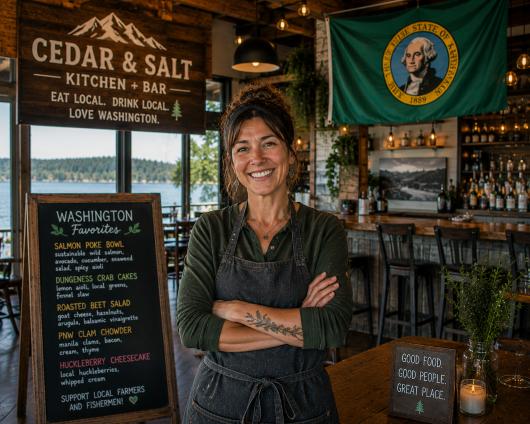
We know Seattle's restaurant scene block by block
Seattle's restaurant scene runs through a market older than the Space Needle and a downtown literally rebuilt on top of itself after a real fire. Here's what we watch for across its neighborhoods.
Pike Place Market
Opened August 17, 1907, a dense, century-old public market with shared corridors and stalls. Multi-tenant fire spread and slip-and-fall exposure run higher in this kind of high-foot-traffic historic space.
Pioneer Square
Rebuilt in brick and masonry after the 1889 fire, many buildings still sitting atop the literal Seattle Underground. Historic-district status limits renovation options, and the neighborhood carries real, long-documented density and premises-liability considerations.
Capitol Hill
The densest bar and nightlife corridor in the city along the Pike-Pine corridor. Concentrated late-night alcohol service raises overserving and liquor liability exposure.
Ballard
A neighborhood with real Scandinavian fishing and cannery heritage, home to a seafood-heavy restaurant scene near a working waterfront. Raw seafood handling and maritime-adjacent property exposure are genuine considerations here.
Chinatown-International District
Home to early-1900s Beaux Arts buildings like the Kong Yick Buildings, dating to around 1910, on the National Register. Dense, tightly packed low-rise blocks with older electrical and structural systems raise fire-spread risk.
Core coverage lines every Seattle restaurant should evaluate
Restaurant insurance in Seattle is a tailored bundle built around Washington law, local licensing, and your lease. Here's what actually protects Seattle food service businesses.
General Liability Insurance
Protects against third-party bodily injury and property damage claims. Responds when guests slip, suffer foodborne illness, or get injured during delivery. Most landlords require $1M/$2M before lease signing.
Commercial Property Insurance
Covers your kitchen equipment, refrigeration and HVAC, tenant improvements, inventory, and business personal property against fire, equipment breakdown, and theft.
Business Owner's Policy (BOP)
Bundles general liability, commercial property, and business interruption into one package. Works best for single-unit restaurants with annual revenue under $3 million.
Liquor Liability Insurance
Protects restaurants serving alcohol from dram shop claims. Restaurants with liquor licenses typically must carry liquor liability coverage to maintain their permit.
Workers' Compensation Insurance
Covers medical expenses and lost wages for work-related injuries. Coverage requirements are set at the state level and apply to restaurants with employees.
Business Interruption Insurance
Replaces lost income and covers ongoing expenses when covered events force shutdowns or reduced capacity. Limits should reflect 3 to 6 months of net income plus fixed expenses.
What restaurant insurance typically costs in Seattle
A rough range based on real Washington market data. Not a quote, just a starting point before you talk to an agent about your specific Seattle location.
| Coverage Type | Typical Annual Range | Why It Varies in Seattle |
|---|---|---|
| General Liability Insurance | $700–$2,200/yr | Scales with your landlord's required limits and Washington's dram shop standard, which sets a lower plaintiff threshold than most states with no statutory damages cap. |
| Commercial Property w/ Earthquake Endorsement | $1,500–$5,000/yr | Standard property policies exclude earthquake coverage entirely. A separate endorsement carries its own deductible, typically 10% to 25% of insured building value, given the Cascadia Subduction Zone's real, modeled risk. |
| Liquor Liability Insurance | $1,200–$4,000/yr | Washington's 'apparently under the influence' dram shop standard is a lower bar for plaintiffs than most states, and there is no statutory cap on damages. |
| Workers' Compensation (Stop-Gap Employer's Liability) | Rated by payroll | Washington runs a monopolistic workers' comp system through L&I, which leaves an employer's liability gap most owners never see coming. Stop-gap coverage closes it. |
| No-Tip-Credit Payroll Exposure | Rated by exposure | Seattle eliminated the tip and medical-benefit credit entirely as of January 1, 2025, meaning every employer pays the full $21.30 minimum wage in cash wages, a real factor in payroll-driven liability underwriting here specifically. |
| Full-Service w/ Alcohol, Bundled | $7,500–$17,000/yr | Puget Sound and lahar-zone locations run higher given catastrophic peril exposure and Washington's no-tip-credit payroll structure. |
Why Seattle's 1889 fire and its minimum wage history both matter for coverage
Seattle restaurant coverage has to account for real, dated fire history and a minimum wage structure that eliminated the tip credit entirely, on top of King County Public Health's food safety permitting.
The 1889 fire built the Seattle Underground beneath Pioneer Square
The Great Seattle Fire of June 6, 1889 destroyed roughly 25 blocks of downtown and forced the city's first comprehensive building code, requiring brick and stone construction in the burned zone. Streets were later regraded one to two stories higher, turning many merchants' original ground floors into the literal underground passageways tours still visit today. Older Pioneer Square buildings carry real, dated construction history worth reflecting in property coverage.
Seattle eliminated the tip credit entirely as of January 1, 2025
Seattle was one of the first major U.S. cities to adopt a $15 minimum wage, passed in 2014 and phased in starting 2015. As of January 1, 2025, every employer regardless of size must pay the full minimum wage, $21.30 as of 2026, in cash wages, with no tip or medical-benefit credit allowed. Liquor licensing itself runs through the Washington State Liquor and Cannabis Board, separate from this payroll requirement.
How Seattle's no-tip-credit minimum wage affects a full-service restaurant's payroll risk
Seattle's real, dated minimum wage history is a specific factor that a generic Washington policy doesn't fully account for.
You're running a full-service restaurant in Seattle with a tipped waitstaff, budgeting payroll under the city's current wage rules.
- The rule: As of January 1, 2025, Seattle eliminated the ability to count tips or medical-benefit payments toward the minimum wage for any employer, regardless of size, meaning every server must be paid the full $21.30 hourly rate in cash wages on top of tips.
- The gap: An EPLI or general liability program sized around an older, tip-credit-inclusive payroll assumption may not reflect this real, current payroll structure.
- The fix: Coverage is reviewed against your actual current payroll model, not an outdated wage assumption.
- The result: Coverage that reflects what Seattle's minimum wage law actually requires today.
This is exactly why Seattle-specific coverage matters. A generic Washington policy doesn't automatically account for a wage structure this specific.
Frequently asked questions
What insurance is required to open a restaurant in Seattle, Washington?
Washington requires workers' compensation through the state's monopolistic L&I system, general liability to meet most lease agreements, and a food establishment permit through King County Public Health. A liquor license through the Washington State Liquor and Cannabis Board is required separately if you serve alcohol.
Did Seattle really eliminate the tip credit for restaurant workers?
Yes. As of January 1, 2025, Seattle requires every employer, regardless of size, to pay the full minimum wage, $21.30 an hour as of 2026, in cash wages, with no tip or medical-benefit credit allowed anywhere in the city.
Is the Seattle Underground really connected to a real fire?
Yes. The Great Seattle Fire of June 6, 1889 destroyed roughly 25 blocks of downtown, and the city's subsequent street regrading turned many original ground-floor storefronts into the underground passageways that tours still visit today, a genuine, dated piece of Pioneer Square's building history.
How much does restaurant insurance cost in Seattle, Washington?
Seattle restaurants typically pay $3,000 to $6,000 a year for standard coverage, though a mid-to-large operation with an active liquor license can scale to $20,000-$40,000/yr. Washington is a monopolistic workers' comp state, meaning coverage must be purchased directly from the state Department of Labor & Industries rather than a private carrier, priced on an hours-worked basis rather than payroll dollars. Downtown Seattle restaurants typically pay 20%-30% more than identical concepts in Eastern Washington due to local litigation rates and urban density, and Seattle's $20.76/hour minimum wage drives up the gross payroll figure carriers use to calculate liability exposure.
How much does a typical slip-and-fall claim cost a Seattle restaurant?
According to Seattle-King County Public Health data, the average slip-and-fall claim cost for area restaurants runs around $21,300. That figure is why most commercial landlords require a minimum $1 million per-occurrence general liability limit, and it's a useful benchmark for deciding whether your current coverage limits are actually adequate rather than just meeting the lease minimum.
Get Seattle restaurant coverage built around your actual neighborhood and payroll structure.
Tell us your concept and your Seattle neighborhood. We'll put together the coverage that actually applies.
Get Your Free Quote →