




Restaurant Insurance in Bellevue, Washington
If you're a Bellevue restaurant owner searching for insurance that actually understands this city's real transformation from farmland to a high-income tech hub, and neighborhoods from Downtown Bellevue to Crossroads, Insurance Kitchen builds coverage around that reality. Bellevue's median household income has climbed to roughly $165,576, among the highest in Washington, driven by major employers like Amazon and T-Mobile with offices here. We build Bellevue restaurant coverage around your actual district and workforce mix.
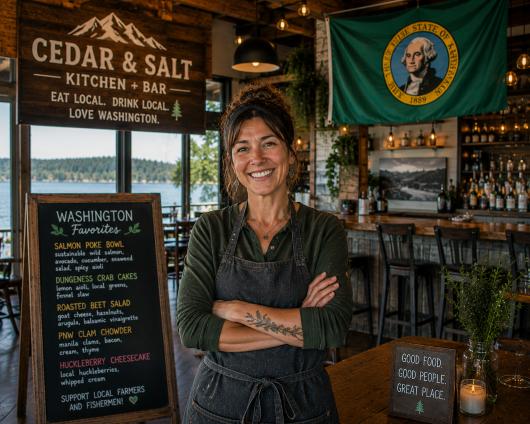
We know Bellevue's restaurant scene block by block
Bellevue's restaurant scene runs through a downtown built on one of the first suburban department stores on the West Coast and a neighborhood with a real, complicated agricultural history. Here's what we watch for across its districts.
Downtown Bellevue
Anchored by Bellevue Square, opened August 20, 1946, and today's dense office-tower core. High lunch-rush volume from corporate office workers raises slip-and-fall and general liability exposure.
Crossroads
Historically farmland worked largely by Japanese immigrant families until their forced internment in 1942 ended that community. Today a genuinely diverse international dining corridor, where wok and fryer-heavy cuisine raises specific kitchen fire-risk considerations.
Wilburton / BelRed
A formal neighborhood undergoing heavy mixed-use redevelopment. New restaurants opening near active construction zones face real builder's-risk and business-interruption exposure during buildout.
The Spring District
Built on 36 acres of former industrial land around a light-rail station, explicitly designed as a mixed-use tech-campus neighborhood. Predictable but highly concentrated weekday lunch-rush traffic creates a distinct liability profile.
Core coverage lines every Bellevue restaurant should evaluate
Restaurant insurance in Bellevue is a tailored bundle built around Washington law, local licensing, and your lease. Here's what actually protects Bellevue food service businesses.
General Liability Insurance
Protects against third-party bodily injury and property damage claims. Responds when guests slip, suffer foodborne illness, or get injured during delivery. Most landlords require $1M/$2M before lease signing.
Commercial Property Insurance
Covers your kitchen equipment, refrigeration and HVAC, tenant improvements, inventory, and business personal property against fire, equipment breakdown, and theft.
Business Owner's Policy (BOP)
Bundles general liability, commercial property, and business interruption into one package. Works best for single-unit restaurants with annual revenue under $3 million.
Liquor Liability Insurance
Protects restaurants serving alcohol from dram shop claims. Restaurants with liquor licenses typically must carry liquor liability coverage to maintain their permit.
Workers' Compensation Insurance
Covers medical expenses and lost wages for work-related injuries. Coverage requirements are set at the state level and apply to restaurants with employees.
Business Interruption Insurance
Replaces lost income and covers ongoing expenses when covered events force shutdowns or reduced capacity. Limits should reflect 3 to 6 months of net income plus fixed expenses.
What restaurant insurance typically costs in Bellevue
A rough range based on real Washington market data. Not a quote, just a starting point before you talk to an agent about your specific Bellevue location.
| Coverage Type | Typical Annual Range | Why It Varies in Bellevue |
|---|---|---|
| General Liability Insurance | $700–$2,200/yr | Scales with your landlord's required limits and Washington's dram shop standard, which sets a lower plaintiff threshold than most states with no statutory damages cap. |
| Commercial Property w/ Earthquake Endorsement | $1,500–$5,000/yr | Standard property policies exclude earthquake coverage entirely. A separate endorsement carries its own deductible, typically 10% to 25% of insured building value, given the Cascadia Subduction Zone's real, modeled risk. |
| Liquor Liability Insurance | $1,200–$4,000/yr | Washington's 'apparently under the influence' dram shop standard is a lower bar for plaintiffs than most states, and there is no statutory cap on damages. |
| Workers' Compensation (Stop-Gap Employer's Liability) | Rated by payroll | Washington runs a monopolistic workers' comp system through L&I, which leaves an employer's liability gap most owners never see coming. Stop-gap coverage closes it. |
| No-Tip-Credit Payroll Exposure | Rated by exposure | Bellevue's median household income runs around $165,576, among the highest in Washington, supporting a genuinely different price point and volume profile for full-service restaurants here than in most Puget Sound cities. |
| Full-Service w/ Alcohol, Bundled | $7,500–$17,000/yr | Puget Sound and lahar-zone locations run higher given catastrophic peril exposure and Washington's no-tip-credit payroll structure. |
Why Bellevue's farmland history still shapes today's dining map
Bellevue restaurant coverage has to account for a genuinely high-income, high-volume corporate dining market and a real, complicated land-use history, on top of King County Public Health's food safety permitting.
Bellevue Square helped launch a Bellevue that didn't exist yet
Bellevue Square opened August 20, 1946, developed by Kemper Freeman Sr., and grew from a single-anchor shopping center into today's dense Downtown Bellevue office and retail core. Bellevue does not have its own city minimum wage ordinance, unlike nearby Seattle, so restaurants here follow the statewide rate, a real, checkable distinction worth confirming before comparing payroll costs across the Eastside.
Crossroads' farmland history is real, and it deserves care
Before World War II, roughly 90% of Bellevue's local agricultural workforce was of Japanese ancestry, concentrated in what's now the Crossroads neighborhood. That community's farms ended when families were forcibly interned starting in 1942, and the vacated land later became available for the postwar development that shaped much of today's Bellevue. It's a real, documented, and difficult piece of the city's history, not casual trivia. Liquor licensing itself runs through the Washington State Liquor and Cannabis Board.
How Bellevue's high corporate lunch volume affects a Downtown restaurant's liability profile
Bellevue's real, high-density corporate workforce is a specific factor that a generic Washington policy doesn't fully account for.
You operate a fast-casual or full-service restaurant in Downtown Bellevue serving a high-volume weekday lunch crowd.
- The reality: Bellevue's downtown and Spring District draw a concentrated, high-volume weekday lunch rush from major employers like Amazon and T-Mobile, a genuinely different traffic pattern than a steady, all-day suburban location.
- The gap: A general liability program sized for even, all-day traffic may not reflect the real slip-and-fall and high-throughput kitchen exposure of a concentrated lunch-rush model.
- The fix: Coverage is reviewed against your restaurant's actual peak-hour volume and workforce mix, not a generic assumption.
- The result: Coverage that matches how a Bellevue lunch rush actually operates.
This is exactly why Bellevue-specific coverage matters. A generic Washington policy doesn't automatically account for a corporate dining market this concentrated.
Frequently asked questions
What insurance is required to open a restaurant in Bellevue, Washington?
Washington requires workers' compensation through the state's monopolistic L&I system, general liability to meet most lease agreements, and a food establishment permit through King County Public Health. A liquor license through the Washington State Liquor and Cannabis Board is required separately if you serve alcohol.
Does Bellevue have its own city minimum wage like Seattle?
No. Unlike Seattle, Renton, and Tukwila, Bellevue does not have its own local minimum wage ordinance, so restaurants there follow the statewide Washington minimum wage, a real distinction worth confirming when comparing payroll costs across the region.
How much does restaurant insurance cost in Bellevue, Washington?
Bellevue restaurants typically pay $3,000 to $6,000 a year for a standard broad package, with food trucks starting around $1,440/yr and bars or breweries running $3,600-$7,200+/yr given elevated liquor liability. Bellevue's high commercial lease rates push property replacement values, and therefore property premiums, above the Washington state average. As in the rest of Washington, workers' compensation must be purchased directly from the state Department of Labor & Industries rather than a private carrier, priced by hours worked rather than payroll dollars.
Does a Bellevue restaurant need cyber liability coverage?
It's worth considering. Modern restaurants process a high volume of card-present and online transactions through POS systems, and cyber liability coverage, roughly $60-$80/month in the Washington market, protects against a data breach affecting customer payment information. It's not legally mandatory the way liquor liability or workers' comp is, but it closes a real gap that standard general liability and property policies don't cover.
What's the minimum liquor liability coverage required to serve alcohol in Bellevue?
Washington state mandates a minimum liquor liability limit of $2,000,000 for establishments serving alcohol to the public, a higher floor than the $1 million per-occurrence limit typical for general liability. This applies statewide, not just in Seattle, so a Bellevue restaurant planning to serve alcohol should confirm its policy actually meets that $2 million threshold before applying for a state liquor license.
Get Bellevue restaurant coverage built around your actual district and workforce mix.
Tell us your concept and your Bellevue neighborhood. We'll put together the coverage that actually applies.
Get Your Free Quote →