




Restaurant Insurance in Williamsburg, Virginia
If you're a Williamsburg restaurant owner searching for insurance that actually understands a private nonprofit foundation's real landholding, a genuinely reconstructed historic district, and neighborhoods from the Colonial Williamsburg Historic Area to Merchants Square, Insurance Kitchen builds coverage around that reality. Of the roughly 500 buildings in Colonial Williamsburg's Historic Area, only 88 are original, since the restoration project actually demolished 720 buildings postdating 1790 to recreate the colonial-era look. We build Williamsburg restaurant coverage around your actual location and seasonal tourism swing.
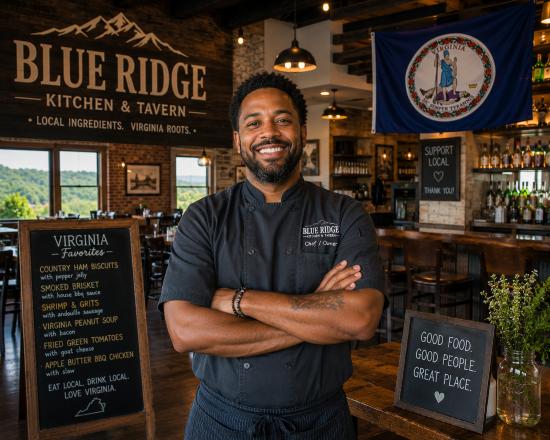
We know Williamsburg's restaurant scene block by block
Williamsburg's restaurant scene runs through a historic district owned by a private foundation and a shopping square deliberately designed to hide anything modern. Here's what we watch for across its districts.
Colonial Williamsburg Historic Area
A 301-acre district owned and operated by the Colonial Williamsburg Foundation, a private nonprofit, not a government entity. Restaurants here operate under the Foundation's own standards, a genuinely unusual landlord and permitting layer.
Merchants Square
Built in 1927 as one of the first planned shopping districts in the country, with telephone wires deliberately buried to preserve the colonial illusion. Any modern buildout must work within this intentional historic-character constraint.
New Town
A newer 365-acre mixed-use development opened around 2002. More consistent, local and commuter-driven traffic creates a different risk profile than tourist-zone dining.
Richmond Road corridor
Home to a major outlet mall drawing regional day-trip traffic. Seasonal shopping surges and large parking lots create distinct liability exposure from historic-area tourism.
Core coverage lines every Williamsburg restaurant should evaluate
Restaurant insurance in Williamsburg is a tailored bundle built around Virginia law, local licensing, and your lease. Here's what actually protects Williamsburg food service businesses.
General Liability Insurance
Protects against third-party bodily injury and property damage claims. Responds when guests slip, suffer foodborne illness, or get injured during delivery. Most landlords require $1M/$2M before lease signing.
Commercial Property Insurance
Covers your kitchen equipment, refrigeration and HVAC, tenant improvements, inventory, and business personal property against fire, equipment breakdown, and theft.
Business Owner's Policy (BOP)
Bundles general liability, commercial property, and business interruption into one package. Works best for single-unit restaurants with annual revenue under $3 million.
Liquor Liability Insurance
Protects restaurants serving alcohol from dram shop claims. Restaurants with liquor licenses typically must carry liquor liability coverage to maintain their permit.
Workers' Compensation Insurance
Covers medical expenses and lost wages for work-related injuries. Coverage requirements are set at the state level and apply to restaurants with employees.
Business Interruption Insurance
Replaces lost income and covers ongoing expenses when covered events force shutdowns or reduced capacity. Limits should reflect 3 to 6 months of net income plus fixed expenses.
What restaurant insurance typically costs in Williamsburg
A rough range based on real Virginia market data. Not a quote, just a starting point before you talk to an agent about your specific Williamsburg location.
| Coverage Type | Typical Annual Range | Why It Varies in Williamsburg |
|---|---|---|
| General Liability Insurance | $600–$1,800/yr | Scales with your landlord's required limits and your building's age, especially in Virginia's historic downtown corridors. |
| Commercial Property w/ Earthquake Endorsement | $1,200–$4,000/yr | The 2011 Mineral earthquake caused $300 million in regional structural damage that standard property policies did not cover. Central Virginia corridor locations should add an earthquake endorsement. |
| Liquor Liability Insurance | $1,000–$3,500/yr | Virginia has no general dram shop liability statute, but the minor-service exception under § 4.1-305 keeps real exposure alive, and Mixed Beverage licenses carry their own compliance requirements. |
| Workers' Compensation | Payroll-class rated | Mandatory once a Virginia restaurant reaches 3 or more employees (Va. Code § 65.2-300), priced by payroll and job classification. |
| Named-Storm / Coastal Flood Coverage | Rated by exposure | Williamsburg's tourism swings dramatically between peak summer crowds and quiet winters, a real, predictable seasonal pattern worth building into your business-interruption and staffing coverage. |
| Full-Service w/ Mixed Beverage License, Bundled | $6,500–$15,000/yr | Hampton Roads locations run higher given named-storm deductibles and coastal flood exposure; Central Virginia corridor locations should add an earthquake endorsement. |
Why a private foundation, not the city, governs much of Williamsburg's Historic Area
Williamsburg restaurant coverage has to account for a genuinely unusual private-foundation landholding and a reconstructed, not purely original, historic district, on top of Virginia ABC's control-state liquor licensing.
Colonial Williamsburg's Historic Area is privately owned, not city property
The Colonial Williamsburg Foundation, a private nonprofit originally endowed by the Rockefeller family, owns and operates the 301-acre Historic Area, a genuinely unusual structure for a historic district this size. Restaurants here answer to the Foundation's own standards on top of standard city and county requirements.
Most of the Historic Area's buildings are reconstructions, not originals
Of roughly 500 buildings in the district, only 88 are labeled truly original. The restoration, which began with John D. Rockefeller Jr.'s 1927 investment, actually demolished 720 buildings postdating 1790 to recreate the colonial-era streetscape, a genuinely surprising fact worth knowing. Food establishment permitting runs through the James City County health district covering this area.
How Colonial Williamsburg's private ownership affects a Historic Area restaurant's lease
Williamsburg's genuinely unusual private-foundation landholding is a specific factor that a generic Virginia policy doesn't fully account for.
You're opening a restaurant inside the Colonial Williamsburg Historic Area, on land owned by a private nonprofit rather than the city.
- The structure: The Colonial Williamsburg Foundation, not the City of Williamsburg, owns and operates the 301-acre Historic Area, meaning your lease and buildout standards run through the Foundation's own review process on top of standard local requirements.
- The gap: A generic buildout and liability timeline may not reflect this dual-layer approval structure specific to the Historic Area.
- The fix: Your lease terms, buildout timeline, and coverage start date are confirmed against the Foundation's actual requirements, not a generic city-only assumption.
- The result: Coverage and planning that reflects how a Colonial Williamsburg Historic Area lease actually works.
This is exactly why Williamsburg-specific coverage matters. A generic Virginia policy doesn't automatically account for a private landholding structure this unusual.
Frequently asked questions
What insurance is required to open a restaurant in Williamsburg, Virginia?
Virginia requires workers' compensation once you reach 3 or more employees, general liability to meet most lease agreements, and a food establishment permit through the local health district covering Williamsburg and James City County. A liquor license through Virginia ABC is required separately if you serve alcohol.
How much does restaurant insurance cost in Williamsburg, Virginia?
A small Williamsburg cafe or takeout spot can find coverage for around $1,200/yr, a standard mid-sized restaurant runs $2,800-$6,000/yr, and a large full-service restaurant with a high-volume bar can reach $9,000-$18,000+/yr. Williamsburg's significant seasonal tourism spikes from Colonial Williamsburg and Busch Gardens mean insurers look at peak projected gross receipts rather than an annual average, which elevates liability costs compared to a non-tourist town.
Does a Williamsburg restaurant need coverage for its own delivery drivers?
Yes, if staff use their own vehicles for delivery rather than relying entirely on third-party apps. A standard personal auto policy won't cover a work-related accident, so adding Hired and Non-Owned Auto (HNOA) coverage, typically $500-$1,500/yr, closes that gap alongside standard general liability and property coverage.
Does a Williamsburg restaurant's alcohol sales ratio actually change its insurance cost?
Yes. Establishments with higher alcohol-to-food sales ratios see meaningfully higher liquor liability premiums under Virginia ABC licensing, since carriers price that coverage directly against how much of total revenue comes from alcohol. Certifying servers through a recognized alcohol training program is one of the more reliable ways to earn a discount on that line item.
How much does seasonal tourism actually affect Williamsburg restaurants?
Significantly. The Historic Triangle draws heavy seasonal tourism, with dramatic swings between packed summer crowds and much quieter winters, a real, predictable pattern worth building into staffing and business-interruption coverage rather than a flat year-round assumption.
Get Williamsburg restaurant coverage built around your actual location and seasonal tourism swing.
Tell us your concept and your Williamsburg location. We'll put together the coverage that actually applies.
Get Your Free Quote →