




Restaurant Insurance in Richmond, Virginia
If you're a Richmond restaurant owner searching for insurance that actually understands the city's real flood-prone warehouse district, a genuinely misunderstood neighborhood name, and neighborhoods from Carytown to Scott's Addition, Insurance Kitchen builds coverage around that reality. Hurricane Gaston flooded Shockoe Bottom in 2004, forcing business closures and building condemnations, and the 2011 Mineral earthquake struck roughly 38 miles from Richmond, causing a documented $300 million in regional structural damage. We build Richmond restaurant coverage around your actual neighborhood and flood or earthquake exposure.
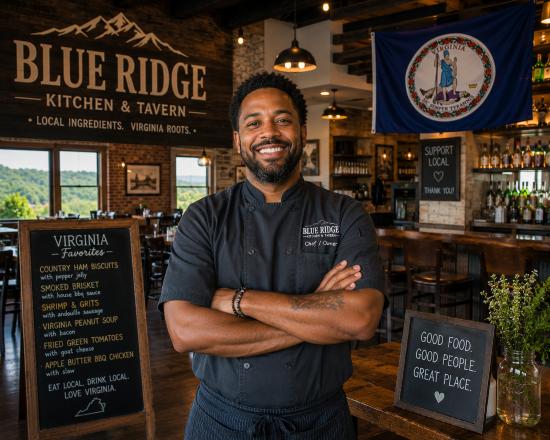
We know Richmond's restaurant scene block by block
Richmond's restaurant scene runs through a converted tobacco-warehouse district with a real flood history and a neighborhood whose name most people get wrong. Here's what we watch for across its districts.
Carytown / Museum District
A dense 1920s-era retail corridor along Cary Street. Attached and adjacent-building exposure raises fire-spread and heavy foot-traffic slip-and-fall risk.
Shockoe Bottom
A former tobacco-warehouse district in the low-lying Shockoe Creek basin. Hurricane Gaston flooded the district in 2004, forcing business closures and building condemnations, a real, documented flood benchmark.
Church Hill
Richmond's oldest neighborhood, built on the original 17th-century city plat with dense 19th-century rowhouse stock. Historic-building code and renovation exposure applies here.
Scott's Addition
A former industrial and rail district, rezoned in 1927, now adaptively reused as one of Richmond's most brewery-dense neighborhoods following a 2010s state law change allowing breweries without food service. Alcohol-heavy tenant mix raises liquor liability exposure.
The Fan District
One of the longest intact stretches of Victorian architecture in the country, VCU-adjacent. High foot traffic and street-parking exposure combine with historic-building fire code considerations.
Core coverage lines every Richmond restaurant should evaluate
Restaurant insurance in Richmond is a tailored bundle built around Virginia law, local licensing, and your lease. Here's what actually protects Richmond food service businesses.
General Liability Insurance
Protects against third-party bodily injury and property damage claims. Responds when guests slip, suffer foodborne illness, or get injured during delivery. Most landlords require $1M/$2M before lease signing.
Commercial Property Insurance
Covers your kitchen equipment, refrigeration and HVAC, tenant improvements, inventory, and business personal property against fire, equipment breakdown, and theft.
Business Owner's Policy (BOP)
Bundles general liability, commercial property, and business interruption into one package. Works best for single-unit restaurants with annual revenue under $3 million.
Liquor Liability Insurance
Protects restaurants serving alcohol from dram shop claims. Restaurants with liquor licenses typically must carry liquor liability coverage to maintain their permit.
Workers' Compensation Insurance
Covers medical expenses and lost wages for work-related injuries. Coverage requirements are set at the state level and apply to restaurants with employees.
Business Interruption Insurance
Replaces lost income and covers ongoing expenses when covered events force shutdowns or reduced capacity. Limits should reflect 3 to 6 months of net income plus fixed expenses.
What restaurant insurance typically costs in Richmond
A rough range based on real Virginia market data. Not a quote, just a starting point before you talk to an agent about your specific Richmond location.
| Coverage Type | Typical Annual Range | Why It Varies in Richmond |
|---|---|---|
| General Liability Insurance | $600–$1,800/yr | Scales with your landlord's required limits and your building's age, especially in Virginia's historic downtown corridors. |
| Commercial Property w/ Earthquake Endorsement | $1,200–$4,000/yr | The 2011 Mineral earthquake struck roughly 38 miles northwest of Richmond and caused a documented $300 million in regional structural damage, a real benchmark for earthquake endorsement coverage here. |
| Liquor Liability Insurance | $1,000–$3,500/yr | Virginia has no general dram shop liability statute, but the minor-service exception under § 4.1-305 keeps real exposure alive, and Mixed Beverage licenses carry their own compliance requirements. |
| Workers' Compensation | Payroll-class rated | Mandatory once a Virginia restaurant reaches 3 or more employees (Va. Code § 65.2-300), priced by payroll and job classification. |
| Named-Storm / Coastal Flood Coverage | Rated by exposure | Hampton Roads and coastal Virginia locations face real named-storm deductibles and flood exposure most inland restaurants don't carry. |
| Full-Service w/ Mixed Beverage License, Bundled | $6,500–$15,000/yr | Hampton Roads locations run higher given named-storm deductibles and coastal flood exposure; Central Virginia corridor locations should add an earthquake endorsement. |
Why Shockoe Bottom's flood history and the Fan's real name origin both matter
Richmond restaurant coverage has to account for real, documented flood history and a genuinely misunderstood neighborhood story, on top of Virginia ABC's control-state liquor licensing.
Shockoe Bottom's flood history is real and documented
Hurricane Gaston in 2004 caused major flooding of Shockoe Creek in Shockoe Bottom, forcing business closures and building condemnations. The James River Flood Wall and Canal Walk, completed in 1995, substantially reduced river-flood risk to the district, but the creek-basin location remains a real, checkable factor for property coverage here.
The Fan District's name isn't what most people assume
Despite its Victorian-era streetscape, the name "the Fan" was actually coined by a mid-20th-century Richmond Times-Dispatch editorial, not a colonial-era nickname. Confirm your food establishment permitting directly with the City of Richmond, since Richmond runs its own health district separate from state-level ABC licensing.
How Shockoe Bottom's flood history affects a warehouse-district restaurant's coverage
Richmond's real, documented flood history is a specific factor that a generic Virginia policy doesn't fully account for.
You're opening a restaurant in a converted tobacco warehouse in Shockoe Bottom, in a district with a real, dated flood event on record.
- The history: Hurricane Gaston flooded Shockoe Creek in 2004, forcing business closures and building condemnations in the district, even after the 1995 James River Flood Wall reduced direct river-flood risk.
- The gap: A property policy priced without confirming current creek-basin flood-zone status may understate real risk for a specific Shockoe Bottom address.
- The fix: Property and business-interruption coverage are reviewed against your building's actual flood-zone designation and this real, documented history.
- The result: Coverage that reflects what Shockoe Bottom's creek basin has actually done before.
This is exactly why Richmond-specific coverage matters. A generic Virginia policy doesn't automatically account for flood risk this well documented.
Frequently asked questions
What insurance is required to open a restaurant in Richmond, Virginia?
Virginia requires workers' compensation once you reach 3 or more employees, general liability to meet most lease agreements, and a food establishment permit through the city's health district. A liquor license through Virginia ABC is required separately if you serve alcohol, since Virginia is a control state for distilled spirits.
Did Shockoe Bottom really flood in 2004?
Yes. Hurricane Gaston caused major flooding of Shockoe Creek in Shockoe Bottom in 2004, forcing business closures and building condemnations, a real, documented event worth reflecting in property coverage for the district today.
How much does restaurant insurance cost in Richmond, Virginia?
Richmond restaurants typically pay $3,000 to $15,000 a year, with small cafes at the $1,200-$5,000/yr end and large or multi-location establishments exceeding $10,000-$25,000/yr. Virginia does not enforce strict dram shop laws holding bars liable for a drunk patron's actions, though a Virginia ABC license still requires dedicated liquor liability coverage. Workers' compensation is mandatory once a restaurant regularly employs 3 or more people, and skipping it carries state fines up to $50,000; operating in a historic neighborhood like The Fan or Shockoe Slip can also push property rates up given older building wiring and plumbing.
How did the 2011 earthquake actually affect the Richmond area?
The epicenter struck roughly 38 miles northwest of Richmond near Mineral, Virginia, causing a documented $300 million in regional structural damage, mostly in Louisa County. It was widely felt across the Richmond area, a real reminder that standard property policies exclude earthquake coverage entirely.
Why is Scott's Addition known as one of Richmond's booziest neighborhoods?
A 2010s Virginia law change allowed breweries to operate without offering food service, and Scott's Addition, a former industrial and rail district rezoned in 1927, became one of the city's most brewery-dense neighborhoods as a result, a real factor in liquor liability exposure there.
Get Richmond restaurant coverage built around your actual neighborhood and flood or earthquake exposure.
Tell us your concept and your Richmond neighborhood. We'll put together the coverage that actually applies.
Get Your Free Quote →