One Claim Can Close A Restaurant. Don't Let That Be Yours.
Access Tailored Restaurant Insurance in Vermont
Vermont rewrote its dram shop law in 2023, made liquor liability insurance mandatory for on-premises licensees starting July 1, 2026, and then watched July 2023 flooding turn Montpelier’s downtown into a disaster zone where water topped four feet inside occupied businesses. In twelve months, Vermont had five separate federally declared flood disasters covering all 14 counties. Property carriers are re-rating, non-renewing, and in some cases exiting the Vermont market entirely. Standard commercial property policies — the ones most Vermont restaurants are carrying right now — covered none of those flood losses.
For restaurant operators in Vermont, the insurance picture in 2025 looks materially different than it did three years ago. The dram shop reform changed what you owe in a liquor liability lawsuit. The mandatory insurance deadline is on the calendar. And the flood events have made commercial property underwriting across the state an active, ongoing negotiation rather than a renewal formality.
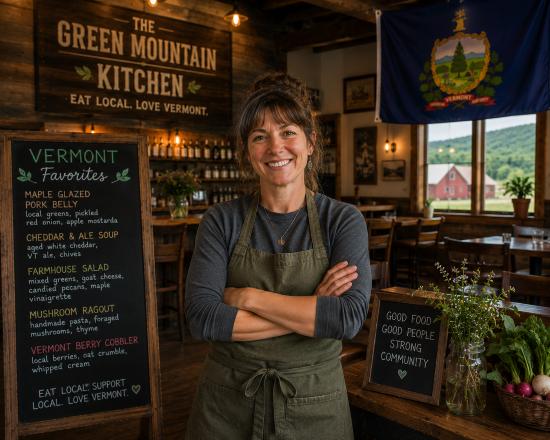
The Insurance Kitchen places restaurant coverage across Vermont from Burlington and Montpelier to Stowe, Killington, and the Northeast Kingdom, and we build programs around what this state’s specific regulatory and risk environment currently requires.
100%
Restaurant-Only Focus
12+
Carrier Markets
VT
Licensed Agents
Our Top A+ Rated Restaurant Insurance Carriers
Every carrier in our restaurant program holds an A+ rating from AM Best. We work with national carriers who write restaurant policies at volume, which means your coverage comes with the claims infrastructure, underwriting depth, and policy language that general business insurers do not offer. Our role is to match your specific concept, size, and risk profile to the carrier whose appetite fits, not just whoever has the lowest opening premium.
COVERAGE AREAS
What Vermont Restaurant Owners Need to Know Before Buying Coverage
Vermont’s Dram Shop Law Changed in 2023 — Here’s What That Means
Vermont’s original 1987 dram shop statute held licensed vendors to a strict liability standard, making Vermont one of the two riskiest states in the country for insuring bars and restaurants, with ISO rating it a maximum risk 10 for liquor liability. Act 17, signed May 2023, shifted the standard to negligence under 7 V.S.A. § 501. A vendor is now liable when alcohol was served to someone apparently under the influence or in a quantity where intoxication would be reasonably expected. Act 17 also removed landlords from the liability chain and reopened the insurance market, with ISO re-rating Vermont from 10 to 5. The current statute incorporates a foreseeability element based on quantity served, meaning documented server training, written cut-off policies, and consistent enforcement remain the primary tools for defending against claims. The Vermont Supreme Court’s ruling in Winney v. Ransom & Hastings (1988) established that § 501 provides the exclusive statutory remedy, preventing plaintiffs from stacking a separate common law negligence theory on top of a dram shop claim.
Liquor Liability Insurance Is Becoming Mandatory — July 1, 2026
Act 156 (2024) extended the compliance deadline originally set for July 1, 2024. As of July 1, 2026, all First, Third, and Fourth Class licensees must carry liquor liability insurance meeting minimum coverage requirements set by the Department of Liquor and Lottery as a condition of license renewal under 7 V.S.A. § 501. An operator who cannot produce a compliant certificate of insurance at renewal will not receive a renewed license. Operators currently running on a First or Third Class license without liquor liability coverage should begin the placement process well before the July 1, 2026 deadline, as a dram shop claim without coverage exposes the operator personally to the full judgment plus defense costs.
Vermont’s July 2023 Floods Exposed a Gap Most Restaurants Didn’t Know They Had
On July 10 and 11, 2023, a slow-moving storm dropped six to nine inches of rain across Vermont in 48 hours. The Winooski River crested near record levels, downtown Montpelier flooded with water exceeding four feet inside ground-floor businesses, and estimated business damages in Montpelier alone reached $100 million. FEMA declared a major disaster under DR-4720. Standard commercial property policies exclude flood damage entirely, and standard business interruption coverage only pays when the underlying closure is caused by a covered peril. Restaurants that flooded without separate flood insurance received nothing from their property carrier. Vermont has five federal disaster declarations covering 2023 and 2024 across all 14 counties, and more than 70 percent of recent Vermont flooding has occurred outside designated Special Flood Hazard Areas. River-valley restaurant corridors along the Connecticut, Winooski, Black, and White Rivers carry meaningful flood exposure regardless of FEMA flood zone designation.
To-Go Cocktails Are Now Permanently Legal — and They Expand Your Liquor Liability Exposure
In June 2025, Governor Scott signed legislation making to-go alcoholic beverage sales permanently legal for First and Third Class licensees, making Vermont the 30th state to permanently authorize cocktails-to-go. Customers must also purchase food, and beverages must remain sealed until reaching a private residence. Permanent to-go authority changes the liability calculus: when a patron purchases an alcoholic beverage to go, consumes it off-premises, and causes harm, the question of whether your establishment was the place of last service becomes more complex. Operators should review their liquor liability policy to confirm it covers to-go sales and off-premises consumption scenarios, as standard liquor liability forms were written before permanent to-go programs existed and endorsements addressing to-go coverage territory should be verified with the carrier before relying on the base form.
General liability covers third-party bodily injury, property damage, and personal injury claims.
Vermont restaurants face slip-and-fall exposure on wet floors and icy surfaces, customer injuries in dining rooms and parking lots, and food contamination claims. Winter conditions including ice on exterior surfaces, wet entries from snow and slush, and inadequate de-icing on sidewalks materially increase premises liability frequency from November through April. Documented snow removal and de-icing programs are underwriting requirements for Vermont accounts with significant winter foot traffic. Standard minimums run $1 million per occurrence and $2 million aggregate.
Vermont’s commercial property market is hardening in the aftermath of the July 2023 floods and subsequent disaster declarations.
Carriers are re-rating accounts in flood-exposed areas, increasing deductibles on wind and water perils, and in some cases declining to renew Vermont commercial property risks. Rate increases of 15 to 30 percent on renewal are documented in flood-affected areas. Restaurant operators renewing commercial property coverage in 2025 and 2026 should anticipate more underwriting scrutiny, higher premiums, and potentially narrower terms than prior renewal cycles, particularly for river-valley locations.
Vermont requires workers’ compensation from the first employee with no minimum headcount exemption.
Coverage is placed through private commercial carriers under NCCI rules, with full-service restaurants running under Class Code 9082. Penalties for non-compliance run at $100 per day for the first seven days escalating to $150 per day thereafter, plus stop-work orders and loss of exclusive remedy protection. SB 117, effective July 1, 2025, added three new compliance obligations: mandatory translation services for injured workers who do not speak English fluently, escalating late benefit payment penalties of 5 percent on first offense and 10 percent on second, and quarterly reporting requirements beginning October 2025.
Vermont’s Act 17 (2023) moved the state from strict liability to a negligence-adjacent standard requiring apparent intoxication or a quantity-based foreseeability finding, reducing the carrier risk profile and reopening the market.
Act 156 (2024) made coverage mandatory for First, Third, and Fourth Class licensees by July 1, 2026 under 7 V.S.A. § 501. A dram shop claim under the current statute can still produce a significant judgment, and defense costs alone on a contested claim can exhaust the resources of most small operators without coverage. Vermont’s dram shop statute imposes no cap on damages.
Umbrella coverage extends general liability, liquor liability, and employer’s liability above primary limits.
Vermont’s dram shop statute imposes no cap on damages, meaning an uncapped judgment on a serious third-party injury case can exceed primary limits, particularly given the foreseeability-based quantity standard that can attach liability to high-volume service regardless of visible signs. For high-volume ski corridor restaurants in Stowe, Killington, and Mad River Glen running peak business in tight winter windows, umbrella coverage is a critical buffer above primary lines.
Flood coverage is a separate purchase from your commercial property policy and the most urgent coverage gap for any Vermont river-valley restaurant.
NFIP commercial flood coverage provides limits of $500,000 for building and $500,000 for contents through FEMA-participating insurers, with approximately 90 percent of Vermont communities participating. Private flood insurance is available above those limits and typically includes broader business interruption coverage than NFIP commercial policies. A Vermont restaurant with $1.5 million in building value needs private excess flood coverage beyond the NFIP maximum. The NFIP 30-day waiting period means flood coverage must be in place before the need arises.
A Business Owner’s Policy bundles general liability, commercial property, and business interruption into a single contract at a combined premium typically lower than purchasing each separately.
Not every Vermont operation qualifies, as carriers apply eligibility based on revenue, square footage, and operation type. River-valley restaurants in Montpelier, Barre, and Ludlow corridor markets frequently fall outside standard BOP eligibility due to flood exposure following Vermont’s July 2023 disaster declarations and subsequent market hardening. Ski corridor operations in Stowe, Killington, and Mad River Glen may face BOP eligibility restrictions due to seasonal revenue concentration. A BOP does not replace workers’ compensation, liquor liability, or commercial auto. It is a foundation, not a finished program.
Vermont’s data breach notification law requires notification to affected residents without unreasonable delay following discovery of a breach involving personal information.
Ransomware attacks and card skimming events are the leading non-weather small business claim type for restaurants processing credit card transactions through POS systems and online ordering platforms. Cyber liability covers forensic investigation, notification and credit monitoring costs, regulatory response, and business income lost during system downtime. POS system breaches can expose hundreds of cardholder records and trigger mandatory individual notification obligations under Vermont law.
Food spoilage coverage pays for perishable inventory losses from refrigeration failures or power outages.
Vermont’s winter storms and July-pattern flood events create multi-day outage exposure for river-valley and ski corridor restaurants alike. Contamination coverage extends to foodborne illness incidents requiring professional sanitation and temporary closure, a distinct exposure for Vermont restaurants sourcing ingredients from local farms, independent foragers, and farmers markets where commercial supply chain traceability is limited. Vermont food establishments are inspected by the Vermont Department of Health on a risk-based schedule, and compliance gaps revealed during inspections can become a liability factor in any subsequent foodborne illness claim.
Commercial kitchen equipment failure is among the most common non-weather property claims for Vermont restaurants.
Walk-in coolers, commercial ovens, hood suppression systems, and refrigerated prep tables are excluded from standard property policies under the mechanical breakdown exclusion. Equipment breakdown coverage pays to repair or replace failed equipment and covers resulting spoilage losses. Vermont winters create additional equipment stress through frozen and burst pipes, heating system failures, and ice-related mechanical damage that can fall between property and equipment breakdown coverage if policies are not coordinated.
Business interruption covers lost revenue and continuing fixed costs during a covered closure.
Vermont restaurants face three distinct BI issues. Flood exclusion means a July flood closure generates no BI payout without separate flood coverage that includes a BI component. Seasonal revenue concentration in ski resort corridor restaurants generating 60 to 80 percent of annual revenue between December and March requires BI limits reflecting peak-season revenue rather than 12-month averages. Vermont operators in seasonal markets should negotiate agreed value coverage or a waiver of coinsurance to avoid underinsurance penalties at the time of a peak-season loss.
Vermont has an unusually active labor law environment with direct EPLI exposure for restaurant operators.
The Vermont Human Rights Commission enforces state anti-discrimination and harassment protections aggressively. Tip pool compliance requires careful attention: when a tip credit is taken, pools are restricted to employees who customarily and regularly receive tips, excluding back-of-house staff. Including even one prohibited employee in a tip pool under a tip credit arrangement invalidates the entire pool and creates a wage claim exposure. EPLI covers defense costs and judgments from wrongful termination, harassment, discrimination, and wage and hour disputes, but operators should confirm their form covers wage and hour claims as many standard policies exclude them or apply a sublimit.
WHO WE SERVE
Vermont Restaurant Insurance by Restaurant Type
🍽️
Full-service Vermont restaurants carry general liability, liquor liability under 7 V.S.A. § 501 with limits reflecting the foreseeability-based quantity standard, workers’ comp from the first employee under NCCI Class Code 9082, commercial property with regional risk reviewed by location, and business interruption sized to seasonal revenue concentration. River-valley locations along the Connecticut, Winooski, Black, and White Rivers must address flood exposure separately from standard property coverage. Vermont’s mandatory liquor liability requirement under Act 156 takes effect July 1, 2026, and server training documentation should be maintained for every alcohol service employee.
🥡
Fast casual operations typically have limited liquor exposure but face general liability, workers’ comp from the first employee under NCCI Class Code 9083, and equipment breakdown for high-volume refrigeration and cooking lines. Winter conditions create elevated slip-and-fall exposure on icy entryways and parking lots from November through April. Documented snow removal and de-icing programs are underwriting requirements for Vermont accounts with significant winter foot traffic. Hired and non-owned auto coverage is important for any fast casual operation using employee personal vehicles for delivery.
🚚
Vermont food trucks need commercial auto for the vehicle, general liability, and product liability for every item sold. Workers’ comp applies from the first employee. Seasonal operation considerations are significant for Vermont food trucks operating at ski resort markets in winter and farmers markets and outdoor festivals in summer. Commissary agreement additional insured requirements should be confirmed before operating at a commissary location. Food trucks serving alcohol at events under Vermont DLC permits carry liquor liability exposure under the Act 17 negligence standard and the mandatory coverage requirement effective July 1, 2026.
🍱
Vermont caterers face product liability and food contamination risk on every event. Catering-specific coverage addresses off-premises general liability with products and completed operations, hired-and-non-owned auto, and event cancellation. Caterers providing alcohol service at events carry exposure under 7 V.S.A. § 501 and must confirm their liquor liability policy covers to-go cocktail service and off-premises consumption scenarios following Vermont’s permanent to-go authorization in June 2025. Product liability review for events featuring locally sourced or foraged ingredients is particularly important given Vermont’s farm-to-table supply chain risk.
☕
Vermont cafes with limited or no alcohol service focus on general liability, commercial property with flood exposure reviewed for river-valley locations, equipment breakdown for espresso machines and refrigerated cases, and food spoilage. Workers’ comp applies from the first employee. Vermont’s earned sick time law applies to all employers regardless of size, and compliance documentation should be current. Cyber liability is important for any cafe running POS systems and online ordering platforms under Vermont’s data breach notification law.
🍕
Pizzerias combine delivery auto risk, burn injury workers’ comp exposure, and general liability. Hired and non-owned auto coverage is critical for delivery operations using employee personal vehicles on Vermont’s winter road conditions. Workers’ comp applies from the first employee, including part-time delivery drivers under NCCI rules. Pizzerias with beer and wine service carry liquor liability exposure under Vermont’s Act 17 negligence standard and must comply with the mandatory coverage requirement effective July 1, 2026. Server training documentation should be maintained for all alcohol service employees.
🥂
Vermont fine dining restaurants carry full bar service and the full liquor liability profile under 7 V.S.A. § 501 with no statutory cap on damages. Stowe, Woodstock, and Burlington fine dining operations serve high-income tourist and resort markets with elevated transaction volumes and higher average spend per table, increasing both liquor liability severity and commercial property values. High-value wine inventory should be scheduled under the property policy with specific valuation. Agreed-value property coverage for custom buildouts is standard, and umbrella above primary limits is appropriate for high-volume operations.
👻
Vermont ghost kitchens carry product liability for every delivered order and need commercial property with flood exposure reviewed for river-valley locations. Workers’ comp applies from the first employee. Cyber liability is the primary coverage consideration given all-digital revenue streams, and Vermont’s data breach notification law creates mandatory individual notification obligations following any POS or online ordering platform breach. Delivery drivers on payroll rather than classified as independent contractors trigger the workers’ comp obligation from the first hire.
🥐
Vermont bakeries face product liability for allergen disclosure failures, workers’ comp for burn and repetitive motion injuries, and commercial property coverage for ovens and equipment. Equipment breakdown for commercial mixers and deck ovens is important. Operators selling at Burlington’s Church Street Marketplace, Montpelier farmers markets, or outdoor summer events need off-premises general liability coverage for those events. River-valley bakeries in Montpelier and Barre should confirm flood coverage addresses building and contents exposure separately from the standard commercial property policy.
🏢
Vermont franchise operators must meet franchisor insurance specifications while layering in state-specific requirements. Vermont’s mandatory liquor liability requirement under Act 156 effective July 1, 2026, the first-employee workers’ comp threshold, the earned sick time mandate applying to all employers, and the farm-to-table product liability exposure are all Vermont-specific factors that standard franchise insurance templates may not address. Operators should review the franchise agreement’s insurance exhibit with their broker against Vermont’s regulatory environment.
🗂️
Vermont restaurant groups operating across Burlington, Montpelier, Stowe, Woodstock, and ski corridor markets face dramatically different seasonal revenue profiles, flood exposure by location, and liquor liability considerations under Act 17’s negligence standard. A master commercial policy with scheduled locations, business interruption limits calibrated to peak-season revenue by location, and umbrella coverage applied uniformly across all locations is the most efficient structure. Flood coverage must be addressed separately for each river-valley location, and mandatory liquor liability compliance under Act 156 must be confirmed across every licensed location before July 1, 2026.
Vermont-Specific Factors Every Restaurant Owner Must Understand
First and Third Class Liquor Licenses
- Vermont’s Department of Liquor and Lottery (DLL) issues two primary on-premises licenses relevant to restaurants. The First Class License covers beer and wine service and costs $115 to the DLL plus $115 to the local municipality ($230 total annually). First Class applications go to the town or city first for local approval before proceeding to the DLL. The Third Class License adds spirits (liquor) to the permitted alcohol program and costs $1,095 annually (or $550 for a six-month license). Unlike the First Class, Third Class applications go directly to the DLL without a prior local approval step. A restaurant operating a full bar program holds both licenses at a combined cost of approximately $1,325 per year. Both First and Third Class licensees must carry liquor liability insurance meeting DLL minimum requirements at issuance and renewal — a mandate written directly into 7 V.S.A. § 501 and enforceable as a license condition as of July 1, 2026 under Act 156.
Vermont’s Local Option Tax
- Municipalities may adopt a Local Option Tax of 1 percent on meals and alcohol through a town vote. Vermont’s meals and alcohol LOT are linked — a town cannot adopt one without the other. In participating municipalities (which include Burlington, Stowe, and other tourism-heavy communities), the effective meals and alcohol tax rate is 10 percent (9 percent state base plus 1 percent LOT). The state retains 25 percent of LOT revenue and remits 75 percent to the municipality. For restaurant operators in LOT-participating towns, the additional 1 percent applies to all on-premises food and alcohol sales and must be collected and remitted separately.
Vermont Health and Food Safety Licensing
- The Vermont Department of Health Food and Lodging Program licenses and inspects all food service establishments. Applications must be submitted at least 30 days before planned opening and include the menu, water system documentation, and wastewater approvals if applicable. An on-site opening inspection is required before service begins. Inspections are risk-based and unannounced; establishments must score 70 or higher and have no uncorrected critical violations to maintain licensure. Inspection results are publicly searchable at vtdoh.safefoodinspection.com. Vermont recommends but does not mandate a Certified Food Protection Manager (CFPM) credential at every food service establishment — the standard is less stringent than states that require it by statute. ServSafe Manager Certification (5-year validity) is the dominant credential used for compliance documentation.
Vermont Wage Requirements
- Vermont’s minimum wage is $14.01 per hour for 2025, increasing to $14.42 per hour in 2026, indexed annually to CPI-U. The tip credit maximum is 50 percent of the applicable minimum wage: tipped employees may be paid a cash wage of $7.01 per hour in 2025 (rising to $7.21 in 2026), provided tips bring total compensation to the full minimum wage in every workweek. Vermont’s Earned Sick Time Law (21 V.S.A. §§ 481–485) applies to all restaurant employers: employees accrue one hour of paid sick leave per 52 hours worked, capped at 40 hours annually, usable after one year of employment. Recordkeeping must be maintained for at least three years.
Vermont Property Risk by Location
- River Valley Corridors (Winooski, Connecticut, Black, White Rivers): Flood is the dominant uninsured risk. The July 2023 disaster demonstrated that river valley flooding in Vermont can be catastrophic and rapid. NFIP commercial policies cover up to $500,000 in building and $500,000 in contents. Restaurant operators with higher replacement values need private excess flood coverage. The market for Vermont flood insurance has tightened since 2023 — secure coverage and keep it in force; the NFIP 30-day waiting period means coverage cannot be placed reactively.
- Ski Resort Corridors (Stowe, Killington, Sugarbush, Okemo, Mad River Glen): Seasonal revenue concentration is the lead insurance issue. Restaurants generating 60 to 80 percent of annual revenue between December and March face catastrophic business interruption exposure during peak season. A December fire or January flood at a resort-area restaurant produces a loss measured against peak-season revenue. Business interruption limits must reflect that concentration. Winter premises liability — ice, snow, wet entries — drives GL frequency during the exact months when these restaurants are most exposed to customer volume.
- Burlington and Urban Centers: Higher worker density, greater workers’ comp exposure, and the most active EPLI environment in the state given Vermont’s progressive labor law culture and Human Rights Commission enforcement patterns. Cyber liability is a more acute exposure in urban markets where online ordering and reservation platforms process higher transaction volumes.
- Northeast Kingdom and Rural Vermont: Fire is the primary property peril in areas with longer emergency response times. Business interruption waiting periods matter more when response and restoration take longer. Workers’ comp coverage is essential regardless of remoteness — the penalty structure and loss-of-exclusive-remedy consequence apply statewide.
WHY INSURANCE KITCHEN
Why Restaurant Owners Choose Us
We specialize exclusively in food service operations. Every carrier we access, every policy we place, is built around restaurant risk — not adapted from a general commercial template.
We shop 12+ carriers to find the right match for your operation — not just the first carrier who will write the policy. Your coverage should reflect your specific risk profile.
Fast Turnaround
Most restaurants get coverage options within 24 – 48 hours. Opening soon, renewing, or replacing a policy that’s not working — we move fast because your timeline matters.
COMMON QUESTIONS
Vermont Restaurant Insurance FAQs
What did Vermont's Act 17 actually change about dram shop liability?
Act 17, signed in May 2023, replaced Vermont’s 1987 strict liability dram shop standard with a negligence-adjacent standard. Under the original law, plaintiffs did not need to prove negligence — service to an intoxicated person was enough for liability. The old standard made Vermont one of the two riskiest states nationally for liquor liability underwriting and caused carriers to stop quoting Vermont restaurant accounts. Act 17 requires that service occur when the patron was apparently under the influence, or in a quantity where intoxication would reasonably be expected. Act 17 also removed landlords from the liability chain. ISO re-rated Vermont from a 10 to a 5 following the reform, and the market reopened.
When does liquor liability insurance become mandatory for Vermont restaurants?
July 1, 2026. Act 156 (2024) set that deadline for all First, Third, and Fourth Class licensees — restaurants and bars serving alcohol on-premises. The mandate is written directly into 7 V.S.A. § 501 and is enforced as a condition of license issuance and renewal. An operator who cannot produce a compliant certificate of insurance at renewal will not receive a renewed license. The practical timeline for placement is several months before the deadline to allow for underwriting, quoting, and documentation.
My restaurant is in Montpelier — what flood coverage do I actually need?
At minimum, an NFIP commercial flood policy covering building ($500,000 maximum) and contents ($500,000 maximum). If your building replacement value or contents value exceeds those limits, you need private excess flood coverage above the NFIP caps. Your standard commercial property policy covers none of the flood damage from a July 2023-type event. NFIP policies also do not cover business interruption losses — revenue lost during a flood-related closure requires a separate endorsement from a private market carrier. Given that the July 2023 event displaced Montpelier businesses for weeks to months, BI coverage for a flood closure is as important as the property replacement coverage.
How does Vermont's tip pool rule work and where does the EPLI exposure come in?
Vermont permits tip pools for employees who customarily and regularly receive tips — servers, bartenders, bussers, food runners, and counter staff. When a tip credit is taken, back-of-house employees (cooks, dishwashers, prep staff) cannot be included in the pool. If even one prohibited employee participates, the entire pool is invalidated and every participant has a potential wage claim. If full minimum wage is paid and no tip credit is taken, back-of-house employees may participate. The compliance exposure sits at the intersection of whether the tip credit was taken and whether pool composition was documented correctly. EPLI covers the defense costs and potential judgments from tip pool disputes — but verify that wage and hour claims are covered by your specific form, since many standard EPLI policies exclude them or apply a sublimit.
How do Vermont's workers' comp changes in SB 117 affect my restaurant?
SB 117, effective July 1, 2025, requires Vermont employers to provide translation services for injured workers who do not speak English as their primary language. For Vermont restaurants employing workers whose primary language is Spanish, Nepali, Somali Bantu, or other languages, this means claims handling now requires coordination of translation at the employer’s expense. SB 117 also introduced escalating late-payment penalties on benefit payments: 5 percent on first offense, 10 percent on second, 15 percent thereafter. Quarterly reporting begins October 2025. These changes increase the administrative burden of claims management and the financial penalty for administrative errors — making accurate, timely claims reporting more important than ever.
What does Vermont's farm-to-table product liability exposure actually mean for insurance?
When a restaurant sources ingredients from commercially licensed food distributors, product liability for a contaminated ingredient flows back through the distributor’s commercial liability chain. When a restaurant sources from a local farm, an independent forager, or a farmers market vendor who carries no commercial liability insurance, that backstop does not exist. If a foraged mushroom causes foodborne illness and the forager has no coverage, your restaurant is the deepest pocket in the claim. Your general liability policy’s products and completed operations coverage should extend to ingredients sourced this way, but confirm the form language with your broker — some policies define “products” narrowly or exclude ingredients not purchased through licensed commercial channels.
Do I need to worry about to-go cocktails affecting my liquor liability coverage?
Yes. Vermont permanently legalized to-go alcoholic beverage sales in June 2025. Standard liquor liability policy forms were written before permanent to-go programs existed in most states. The question of where coverage applies — your premises, the customer’s vehicle, or their final destination — may not be clearly resolved by your current policy form. Confirm with your carrier that the policy covers to-go sales and any dram shop liability arising from off-premises consumption of beverages your establishment sold. If the form is ambiguous, request an endorsement specifically addressing to-go coverage before relying on the base policy.
Get Your Restaurant Covered Today
Insurance Kitchen specializes exclusively in restaurants. No generalists, no boilerplate programs. Call (234) 271-4963 or start your custom quote online to build coverage calibrated to your operating environment.