




Restaurant Insurance in Morristown, New Jersey
Morristown runs an established restaurant economy around a green in a county that has drawn more federal disaster declarations than any other in this part of New Jersey, most of them winter. Two things here are about continuity rather than catastrophe: what happens to a liquor license when the licensee dies, and the route a larger operator can take to self-insure its workers compensation instead of buying a policy.
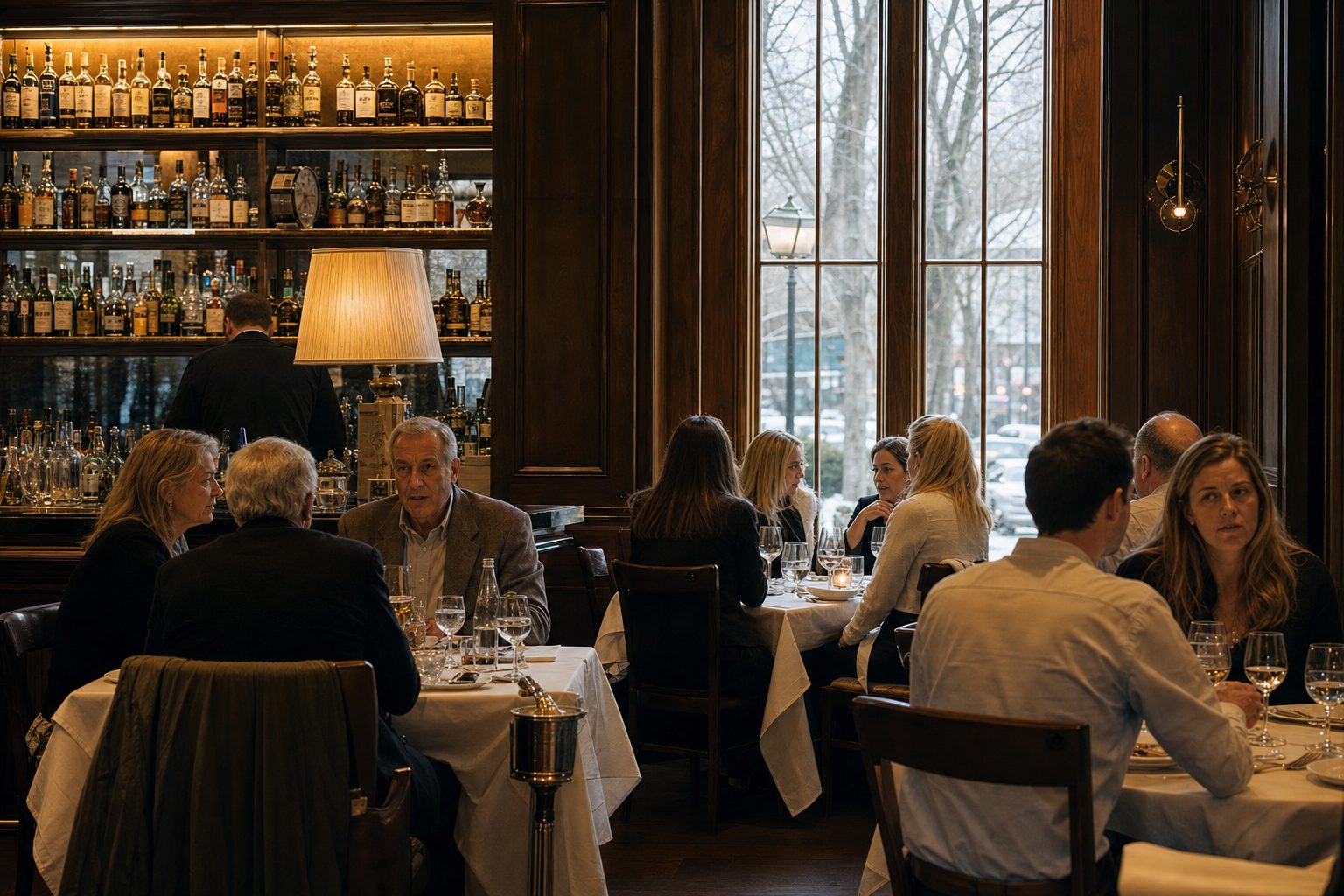
We know Morristown's restaurant scene block by block
Morristown concentrates an affluent commuter and county-seat dining market into a few blocks around the Green, with long-tenured businesses and serious investment in the rooms.
The Green and the surrounding blocks
A heavily canopied county seat where declared winter storms bring down limbs and power together. Debris removal and spoilage matter as much as structural damage.
South Street and the restaurant row
Family businesses held for decades. Succession is a live operational question, and the license has its own rules about what happens when an owner dies.
The Green-facing dining rooms
Significant investment in kitchens, bars and furnishings. Underinsurance is the common failure mode once replacement cost is calculated honestly.
The Morristown station corridor
Revenue tied to a rail commuter population and a county courthouse. A service disruption elsewhere shows up on your covers without touching your building.
Multi-unit and established operators
Businesses big enough that self-insuring workers compensation becomes a real option rather than a theoretical one, subject to state approval.
Core coverage lines every Morristown restaurant should evaluate
A Morristown policy has to carry high replacement values, winter storm frequency, and the questions an established business eventually faces about succession and scale.
General Liability Insurance
South Street evening trade and an icy approach from the Green are the same question in two seasons. This line handles injury to guests and the defense costs attached, including on the walk you keep clear.
Commercial Property Insurance
Morris County carries the heaviest declared winter storm record of these markets. Weight of ice and snow, tree fall, debris removal limits and spoilage after an outage all belong in this conversation.
Business Owner's Policy (BOP)
A single Morristown dining room generally fits a business owner's policy, placing property and general liability together for less than the two placed apart.
Liquor Liability Insurance
A license does not die with its holder, but trading on it needs authority. On the death of a licensee an executor or administrator of the estate, a trustee, or a receiver in bankruptcy obtains a permit allowing continued operation pending formal extension of the license by municipal resolution, on proof of identity and status, for a fee of $50.
Workers' Compensation Insurance
Buying a policy is not the only route. An employer may instead apply to the Commissioner of Banking and Insurance for approval to self-insure, judged on its financial ability to meet its obligations and the permanence of the business, with security sometimes required and claims handled in-house or by a third-party administrator.
Business Interruption Insurance
A winter outage can empty a dining room and a walk-in at the same time. Business interruption, and the spoilage and utility-interruption provisions beside it, decide how much of that lands on you.
What restaurant insurance typically costs in Morristown
Morristown prices above most of inland New Jersey because of what the rooms cost to rebuild. The figures below set expectations; the quote comes from the specifics.
| Coverage Type | Typical Annual Range | Why It Varies in Morristown |
|---|---|---|
| General Liability Insurance | $750-$2,100/yr | Evening volume and winter approach conditions drive this more than floor area. |
| Commercial Property (high fit-out) | $2,000-$6,200/yr | High replacement values on well-invested rooms, with weight of ice and snow and tree fall live concerns. |
| Liquor Liability Insurance | $1,300-$4,000/yr | Established bars with evening trade price above a food-led room. |
| Workers' Compensation | Payroll-class rated | Required for a staffed business, though an operator of sufficient size may instead seek approval to self-insure, which New Jersey grants on financial strength and the permanence of the business rather than on request. |
| Temporary Disability and Family Leave Insurance | Separately rated | A further New Jersey mandate running alongside comp for essentially all employers. |
| Business Interruption and Spoilage | Rated by exposure | Outage-driven stock loss is a distinct exposure in a county with repeated declared winter storms. |
| Full-Service w/ Alcohol, Bundled | $10,000-$20,000+/yr | The upper end reflects high fit-out values and established bar trade. |
Why succession is a licensing question before it is a tax question
Long-held restaurants eventually face the death of an owner, and most planning for it concentrates on the estate. In New Jersey the license has its own procedure, and getting it wrong means the business cannot lawfully serve while the estate is being sorted out.
Trading on a deceased licensee's license
The ABC Municipal Handbook describes an Extension of License Permit, obtained on the death of a licensee by an executor or administrator of the estate, a trustee, or a receiver in bankruptcy. It allows continued operation of the licensed business pending formal extension of the license by municipal resolution of the issuing authority. Proof of the applicant's identity and status must be established, and the fee is $50. (N.J.A.C. 13:2-6.1 et seq.)
Self-insuring workers compensation in New Jersey
The Department of Labor explains on its employer requirements page that coverage may be obtained either through a policy written by an authorized carrier or through self-insurance approved by the Commissioner of Banking and Insurance. Approval rests on the employer's financial ability to meet its obligations and the permanence of the business, security may be required, and a self-insurer may administer its own claims or appoint a third-party administrator.
How a family restaurant loses its ability to serve for a fortnight
The license does not transfer itself on a death, and a business that keeps pouring while the estate is unresolved is trading without authority.
The licensee of a forty-year-old Morristown restaurant dies in service
- The setting: A long-established South Street restaurant. The license is held personally by the founder, who dies, and the family intends to continue trading while the estate is administered.
- The gap: The license does not simply pass. Until the municipal issuing authority formally extends it, continued operation depends on an executor, administrator, trustee or receiver obtaining the extension permit, proving identity and status and paying the $50 fee. Serving without it puts the license itself at risk at the worst possible moment.
- The fix: Succession is planned while the licensee is alive, the people who would need to apply know they would need to, and the business interruption cover is reviewed for whether a licensing stoppage of this kind is a covered cause of loss, since it usually is not.
- The result: A continuity plan covering the license, not only the estate.
Most business interruption answers physical damage. A license problem is a different failure, and usually an uninsured one.
Frequently asked questions
How much does restaurant insurance cost in Morristown, New Jersey?
A full-service Morristown restaurant with alcohol commonly runs $10,000 to $20,000 or more a year across property, general liability, liquor liability and workers' compensation, with temporary disability and family leave contributions on top. High fit-out values are the main reason property sits above inland comparables.
What happens to a liquor license when the owner dies in New Jersey?
Trading can continue, but only with authority. An executor or administrator of the estate, a trustee, or a receiver in bankruptcy obtains an Extension of License Permit allowing continued operation pending formal extension of the license by municipal resolution. Identity and status must be proved and the fee is $50.
Can a restaurant self-insure workers' comp in New Jersey?
It can apply to. Coverage may be obtained through a policy from an authorized carrier or through self-insurance approved by the Commissioner of Banking and Insurance, with approval based on the employer's financial ability to meet its obligations and the permanence of the business. Security may be required, and claims may be handled in-house or by a third-party administrator.
Does my policy cover food spoiled by a storm power outage?
Only where spoilage or utility interruption has been added. Standard property forms frequently exclude loss caused by an off-premises power failure, which matters in a county with the declared winter storm record Morris County carries, including DR-4368 over 6 to 7 March 2018.
Are falling trees and debris removal covered?
Usually yes for the damage, but debris removal often carries its own sub-limit that is easy to exhaust on a heavily canopied site. Check the limit rather than assuming the main property figure carries it.
Do I have to provide temporary disability insurance as well?
Yes, in New Jersey. Most employers must provide Temporary Disability Insurance with Family Leave Insurance alongside, and a subject employer is automatically covered under the State Plan unless its workers are covered under an approved private plan.
Get Morristown coverage built for a business that intends to outlast its owners.
Tell us who holds the license, what the room cost to build and how large the payroll runs. We'll build a Morristown program that covers the winter and the succession.
Get Your Free Quote →