




Restaurant Insurance in Jersey City, New Jersey
If you're a Jersey City restaurant owner searching for insurance that actually understands Exchange Place's real Hurricane Sandy flood history, one of the highest concentrations of Indian restaurants in the country, and neighborhoods from Paulus Hook to The Heights, Insurance Kitchen builds coverage around that reality. The Hudson River overflowed its wall at Exchange Place during Hurricane Sandy in 2012, flooding much of historic Downtown, including City Hall itself. We build Jersey City restaurant coverage around your actual location and flood-zone exposure.
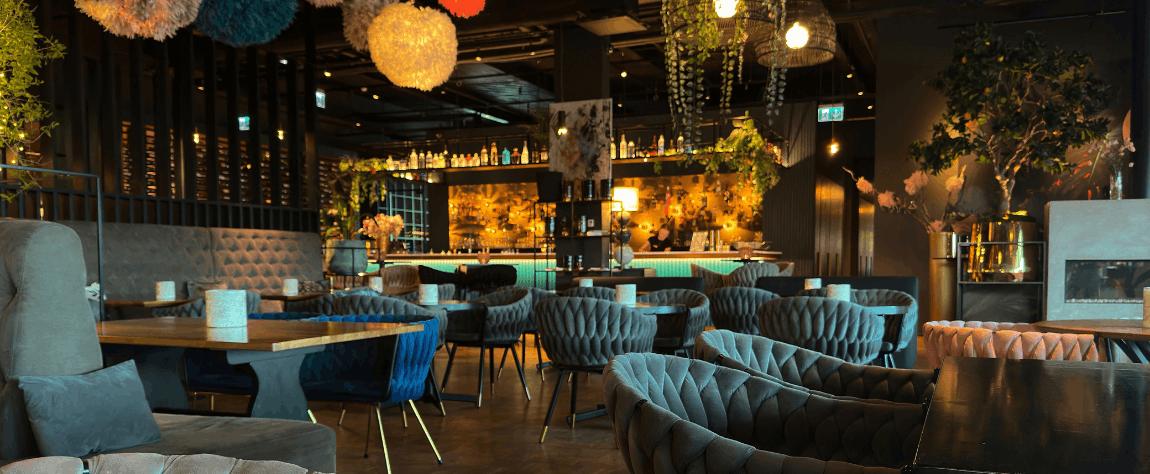
We know Jersey City's restaurant scene block by block
Jersey City's restaurant scene runs from a documented flood-hit financial waterfront to an elevated historic hilltop. Here's what we watch for across its districts.
India Square / Little India
Centered on Newark Avenue, home to one of the highest concentrations of Asian Indian residents in the Western Hemisphere. Real annual events like Holi and the largest outdoor Navratri celebration in New Jersey draw dense restaurant and retail foot traffic.
Journal Square
A PATH transit hub surrounded by major high-rise residential development, including the 53-story Journal Squared tower. High transit-driven foot traffic creates a different exposure than a standalone neighborhood restaurant strip.
Paulus Hook
Jersey City's oldest neighborhood, settled in 1633 and listed as a National Register Historic District. Its Washington and Morris Street restaurant corridor sits inside genuinely older building stock.
Exchange Place
A high-rise financial district nicknamed "Wall Street West" at the Hudson River waterfront. The river overflowed its wall here during Hurricane Sandy in 2012, flooding much of historic Downtown.
The Heights
Sits atop the Jersey City Palisades, physically above the waterfront flood zones, and contains Hudson County's oldest building, the 1742 Van Vorst House. A useful contrast to Exchange Place's documented flood history.
Core coverage lines every Jersey City restaurant should evaluate
Restaurant insurance in Jersey City is a tailored bundle built around New Jersey law, local licensing, and your lease. Here's what actually protects Jersey City food service businesses.
General Liability Insurance
Protects against third-party bodily injury and property damage claims. Responds when guests slip, suffer foodborne illness, or get injured during delivery. Most landlords require $1M/$2M before lease signing.
Commercial Property Insurance
Covers your kitchen equipment, refrigeration and HVAC, tenant improvements, inventory, and business personal property against fire, equipment breakdown, and theft.
Business Owner's Policy (BOP)
Bundles general liability, commercial property, and business interruption into one package. Works best for single-unit restaurants with annual revenue under $3 million.
Liquor Liability Insurance
Protects restaurants serving alcohol from dram shop claims. Restaurants with liquor licenses typically must carry liquor liability coverage to maintain their permit.
Workers' Compensation Insurance
Covers medical expenses and lost wages for work-related injuries. Coverage requirements are set at the state level and apply to restaurants with employees.
Business Interruption Insurance
Replaces lost income and covers ongoing expenses when covered events force shutdowns or reduced capacity. Limits should reflect 3 to 6 months of net income plus fixed expenses.
What restaurant insurance typically costs in Jersey City
A rough range based on real New Jersey market data. Not a quote, just a starting point before you talk to an agent about your specific Jersey City location.
| Coverage Type | Typical Annual Range | Why It Varies in Jersey City |
|---|---|---|
| General Liability Insurance | $700–$2,000/yr | Scales with your landlord's required limits and your building's age, especially in New Jersey's older urban downtown corridors. |
| Liquor Liability Insurance | $1,200–$4,000/yr | New Jersey caps retail-consumption liquor licenses at one per 3,000 residents, a scarcity that has pushed resale prices to a $350,000 statewide average and as high as $1.8 million, making license protection and liquor liability limits both matter. |
| Commercial Property w/ Flood Endorsement | $1,500–$5,000/yr | The Hudson River overflowed its wall at Exchange Place during Hurricane Sandy in 2012, flooding much of historic Downtown Jersey City, including City Hall, a real, documented benchmark for waterfront property coverage. |
| Workers' Compensation | Payroll-class rated | Required for virtually all New Jersey employers regardless of headcount, priced by payroll and job classification. |
| Business Interruption / Named-Storm Coverage | Rated by exposure | Coastal and riverfront New Jersey cities face real named-storm and flood-related closure risk most inland restaurants don't carry. |
| Full-Service w/ Liquor License, Bundled | $7,000–$16,000/yr | Waterfront or flood-zone locations should budget toward the higher end given New Jersey's documented storm history; a scarce liquor license itself is a real asset worth insuring. |
Why Exchange Place's real flood history should shape your coverage, not just its skyline
Jersey City restaurant coverage has to account for a real, documented flood event at the city's own financial waterfront, on top of New Jersey's Division of Alcoholic Beverage Control's statewide liquor licensing.
Exchange Place's Sandy flooding is real and well documented
During Hurricane Sandy in October 2012, the Hudson River overflowed its wall at Exchange Place, with floodwaters reaching their maximum height around 10:30 PM. Large sections of historic Downtown Jersey City, including City Hall and the Jersey City Medical Center, flooded and had to be evacuated, a genuine, checkable benchmark for waterfront property risk today.
Jersey City licenses restaurants at the city level, not the county
New first-time restaurant owners must meet in person with the city's Bureau of Licensing, submit a documentation checklist, and pass a pre-operational inspection before receiving an operating license. Confirm your specific requirements directly with the City of Jersey City Division of Health, since New Jersey's population-capped liquor licensing runs through the state ABC separately.
How Exchange Place's real Sandy flood history affects a waterfront restaurant's coverage
Jersey City's genuinely documented flood event at Exchange Place is a specific factor a generic New Jersey policy doesn't fully account for.
You're opening a restaurant at or near Exchange Place, on Jersey City's Hudson River waterfront.
- The history: The Hudson River overflowed its wall at Exchange Place during Hurricane Sandy in 2012, flooding much of historic Downtown Jersey City, including City Hall itself.
- The gap: A property policy priced without confirming your building's actual current flood-zone status may understate real risk for a specific Exchange Place or Downtown address.
- The fix: Property and business-interruption coverage are reviewed against your building's actual flood-zone designation and this real, documented 2012 flood event.
- The result: Coverage that reflects what Jersey City's waterfront has actually experienced, not a generic assumption.
This is exactly why Jersey City-specific coverage matters. A generic New Jersey policy doesn't automatically account for flood risk this well documented at one specific waterfront district.
Frequently asked questions
What insurance is required to open a restaurant in Jersey City, New Jersey?
New Jersey requires workers' compensation for virtually all employers regardless of headcount, general liability to meet most lease agreements, and a food establishment license through Jersey City's Division of Environmental Health, Bureau of Licensing. A liquor license through New Jersey's ABC is required separately if you serve alcohol.
Did Exchange Place really flood during Hurricane Sandy?
Yes. The Hudson River overflowed its wall at Exchange Place during Hurricane Sandy in October 2012, with large sections of historic Downtown Jersey City, including City Hall and the Jersey City Medical Center, flooding and requiring evacuation.
How much does restaurant insurance cost in Jersey City, New Jersey?
Restaurant insurance in Jersey City typically runs $2,000 to $30,000+ per year depending on format: a small cafe or takeout spot usually lands at $2,000 to $5,000, a full-service BYOB restaurant at $5,000 to $10,000, and a full-service restaurant with a bar at $15,000 to $30,000+ once liquor liability is added. By coverage type, general liability runs $500 to $2,000 per year, commercial property $1,500 to $2,500 per year, and workers' compensation about $2.13 per $100 of payroll. Because Hudson County carries a historically litigious civil court environment and New Jersey enforces strict dram shop liability, Jersey City premiums tend to run 15% to 20% above national averages, with liquor liability alone ranging $1,200 to $5,000+ per year for bar-service restaurants.
Does Jersey City license restaurants itself, or does Hudson County?
The city. Jersey City's own Division of Environmental Health, Bureau of Licensing, handles restaurant licensing, requiring an in-person meeting for first-time owners and a pre-operational inspection, separate from Hudson County.
Is The Heights really less flood-exposed than the waterfront?
Genuinely, yes, by elevation. The Heights sits atop the Jersey City Palisades, physically above the waterfront flood zones that affected Exchange Place and Downtown during Hurricane Sandy, though every location's actual flood-zone status should still be confirmed individually.
Get Jersey City restaurant coverage built around your actual location and flood-zone exposure.
Tell us your concept and your Jersey City neighborhood. We'll put together the coverage that actually applies.
Get Your Free Quote →