




Restaurant Insurance in Las Vegas, Nevada
If you're a Las Vegas restaurant owner searching for insurance that actually understands the city's real 24-hour alcohol service, a genuine gap between the Strip and city limits, and neighborhoods from Fremont Street to Chinatown, Insurance Kitchen builds coverage around that reality. The famous Strip itself sits in unincorporated Clark County, not the City of Las Vegas, and Nevada is one of only two states with no mandated closing time for alcohol service. We build Las Vegas restaurant coverage around your actual location and licensing jurisdiction.
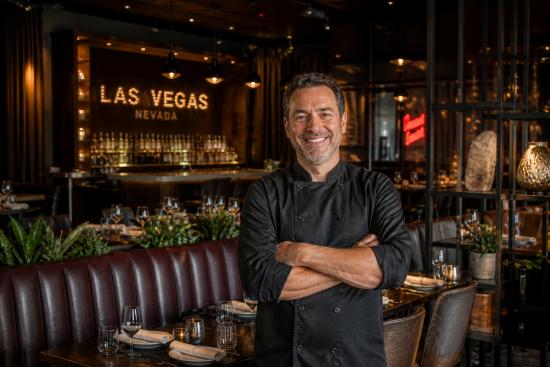
We know Las Vegas's restaurant scene block by block
Las Vegas's restaurant scene runs through resort corridors that technically aren't in the city at all and a Chinatown that grew from a single 1990s development into hundreds of restaurants. Here's what we watch for across its districts.
The Strip
Legally sits in unincorporated Clark County, not the City of Las Vegas. Restaurants inside resort-casinos face overlapping gaming and liquor licensing layers most standalone restaurants never encounter.
Downtown / Fremont Street
Home to some of the city's oldest continuously operating properties, including El Cortez, opened in 1941, and the Golden Gate, opened in 1906. Older buildings raise fire and structural-age considerations distinct from Strip megaresorts.
18b Arts District
Restaurants here occupy converted warehouses and older commercial buildings rather than purpose-built restaurant spaces. Adaptive reuse raises property and code-compliance considerations.
Chinatown / Spring Mountain Road
Grew from a single 1990s development into a roughly 3-mile corridor with 200-plus independent, often immigrant-owned restaurants in shared strip-mall plazas. Shared-wall and shared-parking-lot exposure applies differently than standalone buildings.
Off-Strip suburban corridors
Standalone and strip-mall restaurants outside the resort-corridor system serve a locals-driven customer base under standard city or county licensing, without the casino-license overlay.
Core coverage lines every Las Vegas restaurant should evaluate
Restaurant insurance in Las Vegas is a tailored bundle built around Nevada law, local licensing, and your lease. Here's what actually protects Las Vegas food service businesses.
General Liability Insurance
Protects against third-party bodily injury and property damage claims. Responds when guests slip, suffer foodborne illness, or get injured during delivery. Most landlords require $1M/$2M before lease signing.
Commercial Property Insurance
Covers your kitchen equipment, refrigeration and HVAC, tenant improvements, inventory, and business personal property against fire, equipment breakdown, and theft.
Business Owner's Policy (BOP)
Bundles general liability, commercial property, and business interruption into one package. Works best for single-unit restaurants with annual revenue under $3 million.
Liquor Liability Insurance
Protects restaurants serving alcohol from dram shop claims. Restaurants with liquor licenses typically must carry liquor liability coverage to maintain their permit.
Workers' Compensation Insurance
Covers medical expenses and lost wages for work-related injuries. Coverage requirements are set at the state level and apply to restaurants with employees.
Business Interruption Insurance
Replaces lost income and covers ongoing expenses when covered events force shutdowns or reduced capacity. Limits should reflect 3 to 6 months of net income plus fixed expenses.
What restaurant insurance typically costs in Las Vegas
A rough range based on real Nevada market data. Not a quote, just a starting point before you talk to an agent about your specific Las Vegas location.
| Coverage Type | Typical Annual Range | Why It Varies in Las Vegas |
|---|---|---|
| General Liability Insurance | $500–$1,500/yr | Scales with your landlord's required limits. Nevada's dram shop immunity under NRS 41.1305 changes the liquor liability calculus, but general liability still applies for premises and food-safety exposure. |
| Commercial Property | $1,000–$3,500/yr | Despite the desert climate, the Las Vegas Valley has a real, documented flash-flood history, including 2022 monsoon flooding that inundated the Strip and Fremont Street, a genuine factor in property coverage here. |
| Liquor Liability Insurance | $800–$2,500/yr | Nevada has no dram shop liability for serving adults 21 and older under NRS 41.1305, the broadest alcohol immunity in the country. Liability still applies for serving minors. |
| Workers' Compensation | Payroll-class rated | Mandatory from your first employee. A 50% alcohol-sales threshold reclassifies a restaurant to bar workers' comp class codes, and Nevada caps the payroll base per employee at $36,000 for premium calculation. |
| EPLI / No-Tip-Credit Payroll Exposure | Rated by exposure | Nevada allows no tip credit anywhere in the state, requiring every tipped employee to receive the full $12.00 minimum wage, a real factor in payroll-driven liability underwriting. |
| Full-Service / Casino-Adjacent, Bundled | $3,000–$35,000/yr | Standard independent restaurants pay toward the lower end. High-volume Las Vegas entertainment district and casino-adjacent operations with large umbrella requirements run substantially higher. |
Why the Strip isn't even in the City of Las Vegas
Las Vegas restaurant coverage has to account for a genuinely unusual jurisdictional split and Nevada's exceptionally broad alcohol liability immunity, on top of Southern Nevada Health District's food safety permitting.
The Strip legally sits outside city limits
The famous 4.2-mile Las Vegas Strip sits in unincorporated Clark County, mostly within the townships of Paradise and Winchester, governed by the Clark County Commission, not the Las Vegas mayor and city council. Only downtown and the Fremont Street area actually fall inside city limits, a real jurisdictional detail worth confirming before assuming which authority licenses your restaurant.
Nevada has the broadest alcohol liability immunity in the country
Under NRS 41.1305, a business that serves alcohol to someone 21 or older generally cannot be held civilly liable for damages that person later causes, even if visibly intoxicated. The narrow exception is knowingly serving a minor. Combined with Nevada allowing 24-hour alcohol service with no mandated last call, confirm your liquor liability coverage directly with the City of Las Vegas and Clark County, since licensing jurisdiction depends on your exact address.
How the Strip's jurisdictional split affects a casino-adjacent restaurant's licensing
Las Vegas's real jurisdictional split is a specific factor that a generic Nevada policy doesn't fully account for.
You're opening a restaurant on or near the Strip and need to know which government actually licenses your business.
- The reality: Most of the Strip sits in unincorporated Clark County, not the City of Las Vegas, meaning county rather than city licensing and zoning authority applies to most Strip-adjacent addresses.
- The gap: A generic liability and licensing timeline built around City of Las Vegas assumptions may not reflect the actual county process that applies to your specific address.
- The fix: Your licensing jurisdiction is confirmed against your exact address before you finalize permitting timelines or coverage start dates.
- The result: Coverage and compliance planning that matches which government actually has authority over your restaurant.
This is exactly why Las Vegas-specific coverage matters. A generic Nevada policy doesn't automatically account for a jurisdictional split this significant.
Frequently asked questions
What insurance is required to open a restaurant in Las Vegas, Nevada?
Nevada requires workers' compensation from your first employee, general liability to meet most lease agreements, and a food establishment permit through the Southern Nevada Health District. A liquor license through the City of Las Vegas or Clark County, depending on your exact address, is required separately if you serve alcohol.
How much does restaurant insurance cost in Las Vegas, Nevada?
A small Las Vegas cafe typically runs $3,000 to $6,000 a year, while a high-volume full-service restaurant or venue on the Strip can run $15,000 to $40,000+/yr given elevated revenue, staffing, and liquor exposure. Workers' compensation is mandatory in Nevada from an owner's first employee. Las Vegas restaurants are genuinely vulnerable to heat-wave power grid failures, so most owners add Equipment Breakdown and Food Spoilage coverage on top of standard commercial property insurance to protect against a summer blackout wiping out walk-in cooler inventory.
Does Nevada really have no dram shop liability law?
Yes, and it's genuinely unusual. Under NRS 41.1305, a business that serves alcohol to an adult 21 or older generally cannot be held civilly liable for damages that person later causes, even if visibly intoxicated. The only real exception is knowingly serving a minor.
Is it true Las Vegas has no mandated bar closing time?
Yes. Nevada is one of only two states with no statutory last call, meaning bars, restaurants, and casinos can legally serve alcohol 24 hours a day, a real, distinctive licensing fact that shapes staffing and liability planning here.
Does the Las Vegas Valley really flood despite being a desert?
Yes. Real, documented flash flooding has hit the valley repeatedly, including a July 2022 monsoon event that flooded the Strip, Fremont Street, and multiple casino parking garages. Property coverage for Las Vegas restaurants should reflect this real risk.
Get Las Vegas restaurant coverage built around your actual location and licensing jurisdiction.
Tell us your concept and your Las Vegas location. We'll put together the coverage that actually applies.
Get Your Free Quote →