




Restaurant Insurance in Omaha, Nebraska
If you're an Omaha restaurant owner searching for insurance that actually understands a tornado that was, for a time, the costliest in U.S. history, a state where dram shop liability was repealed outright, and a cobblestone historic district that's anchored Omaha dining since the 1970s, Insurance Kitchen builds coverage around that reality. The May 6, 1975 tornado tore a 15-mile path through the city and caused an estimated $150 million in damage. We build Omaha restaurant coverage around your actual neighborhood and local risk.
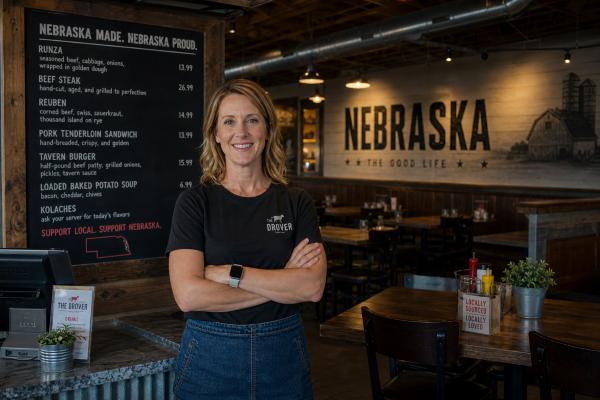
We know Omaha's restaurant scene block by block
Omaha's restaurant scene runs from cobblestone warehouse blocks that survived a 150-year-old railroad boom to a revitalized commercial strip built around a sandwich invented on-site. Here's what we watch for across its neighborhoods.
Old Market
Added to the National Register of Historic Places on March 23, 1979, and designated an Omaha Landmark on January 22, 1985. Cobblestone streets run past warehouse buildings dating from the late 1870s to about 1918, now home to Omaha's densest concentration of independent restaurants, galleries, and bars.
Blackstone District
A historic district running from 36th to 42nd Street along Farnam, annexed into Omaha in 1897 and redeveloped over the past decade into one of the city's most walkable dining strips. Crescent Moon, a Blackstone institution, still serves the Reuben sandwich recipe it originated in the 1920s.
Core coverage lines every Omaha restaurant should evaluate
Restaurant insurance in Omaha is a tailored bundle built around Nebraska law, local licensing, and your lease. Here's what actually protects Omaha food service businesses.
General Liability Insurance
Protects against third-party bodily injury and property damage claims. Responds when guests slip, suffer foodborne illness, or get injured during delivery. Most landlords require $1M/$2M before lease signing.
Commercial Property Insurance
Covers your kitchen equipment, refrigeration and HVAC, tenant improvements, inventory, and business personal property against fire, equipment breakdown, and theft.
Business Owner's Policy (BOP)
Bundles general liability, commercial property, and business interruption into one package. Works best for single-unit restaurants with annual revenue under $3 million.
Liquor Liability Insurance
Nebraska repealed its dram shop liability statutes outright, and the state's high court has declined to revive that liability by common law. The narrow real exposure that remains is serving a minor, which still creates civil liability under Neb. Rev. Stat. Section 53-180 et seq.
Workers' Compensation Insurance
Covers medical expenses and lost wages for work-related injuries. Nebraska's Workers' Compensation Act requires coverage as soon as you have one employee, full or part time, though executive officers owning 25% or more of a corporation's common stock can opt out unless they elect coverage in writing.
Business Interruption Insurance
Replaces lost income and covers ongoing expenses when covered events force shutdowns or reduced capacity. Limits should reflect 3 to 6 months of net income plus fixed expenses.
What restaurant insurance typically costs in Omaha
A rough range based on real Nebraska market data. Not a quote, just a starting point before you talk to an agent about your specific Omaha location.
| Coverage | Typical Range | Why |
|---|---|---|
| General Liability Insurance | $900–$2,500/yr | Scales with your landlord's required limits and your foot traffic, especially in the Old Market's dense pedestrian corridor. |
| Liquor Liability Insurance | $600–$3,000/yr | Nebraska repealed its dram shop statutes outright and the state's high court has declined to revive that liability by common law, but serving a minor still creates real civil exposure, and most Omaha leases require this coverage regardless. |
| Commercial Property w/ Wind & Hail Endorsement | $1,500–$10,000/yr | Douglas County sits in a genuinely active convective-storm corridor, and the 1975 tornado is documented proof of how fast a single storm can total a building here; confirm your wind and hail deductible before a severe-weather season, not after. |
| Workers' Compensation | $2.00–$3.50 per $100 of payroll | Nebraska law doesn't wait for your headcount to grow into some threshold. Bring on a single employee, even a weekend host working a few shifts, and coverage is already required. |
| Business Owner's Policy (BOP), Bundled | $1,500–$4,500/yr | Bundles general liability and commercial property at a discounted rate, the standard starting point for most single-unit Omaha restaurants. |
| Full-Service, High-Volume, Bundled | $8,000–$18,000/yr | Old Market and Blackstone restaurants running a full bar or high weekend covers should budget toward the higher end. |
Why a repealed dram shop law and a historically destructive tornado change what your Omaha policy needs to do
Omaha restaurant coverage has to account for a legal landscape where over-serving an adult patron carries essentially no dram shop exposure, layered against a documented history of the kind of severe convective storm that can total a building in minutes.
Nebraska's dram shop law was repealed, not just narrowly written
In Arant v. G.H., Inc., 229 Neb. 729, 428 N.W.2d 631 (1988), the Nebraska Supreme Court confirmed that the Legislature had already repealed the state's dramshop liability statutes, and the Court itself declined to step in and create a common-law substitute. That leaves adult patrons with essentially no dram shop claim against an Omaha restaurant or bar. The real exposure that remains is narrow but genuine: serving alcohol to someone under 21 creates civil liability under Neb. Rev. Stat. Section 53-180 et seq., though a server who reasonably relied on a fake ID that matched the minor's appearance has an absolute defense under Section 53-180.07.
The 1975 tornado set the standard for how bad Omaha property damage can get
An F-4 tornado touched down near 96th and Q Street on May 6, 1975, killing three people, injuring well over a hundred more, and cutting a roughly 15-mile path across the city. At an estimated $150 million in damage, it was, at the time, the costliest tornado in U.S. history. Eastern Nebraska's convective-storm exposure hasn't gone anywhere since, which is exactly why confirming your commercial property policy's wind and hail deductible terms matters before the next severe-weather season, not after a claim.
A severe convective storm rolls through Douglas County during peak dinner service and hail damages your building's exterior and rooftop HVAC.
A closer look at how Omaha's documented risk factors actually play out.
A severe convective storm rolls through Douglas County during peak dinner service and hail damages your building's exterior and rooftop HVAC.
- The history: Eastern Nebraska sits in an active severe-storm corridor, and the May 6, 1975 tornado remains the starkest documented example of how much damage a single storm event can cause across Omaha.
- The direct impact: Hail and wind can total a rooftop HVAC unit or damage a storefront in minutes, and a full night's lost revenue on top of the repair bill compounds the loss fast.
- The coverage question: Confirm your commercial property policy's wind and hail deductible is a flat dollar amount, not a percentage of your building's insured value, which can quietly balloon your out-of-pocket cost on a major storm.
- The fix: A property policy paired with business interruption coverage sized to your actual weekend revenue is what actually responds to a storm night, not just the physical repair.
This is exactly why Omaha-specific coverage matters. A generic statewide policy doesn't automatically size your deductible or your business interruption limit to eastern Nebraska's real storm exposure.
Frequently asked questions
How much does restaurant insurance cost in Omaha?
Restaurant insurance in Omaha typically runs $2,000 to $8,000 per year for a standard package combining general liability, commercial property, and workers' compensation, with larger full-service or high-volume operations running $8,000 to $18,000 per year. General liability runs $900 to $2,500 per year; commercial property with a wind and hail endorsement runs $1,500 to $10,000 per year; workers' compensation, mandatory from your first employee, runs roughly $2.00 to $3.50 per $100 of payroll. Liquor liability runs $600 to $3,000 per year.
Can an Omaha restaurant be held liable for over-serving a customer?
Generally, no. Nebraska's Legislature repealed its dram shop liability statutes, and the Nebraska Supreme Court confirmed in Arant v. G.H., Inc. (1988) that it would not create a substitute common-law claim. The real exception is serving a minor: that creates genuine civil liability under Neb. Rev. Stat. Section 53-180 et seq., which is why most Omaha restaurants still carry liquor liability coverage even in a state this protective on the adult-overservice question.
Does the 1975 tornado still matter for restaurant insurance in Omaha today?
Yes, as documented precedent. At an estimated $150 million in damage, it was the costliest tornado in U.S. history at the time, and it's a documented reminder of how severe eastern Nebraska's convective-storm exposure can get. Confirming your commercial property policy's wind and hail deductible terms is a direct, practical lesson from that history.
Does the Old Market's historic building stock affect restaurant insurance in Omaha?
Yes, in a real way. Old Market buildings date from the late 1870s to about 1918, and older brick-and-timber construction generally carries higher replacement costs and different fire-suppression requirements than new construction. Restaurants in Old Market or Blackstone's older storefronts should confirm their property coverage reflects true replacement cost, not the building's market value.
Is workers' compensation required for a small Omaha restaurant with only a couple of employees?
Yes, immediately. Nebraska's Workers' Compensation Act applies as soon as you have one employee, full-time or part-time, with no small-business grace period. The one narrow exemption is for executive officers who own 25% or more of the corporation's common stock, and even they must file a written election under Neb. Rev. Stat. Section 48-115(10) if they want to opt out of that exemption and be covered.
Get Omaha restaurant coverage built around your actual neighborhood and real local risk.
Tell us your concept and your Omaha neighborhood. We'll put together the coverage that actually applies.
Get Your Free Quote →