




Restaurant Insurance in Lincoln, Nebraska
If you're a Lincoln restaurant owner searching for insurance that actually understands a flood that killed nine people and left a thousand residents homeless, a state where dram shop liability was repealed outright, and a warehouse district that didn't earn its National Register listing until 2014, Insurance Kitchen builds coverage around that reality. The Salt Creek flood of July 6, 1908 remains one of the worst natural disasters in Lincoln's history. We build Lincoln restaurant coverage around your actual neighborhood and local risk.
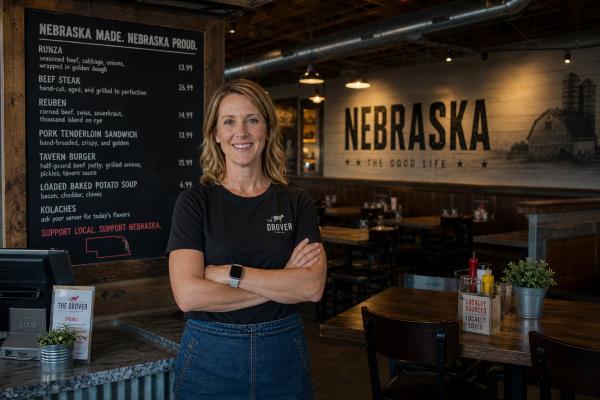
We know Lincoln's restaurant scene block by block
Lincoln's restaurant scene runs from a 19th-century wholesale district that only recently earned formal historic status to a modern entertainment corridor built around the city's newest arena. Here's what we watch for across its neighborhoods.
Historic Haymarket
Named for the original 1867 market square where wagons and hay were bought and sold, before the market itself shifted location in 1874. The surrounding wholesale-house district was locally designated a Landmark District in 1982, federally certified as the equivalent of a National Register district in 1984, and formally added to the National Register of Historic Places under its own listing in 2014.
The Railyard
An open-courtyard dining and entertainment district on Canopy Street, immediately adjacent to Pinnacle Bank Arena, home to more than a dozen restaurants and bars built around a public market and a large outdoor screen.
Core coverage lines every Lincoln restaurant should evaluate
Restaurant insurance in Lincoln is a tailored bundle built around Nebraska law, local licensing, and your lease. Here's what actually protects Lincoln food service businesses.
General Liability Insurance
The Railyard on Canopy Street runs an open-courtyard dining and entertainment district where shared circulation extends guest injury responsibility past your own four walls.
Commercial Property Insurance
The Historic Haymarket takes its name from the original 1867 market square, and its converted warehouse construction governs both fire spread and Haymarket rebuild cost.
Business Owner's Policy (BOP)
Independent operators around the Haymarket are single-location businesses matching this liability, property and business interruption package.
Liquor Liability Insurance
Haymarket and Railyard venues carry no broad civil dram shop liability, since Nebraska repealed those statutes and the courts declined to replace them, but serving a minor still creates civil exposure under Neb. Rev. Stat. 53-180.
Workers' Compensation Insurance
Lincoln employers fall under the Nebraska Workers' Compensation Act from their first hire of any kind, with a narrow opt-out for executive officers owning a quarter or more of common stock.
Business Interruption Insurance
A district built around arena and event programming concentrates Lincoln revenue into event nights, so a closure across a run of them justifies three to six months of net income plus fixed costs.
What restaurant insurance typically costs in Lincoln
A rough range based on real Nebraska market data. Not a quote, just a starting point before you talk to an agent about your specific Lincoln location.
| Coverage | Typical Range | Why |
|---|---|---|
| General Liability Insurance | $900–$2,500/yr | Scales with your landlord's required limits and your building's age, especially in the Haymarket's converted 19th-century wholesale houses. |
| Liquor Liability Insurance | $600–$3,000/yr | Nebraska has no dram shop liability for over-serving an adult, but a Railyard or Haymarket bar serving a minor still faces real civil exposure, and most Lincoln leases still require this coverage. |
| Commercial Property w/ Flood-Zone Review | $1,500–$10,000/yr | Lincoln's own 1908 Salt Creek flood is a documented reminder that low-lying downtown blocks near the creek carry real water exposure; confirm whether your specific address sits inside a mapped floodplain before assuming your standard property policy responds. |
| Workers' Compensation | $2.00–$3.50 per $100 of payroll | There's no grace period tied to staff size under Nebraska law. Hire one person, even a part-time weekend server, and workers' compensation coverage is already required the same day. |
| Business Owner's Policy (BOP), Bundled | $1,500–$4,500/yr | Bundles general liability and commercial property at a discounted rate, the standard starting point for most single-unit Lincoln restaurants. |
| Full-Service, High-Volume, Bundled | $8,000–$18,000/yr | Haymarket and Railyard restaurants running a full bar near Pinnacle Bank Arena on event nights should budget toward the higher end. |
Why the 1908 Salt Creek flood and Nebraska's repealed dram shop law change what your Lincoln policy needs to do
Lincoln restaurant coverage has to account for a documented historic flood event tied directly to the low-lying ground the Haymarket and Railyard sit on, layered against a state legal framework that all but eliminates dram shop exposure for serving adults.
The 1908 Salt Creek flood is Lincoln's worst documented flood event
On July 6, 1908, nearly seven inches of rain overwhelmed Salt Creek, flooding the Antelope Valley south to G Street. Nine people were killed, many houses were destroyed, and roughly 1,000 residents were made homeless. The Haymarket and Railyard districts sit close to that same low-lying ground today, which is exactly why confirming whether your specific address falls inside a mapped floodplain, rather than assuming a standard commercial property policy automatically covers flood, is worth doing before the next major rain event, not after.
Nebraska's dram shop law was repealed, not just narrowly written
In Arant v. G.H., Inc., 229 Neb. 729, 428 N.W.2d 631 (1988), the Nebraska Supreme Court confirmed the Legislature had already repealed the state's dramshop liability statutes, and the Court declined to create a common-law substitute. That leaves adult patrons with essentially no dram shop claim against a Lincoln bar or restaurant. The real exposure that remains is narrow: serving a minor creates civil liability under Neb. Rev. Stat. Section 53-180 et seq., with an absolute defense under Section 53-180.07 for a server who reasonably relied on a false ID.
Heavy spring rain overwhelms Salt Creek and floodwater backs up into a Haymarket restaurant's lower level.
A closer look at how Lincoln's documented risk factors actually play out.
Heavy spring rain overwhelms Salt Creek and floodwater backs up into a Haymarket restaurant's lower level.
- The history: The July 6, 1908 Salt Creek flood killed nine people and left 1,000 residents homeless, a documented reminder that this exact stretch of low-lying downtown ground has flooded before.
- The direct impact: A flooded lower level can mean ruined inventory, damaged kitchen equipment, and days of closed dining room, even without any wind or fire damage at all.
- The coverage question: Confirm whether your commercial property policy explicitly includes flood coverage or excludes it, since standard policies frequently exclude flood by default and require a separate endorsement or policy.
- The fix: A property policy with a confirmed flood endorsement, sized to your actual lower-level inventory and equipment value, is what actually responds to a Salt Creek-style event.
This is exactly why Lincoln-specific coverage matters. A generic statewide policy doesn't automatically confirm flood coverage for ground with this documented a history.
Frequently asked questions
How much does restaurant insurance cost in Lincoln?
Restaurant insurance in Lincoln typically runs $2,000 to $8,000 per year for a standard package combining general liability, commercial property, and workers' compensation, with larger full-service or high-volume operations running $8,000 to $18,000 per year. General liability runs $900 to $2,500 per year; commercial property runs $1,500 to $10,000 per year; workers' compensation, mandatory from your first employee, runs roughly $2.00 to $3.50 per $100 of payroll. Liquor liability runs $600 to $3,000 per year.
Can a Lincoln restaurant be held liable for over-serving a customer?
Generally, no. Nebraska's Legislature repealed its dram shop liability statutes outright, and the Nebraska Supreme Court confirmed in Arant v. G.H., Inc. (1988) that it would not create a substitute common-law claim. The real exception is serving a minor, which creates genuine civil liability under Neb. Rev. Stat. Section 53-180 et seq. -- that narrow exposure is why most Lincoln bars and restaurants still carry liquor liability coverage.
Should a Haymarket restaurant carry flood coverage in Lincoln?
It's worth confirming directly rather than assuming. Lincoln's worst documented flood, the 1908 Salt Creek flood, killed nine people and flooded the Antelope Valley south to G Street, ground close to today's Haymarket and Railyard districts. Standard commercial property policies frequently exclude flood by default, so check whether your policy includes it or needs a separate endorsement.
Is the Historic Haymarket's landmark status relevant to restaurant insurance in Lincoln?
Indirectly, yes. The Haymarket's wholesale houses were locally designated a Landmark District in 1982 and only added to the National Register of Historic Places under its own listing in 2014, meaning many buildings are genuinely older construction. Confirm your commercial property coverage reflects true replacement cost for that older brick and timber, not just the building's market value.
Is workers' compensation required for a small Lincoln restaurant with only part-time staff?
Yes. Nebraska's Workers' Compensation Act applies the moment you have a single employee on payroll, whether they work full shifts or a few part-time hours a week, with no small-business exemption based on staff size. The only narrow exemption applies to executive officers who own 25% or more of the corporation's common stock, and even they must file a written election under Neb. Rev. Stat. Section 48-115(10) to opt back into coverage if they choose.
Get Lincoln restaurant coverage built around your actual neighborhood and real local risk.
Tell us your concept and your Lincoln neighborhood. We'll put together the coverage that actually applies.
Get Your Free Quote →