




Restaurant Insurance in Minneapolis, Minnesota
If you're a Minneapolis restaurant owner searching for insurance that actually understands the city's real 9.5-mile skyway system, a genuinely disputed burger origin story, and neighborhoods from the North Loop to Cedar-Riverside, Insurance Kitchen builds coverage around that reality. Minneapolis's minimum wage reached $16.37 an hour in 2026 with no tip credit allowed, and the city's downtown skyway network connects roughly 80 city blocks, changing how street-level restaurants compete for foot traffic. We build Minneapolis restaurant coverage around your actual neighborhood and foot-traffic pattern.
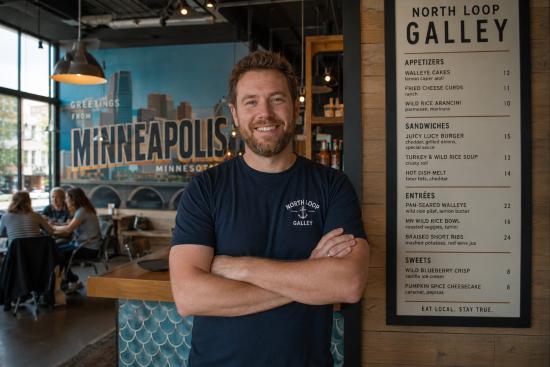
We know Minneapolis's restaurant scene block by block
Minneapolis's restaurant scene runs through converted warehouses, a skyway network most cities don't have, and a neighborhood home to the largest Somali community in the country. Here's what we watch for across its districts.
North Loop / Warehouse District
Late-19th and early-20th-century warehouses converted into restaurants and food halls near Target Field. Older timber-and-masonry construction raises electrical, sprinkler, and shared-wall exposure, plus heavy game-day foot traffic.
Cedar-Riverside
Home to the largest concentration of Somali Americans in the country, often called 'Little Mogadishu,' with a dense East African restaurant and market corridor. Family-owned restaurants here can carry less standardized insurance coverage, worth addressing directly.
Dinkytown
A restaurant and bar corridor adjacent to the University of Minnesota. High-volume, college-age nightlife raises overserving and liquor liability exposure.
Eat Street (Nicollet Avenue)
A long-documented international and immigrant-owned restaurant corridor in the Whittier neighborhood. Diverse kitchen equipment and cuisine types benefit from coverage reviewed against actual operations, not a generic template.
Northeast Minneapolis Arts District
A historic industrial and arts district now dense with breweries and taprooms in converted warehouse space. Combined liquor liability and light-manufacturing exposure applies here differently than a standard restaurant.
Core coverage lines every Minneapolis restaurant should evaluate
Restaurant insurance in Minneapolis is a tailored bundle built around Minnesota law, local licensing, and your lease. Here's what actually protects Minneapolis food service businesses.
General Liability Insurance
Protects against third-party bodily injury and property damage claims. Responds when guests slip, suffer foodborne illness, or get injured during delivery. Most landlords require $1M/$2M before lease signing.
Commercial Property Insurance
Covers your kitchen equipment, refrigeration and HVAC, tenant improvements, inventory, and business personal property against fire, equipment breakdown, and theft.
Business Owner's Policy (BOP)
Bundles general liability, commercial property, and business interruption into one package. Works best for single-unit restaurants with annual revenue under $3 million.
Liquor Liability Insurance
Protects restaurants serving alcohol from dram shop claims. Restaurants with liquor licenses typically must carry liquor liability coverage to maintain their permit.
Workers' Compensation Insurance
Covers medical expenses and lost wages for work-related injuries. Coverage requirements are set at the state level and apply to restaurants with employees.
Business Interruption Insurance
Replaces lost income and covers ongoing expenses when covered events force shutdowns or reduced capacity. Limits should reflect 3 to 6 months of net income plus fixed expenses.
What restaurant insurance typically costs in Minneapolis
A rough range based on real Minnesota market data. Not a quote, just a starting point before you talk to an agent about your specific Minneapolis location.
| Coverage Type | Typical Annual Range | Why It Varies in Minneapolis |
|---|---|---|
| General Liability Insurance | $600–$1,800/yr | Scales with your landlord's required limits and Minnesota's uncapped Civil Damage Act exposure if you serve alcohol. |
| Commercial Property w/ Winter Storm Coverage | $1,200–$4,000/yr | The May 22, 2011 tornado tore directly through North Minneapolis, a real, documented urban tornado strike that damaged hundreds of homes, a genuine benchmark for severe-weather property risk here specifically. |
| Liquor Liability Insurance | $1,200–$4,000/yr | Minnesota's Civil Damage Act (Minn. Stat. § 340A.801) imposes dram shop liability with no statutory damages cap, one of the more expansive frameworks in the country. |
| Workers' Compensation | Payroll-class rated | Mandatory for Minnesota employers, priced by payroll and job classification rather than location. |
| EPLI / Earned Sick and Safe Time Compliance | Rated by exposure | Minnesota's ESST law caps paid leave accrual at 48 hours per year, a real payroll and compliance factor worth reflecting in your EPLI coverage. |
| Full-Service w/ Bar Program, Bundled | $15,000–$35,000/yr | A small year-round fast-casual operation may pay far less. Full-service restaurants with an active bar program and significant property values run toward the higher end. |
Why Minneapolis's skyway system and dram shop law both shape your coverage
Minneapolis restaurant coverage has to account for a genuinely unusual downtown pedestrian network and Minnesota's uncapped dram shop liability, on top of the City of Minneapolis's own food and liquor licensing.
The skyway system changes what street-level restaurant risk actually looks like
Minneapolis's downtown skyway network runs roughly 9.5 miles, connecting about 80 city blocks since construction began in the early 1960s. Street-level restaurants in the skyway-connected core compete with second-story skyway traffic for foot traffic, a genuine leasing and liability consideration most cities simply don't have.
Minnesota's Civil Damage Act has no statutory damages cap
Under Minn. Stat. § 340A.801, Minnesota's dram shop law imposes liability on establishments that serve alcohol contributing to a patron's intoxication, with damages determined case by case rather than capped by statute. Confirm your actual liquor liability limits directly through Minnesota's official statute text rather than assuming a generic state minimum applies.
How Minneapolis's uncapped dram shop law affects a bar-forward restaurant's liability limits
Minnesota's real, uncapped Civil Damage Act is a specific factor that a generic policy doesn't fully account for.
You're opening a full-service restaurant with an active bar program in Minneapolis and setting your liquor liability limits.
- The law: Minnesota's Civil Damage Act, Minn. Stat. § 340A.801, imposes dram shop liability with no statutory cap on damages, one of the more expansive frameworks in the country.
- The gap: A liquor liability policy sized around a generic state-minimum assumption may not reflect the real, uncapped exposure Minnesota law actually creates.
- The fix: Liquor liability limits are reviewed against your restaurant's actual bar volume and Minnesota's real statutory framework, not a generic national assumption.
- The result: Coverage that reflects what Minnesota's dram shop law can genuinely expose you to.
This is exactly why Minneapolis-specific coverage matters. A generic policy doesn't automatically account for liability exposure this uncapped.
Frequently asked questions
What insurance is required to open a restaurant in Minneapolis, Minnesota?
Minnesota requires workers' compensation and general liability to meet most lease agreements, plus a food establishment license through the City of Minneapolis Health Department. A liquor license through the city is required separately if you serve alcohol, and mandatory Civil Damage Act liquor liability exposure applies statewide.
Does Minnesota's dram shop law really have no damages cap?
That's correct as characterized by multiple legal sources. Minnesota's Civil Damage Act, Minn. Stat. § 340A.801, determines dram shop damages case by case rather than capping them by statute, one of the more expansive alcohol liability frameworks in the country.
How much does restaurant insurance cost in Minneapolis, Minnesota?
A small Minneapolis cafe or food truck can find coverage starting around $1,000/yr, a standard mid-sized restaurant runs $3,500-$7,000/yr, and a large, high-volume venue with a full bar can exceed $10,000-$16,000/yr. Minneapolis restaurants face genuinely higher-than-average premiums driven by urban property values, dense foot traffic, and Minnesota's uncapped dram shop exposure. Winter weather is a real, priced-in cost factor too: property policies here typically need explicit endorsements for heavy snow loads, roof collapse risk, and frozen pipe bursts.
Does a Minneapolis restaurant need coverage for its own delivery drivers?
Yes, if staff use their own vehicles to deliver food. A standard personal auto policy won't cover a work-related accident, so restaurants running their own delivery rather than relying entirely on third-party apps need Hired and Non-Owned Auto (HNOA) insurance on top of general liability. It's a coverage gap that's easy to miss when a delivery program gets added on later rather than built into the original policy.
Is Cedar-Riverside really the center of Minneapolis's Somali community?
Yes. Cedar-Riverside, often called 'Little Mogadishu,' is documented as home to the largest concentration of Somali Americans in the country, anchored by the Riverside Plaza high-rises, a real and significant piece of the neighborhood's restaurant and business identity.
Get Minneapolis restaurant coverage built around your actual neighborhood and foot-traffic pattern.
Tell us your concept and your Minneapolis neighborhood. We'll put together the coverage that actually applies.
Get Your Free Quote →