




Restaurant Insurance in New Orleans, Louisiana
If you're a New Orleans restaurant owner searching for insurance that actually understands Bourbon Street's unique go-cup laws, this city's real flood history, and Louisiana's Bar Card requirement, whether you're in the French Quarter or on Frenchmen Street, Insurance Kitchen builds coverage around that reality. Louisiana Statute § 22:1267.1 limits carriers to one hurricane deductible per calendar year, and every alcohol server needs a Bar Card within 45 days of hire. We build New Orleans restaurant coverage around your actual building and flood exposure.
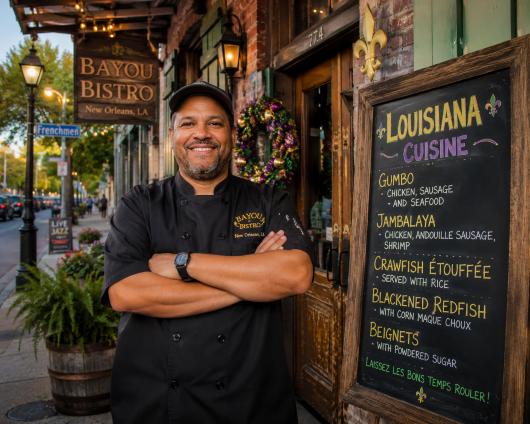
We know New Orleans's restaurant scene block by block
New Orleans is home to Antoine's, the oldest continuously family-run restaurant in the United States. Here's what we watch for across its districts.
French Quarter
Dense historic building stock, many structures 150 to 300 or more years old with shared walls. Older wood and brick construction drives elevated fire-spread and business-interruption exposure.
Bourbon Street
One of the only strips in the country with no general open-container ban, where patrons can carry drinks in plastic go-cups between bars. This creates a genuinely distinctive liquor liability and crowd-management profile.
Frenchmen Street
A dense live-music and bar corridor in the Faubourg Marigny. Bar-restaurant-music-venue hybrids under one roof raise liquor liability alongside noise-ordinance and occupancy risk.
Magazine Street
A long commercial corridor of independent restaurants and cafes in converted historic storefronts. Tenant-improvement and leasehold risk in older retail buildings applies here.
Garden District
Home to Commander's Palace and other higher-end fine-dining institutions. Larger staff, wine programs, and private-dining events raise a different liability profile than a casual neighborhood spot.
Core coverage lines every New Orleans restaurant should evaluate
Restaurant insurance in New Orleans is a tailored bundle built around Louisiana law, local licensing, and your lease. Here's what actually protects New Orleans food service businesses.
General Liability Insurance
Protects against third-party bodily injury and property damage claims. Responds when guests slip, suffer foodborne illness, or get injured during delivery. Most landlords require $1M/$2M before lease signing.
Commercial Property Insurance
Covers your kitchen equipment, refrigeration and HVAC, tenant improvements, inventory, and business personal property against fire, equipment breakdown, and theft.
Business Owner's Policy (BOP)
Bundles general liability, commercial property, and business interruption into one package. Works best for single-unit restaurants with annual revenue under $3 million.
Liquor Liability Insurance
Protects restaurants serving alcohol from dram shop claims. Restaurants with liquor licenses typically must carry liquor liability coverage to maintain their permit.
Workers' Compensation Insurance
Covers medical expenses and lost wages for work-related injuries. Coverage requirements are set at the state level and apply to restaurants with employees.
Business Interruption Insurance
Replaces lost income and covers ongoing expenses when covered events force shutdowns or reduced capacity. Limits should reflect 3 to 6 months of net income plus fixed expenses.
What restaurant insurance typically costs in New Orleans
A rough range based on real Louisiana market data. Not a quote, just a starting point before you talk to an agent about your specific New Orleans location.
| Coverage Type | Typical Annual Range | Why It Varies in New Orleans |
|---|---|---|
| General Liability Insurance | $600–$2,000/yr | Scales with your landlord's required limits and coastal proximity, not a flat statewide number. |
| Commercial Property (hurricane/flood-rated) | $2,000–$8,000/yr | The French Quarter and Garden District sit on higher, older natural ridges and largely escaped 2005 Katrina flooding, unlike lower-lying parts of the city, a real factor worth confirming by exact address. |
| Liquor Liability Insurance | $1,200–$4,000/yr | Every alcohol server needs a Bar Card within 45 days of hire under Louisiana ATC rules, and premiums scale with alcohol sales volume. |
| Workers' Compensation | Payroll-class rated | Mandatory for Louisiana employers, priced by payroll and job classification rather than location. |
| Fast-Casual, Limited or No Alcohol | $4,000–$8,000/yr | A baseline for a smaller operation before full liquor service and flood coverage are added. |
| Full-Service w/ Liquor & Flood, Bundled | $15,000–$35,000/yr | Coastal Louisiana locations run about 15% higher due to hurricane exposure. |
Why Bourbon Street's go-cup law and Louisiana's Bar Card rule both shape your coverage
New Orleans restaurant coverage has to account for the French Quarter's unique open-container status and Louisiana's statewide alcohol-server certification, on top of the state's hurricane deductible and flood-coverage framework.
Louisiana licenses restaurants at the state level, not by parish health department
The Louisiana Department of Health, Bureau of Sanitarian Services permits and inspects retail food establishments statewide, a genuinely centralized structure most other states don't use. Alcohol servers separately need a Bar Card from the Louisiana Office of Alcohol and Tobacco Control within 45 days of hire.
Bourbon Street's go-cup law is a real, unique liquor liability factor
New Orleans has no general open-container ban, and patrons can legally carry drinks in plastic go-cups (never glass) between and outside French Quarter bars. This genuinely unusual legal status changes how liquor liability and premises exposure should be structured for restaurants and bars in that corridor.
How the French Quarter's actual flood history affects property coverage
New Orleans' flood risk is real but uneven across the city, and that distinction matters directly for property coverage.
You're opening a restaurant in the French Quarter, in a building that has stood since long before Hurricane Katrina.
- The history: The French Quarter and Garden District sit on relatively higher, older natural ridges and largely escaped the 2005 Katrina flooding that devastated lower-lying parts of the city.
- The gap: A property policy priced from a blanket "New Orleans floods" assumption may not reflect your specific address's real elevation and flood-zone history.
- The fix: Property and flood coverage are reviewed against your building's actual FEMA flood-zone designation and elevation, not a citywide assumption.
- The result: Coverage that reflects your specific block's real flood history, not a generic New Orleans policy.
This is exactly why New Orleans-specific coverage matters. A generic Louisiana policy doesn't automatically account for how unevenly flood risk is actually distributed across the city.
Frequently asked questions
How much does restaurant insurance cost in New Orleans, Louisiana?
Restaurant insurance in New Orleans typically runs $3,000 to $12,000+ a year for a standard program, with large or historic French Quarter spaces facing hurricane-driven property premiums well past $15,000. Standard commercial property policies exclude flood damage entirely, so a separate flood policy is essential given the city's storm history. Alcohol sales are the other major cost driver: once an establishment's revenue crosses roughly 50% alcohol, insurers reclassify it from a restaurant to a bar and liquor liability premiums rise sharply, on top of the standard Bar Card requirement for alcohol-serving staff.
Is it really legal to drink on the street in the French Quarter, and does that affect a bar's liability?
Yes. New Orleans has no general open-container ban, and patrons can legally carry drinks in plastic go-cups between bars, as long as it's never glass. This genuinely unique legal status is worth reviewing directly with your liquor liability coverage rather than assuming a standard restaurant policy covers it.
Did the French Quarter actually flood during Hurricane Katrina?
Largely, no. The French Quarter and Garden District sit on relatively higher, older natural ridges and largely escaped the 2005 flooding that devastated lower-lying parts of the city. Flood-zone status should still be confirmed by exact address rather than assumed from the neighborhood's reputation alone.
How long do my New Orleans restaurant's servers have to get their Bar Card?
Alcohol-serving employees have 45 days from their hire date to complete Responsible Vendor training and obtain a Bar Card from the Louisiana Office of Alcohol and Tobacco Control.
Does a Frenchmen Street venue with live music need different coverage than a standard restaurant?
Yes. Venues that combine a restaurant, bar, and live-music stage under one roof carry added liquor liability and occupancy-related risk on top of standard restaurant coverage, worth reviewing separately.
Get New Orleans restaurant coverage built around your actual building and flood risk.
Tell us your concept and your New Orleans neighborhood. We'll put together the coverage that actually applies.
Get Your Free Quote →