




Restaurant Insurance in Topeka, Kansas
If you're a Topeka restaurant owner searching for insurance that actually understands the F5 tornado that struck this city's own university and state capitol in 1966, a state with no civil dram shop liability at all, and a downtown arts district rebuilt from flood-damaged warehouses, Insurance Kitchen builds coverage around that reality. The June 8, 1966 tornado killed 17 people, injured more than 500, and caused over $200 million in damage, at the time the costliest tornado in U.S. history. We build Topeka restaurant coverage around your actual neighborhood and local risk.
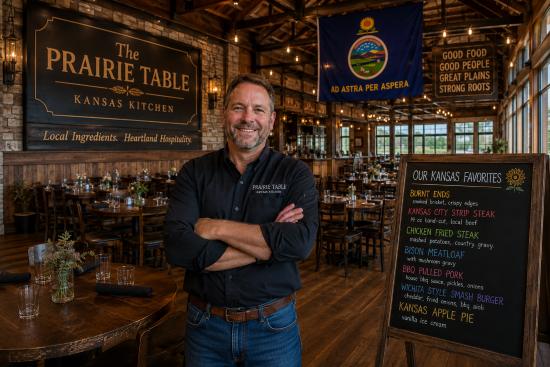
We know Topeka's restaurant scene block by block
Topeka's restaurant scene runs from a flood-rebuilt arts district to Victorian-era brick streets, with a documented tornado history to plan around. Here's what we watch for across its neighborhoods.
NOTO Arts & Entertainment District
North Kansas Avenue's 800 and 900 blocks were North Topeka's historic retail corridor in the 1940s and '50s, devastated by the 1951 Kansas River flood and further hurt by a 1965 bridge collapse. Revitalization began in 2011 with three businesses and reached a dozen the following year, converting the old brick warehouses into today's arts and dining district.
Potwin Place Historic District
Listed on the National Register on May 1, 1980. Founded in 1869, platted into 80 lots in 1882, and its own incorporated city until Topeka annexed it in 1899. Known for brick-lined streets and Victorian and Queen Anne homes.
South Kansas Avenue Commercial Historic District
Ten blocks of Kansas Avenue between 6th and 10th Streets, nominated to the National Register in 2015. Includes early-1900s commercial buildings like the Veale Building, representative of the corridor's 1900-1930 main-street architecture.
Core coverage lines every Topeka restaurant should evaluate
Restaurant insurance in Topeka is a tailored bundle built around Kansas law, local licensing, and your lease. Here's what actually protects Topeka food service businesses.
General Liability Insurance
Protects against third-party bodily injury and property damage claims. Responds when guests slip, suffer foodborne illness, or get injured during delivery. Most landlords require $1M/$2M before lease signing.
Commercial Property Insurance
Covers your kitchen equipment, refrigeration and HVAC, tenant improvements, inventory, and business personal property against fire, equipment breakdown, and theft.
Business Owner's Policy (BOP)
Bundles general liability, commercial property, and business interruption into one package. Works best for single-unit restaurants with annual revenue under $3 million.
Liquor Liability Insurance
Kansas repealed its dram shop act in 1949 and courts have upheld no civil vendor liability since (Ling v. Jan's Liquors, 1985), but criminal penalties and most lease requirements still apply.
Workers' Compensation Insurance
Covers medical expenses and lost wages for work-related injuries. Mandatory in Kansas once your gross annual payroll exceeds $20,000, a threshold most active restaurants cross with a single employee.
Business Interruption Insurance
Replaces lost income and covers ongoing expenses when covered events force shutdowns or reduced capacity. Limits should reflect 3 to 6 months of net income plus fixed expenses.
What restaurant insurance typically costs in Topeka
A rough range based on real Kansas market data. Not a quote, just a starting point before you talk to an agent about your specific Topeka location.
| Coverage Type | Typical Annual Range | Why It Varies |
|---|---|---|
| General Liability Insurance | $500–$2,500/yr | Scales with your landlord's required limits and your building's age, especially in NOTO's rebuilt brick warehouses. |
| Liquor Liability Insurance | $300–$2,000/yr | Kansas has no civil dram shop liability, but licensees still face criminal and administrative penalties for serving a minor or a visibly intoxicated patron. |
| Commercial Property w/ Wind Endorsement | $1,000–$3,500/yr | The June 1966 F5 tornado killed 17 people and caused over $200 million in 1966-dollar damage, a documented ceiling for how severe wind damage can get in this city. |
| Workers' Compensation | $0.30–$1.50 per $100 of payroll | Mandatory once your gross annual payroll exceeds $20,000, a threshold most active restaurants cross with a single cook or server. |
| Business Owner's Policy (BOP), Bundled | $1,150–$3,500/yr | Bundles general liability and commercial property at a discounted rate, the standard starting point for most single-unit Topeka restaurants. |
| Full-Service, Bundled | $4,000–$9,500/yr | Restaurants in older Potwin Place or South Kansas Avenue buildings, or those running a full bar, should budget toward the higher end. |
Why the 1966 tornado and Kansas's dram shop rule change what your policy needs to do
Topeka restaurant coverage has to account for a documented F5 tornado that hit the city's own university and capitol directly, on top of Kansas's unusual legal framework: no civil dram shop liability at all.
The 1966 tornado hit Washburn University and the State Capitol directly
The June 8, 1966 F5 tornado tracked roughly 22 miles through the city, killing 17 people, injuring more than 500, and destroying or heavily damaging every building at Washburn University, an estimated $10 million in campus damage alone, per the National Weather Service's own record of the storm. The tornado also struck the Kansas State Capitol dome, knocking loose a copper panel. About 820 homes were destroyed and 250 businesses lost entirely. Total damage exceeded $200 million in 1966 dollars, the costliest tornado in U.S. history at the time.
Kansas repealed its dram shop law in 1949, and courts have upheld that ever since
The Kansas Supreme Court held in Ling v. Jan's Liquors (1985) that commercial vendors are not civilly liable for injuries caused by an intoxicated patron they served, per legal analysis of Kansas dram shop law. Criminal and administrative penalties still apply for serving a minor or an already-intoxicated adult, and most commercial leases still require liquor liability coverage regardless of the civil-liability question.
A severe storm system develops over Topeka, and a tornado watch escalates to a warning near your restaurant.
A closer look at how Topeka's documented risk factors actually play out.
A severe storm system develops over Topeka, and a tornado watch escalates to a warning near your restaurant.
- The history: The June 1966 F5 tornado killed 17 people, destroyed every building at Washburn University, and struck the State Capitol dome, a stark ceiling for how severe a single storm can get here.
- The scale: Total damage exceeded $200 million in 1966 dollars, roughly $2.48 billion adjusted for inflation, the costliest tornado in U.S. history at the time.
- The building-age question: If your restaurant occupies an older building in NOTO or Potwin Place, confirm your property policy's replacement-cost basis matches the building's actual age and construction.
- The fix: Confirmed wind coverage under your commercial property policy, checked against a storm this severe, is what actually responds to a tornado loss.
This is exactly why Topeka-specific coverage matters. A generic Kansas policy doesn't automatically account for a tornado this destructive or a legal framework this different from most states.
Frequently asked questions
How much does restaurant insurance cost in Topeka, Kansas?
Restaurant insurance in Topeka typically runs $2,000 to $5,000 per year for a standard package, with small bakeries or cafes on the lower end and full-service establishments with extensive liquor liability on the higher end. General liability runs $500 to $2,500 per year; commercial property runs $1,000 to $3,500 per year; workers' compensation, mandatory once your gross annual payroll exceeds $20,000, runs $0.30 to $1.50 per $100 of payroll. Liquor liability runs $300 to $2,000 per year.
Does Kansas have a dram shop law that holds restaurants liable for over-served patrons?
No. Kansas repealed its dram shop act in 1949, and the Kansas Supreme Court confirmed in Ling v. Jan's Liquors (1985) that restaurants and bars carry no civil liability for injuries caused by a patron they served alcohol to. Criminal and administrative penalties still apply for serving a minor or a visibly intoxicated adult.
How bad was the 1966 Topeka tornado, and does that affect insurance today?
Severe, and yes. The June 8, 1966 F5 tornado killed 17 people, injured more than 500, destroyed every building at Washburn University, and struck the State Capitol dome, causing over $200 million in 1966-dollar damage, the costliest tornado in U.S. history at the time. That severity is priced into commercial property premiums here, so it's worth checking your policy's wind coverage limits rather than assuming a standard policy accounts for a storm this destructive.
Do older buildings in NOTO or Potwin Place cost more to insure?
Often, yes. NOTO's buildings are rebuilt brick warehouses tied to North Topeka's 1940s-50s retail era, and Potwin Place's Victorian and Queen Anne homes date to 1869 and after. Insuring a building that age typically costs more than insuring new construction because of higher replacement costs for period materials and the likelihood of older electrical or plumbing systems.
Does Topeka's status as the state capital affect local restaurant demand or insurance needs?
Indirectly, yes. The State of Kansas employs 9,919 people in Topeka, per the city's 2023 financial report, making it the city's single largest employer. Restaurants near the capitol and downtown government offices see concentrated weekday lunch demand tied to that workforce, useful context for staffing decisions rather than assuming flat foot traffic across the whole city.
Get Topeka restaurant coverage built around your actual neighborhood and real local risk.
Tell us your concept and your Topeka neighborhood. We'll put together the coverage that actually applies.
Get Your Free Quote →