




Restaurant Insurance in Iowa City, Iowa
If you're an Iowa City restaurant owner searching for insurance that actually understands the real 2008 flood that caused roughly $743 million in University of Iowa campus damage, a 69,250-seat stadium that swings downtown demand on game day, and truly century-old residential districts anchoring the dining scene, Insurance Kitchen builds coverage around that reality. The Iowa River crested at a record 30.46 feet in June 2008, flooding 19 University of Iowa campus buildings. We build Iowa City restaurant coverage around your actual neighborhood and real local risk.
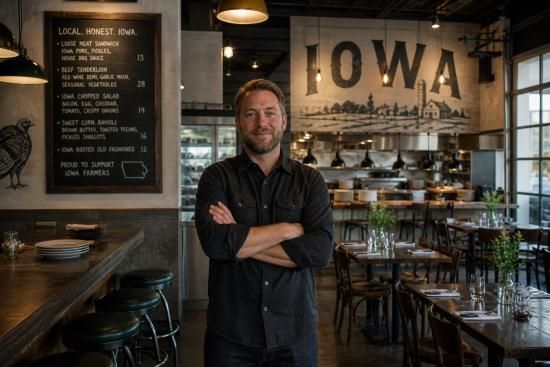
We know Iowa City's restaurant scene block by block
Iowa City's restaurant scene runs from a pedestrian mall built on 1970s urban renewal to true 19th-century residential districts, with documented Iowa River flood history and a documented game-day demand swing to plan around. Here's what we watch for across its neighborhoods.
Ped Mall / Downtown Historic District
Added to the National Register on May 27, 2021, this district includes the Pedestrian Mall itself, built in 1979 as the centerpiece of a 1970s urban-renewal project. Today it's the city's dining, bar, and retail hub.
South Summit Street District
Added to the National Register on October 9, 1973, covering 29 acres and 50 contributing buildings, most built between 1860 and 1910 in Folk Victorian, Queen Anne, and Tudor Revival styles. Dated construction anchoring this corridor.
College Green Historic District
Added to the National Register on July 9, 1997, covering 17.5 acres and 37 contributing buildings; the earliest houses date to the 1860s, with most built between 1890 and 1920, adjacent to the Old Capitol Cultural District.
Core coverage lines every Iowa City restaurant should evaluate
Restaurant insurance in Iowa City is a tailored bundle built around Iowa law, local licensing, and your lease. Here's what actually protects Iowa City food service businesses.
General Liability Insurance
Protects against third-party bodily injury and property damage claims. Responds when guests slip, suffer foodborne illness, or get injured during delivery. Most landlords require $1M/$2M before lease signing.
Commercial Property Insurance
Covers your kitchen equipment, refrigeration and HVAC, tenant improvements, inventory, and business personal property against fire, equipment breakdown, and theft.
Business Owner's Policy (BOP)
Bundles general liability, commercial property, and business interruption into one package. Works best for single-unit restaurants with annual revenue under $3 million.
Liquor Liability Insurance
Iowa's Dram Shop Act (Iowa Code § 123.92) requires on-premises licensees to carry dramshop insurance meeting statutory minimums of $50,000 per person / $100,000 cumulative for bodily injury.
Workers' Compensation Insurance
Covers medical expenses and lost wages for work-related injuries. Mandatory in Iowa from your very first employee; up to four corporate officers can file a formal rejection of coverage.
Business Interruption Insurance
Replaces lost income and covers ongoing expenses when covered events force shutdowns or reduced capacity. Limits should reflect 3 to 6 months of net income plus fixed expenses.
What restaurant insurance typically costs in Iowa City
A rough range based on real Iowa market data. Not a quote, just a starting point before you talk to an agent about your specific Iowa City location.
| Coverage Type | Typical Annual Range | Why It Varies |
|---|---|---|
| General Liability Insurance | $500–$3,000/yr | Scales with your landlord's required limits and your building's age, especially in the historic South Summit Street and College Green districts. |
| Liquor Liability Insurance | $300–$2,500/yr | Iowa's statutory dram shop minimum runs $50,000 per person / $100,000 cumulative for bodily injury, real underlying exposure for a downtown scene built around a large student and game-day population. |
| Commercial Property w/ Flood Endorsement | $1,000–$3,500/yr | Standard property policies exclude flood damage. The Iowa River crested at a record 30.46 feet in June 2008, flooding 19 University of Iowa campus buildings and causing roughly $743 million in university repair costs. |
| Workers' Compensation | $0.40–$1.50 per $100 of payroll | Mandatory in Iowa from your very first employee, with up to four corporate officers able to file a formal rejection of coverage. |
| Business Owner's Policy (BOP), Bundled | $3,000–$6,000/yr | Bundles general liability and commercial property at a discounted rate; a small cafe may pay as little as $750 to $1,500 annually. |
| Full-Service, High-Volume Downtown, Bundled | $14,400–$30,000+/yr | Large or high-volume dining establishments near the Ped Mall or Kinnick Stadium corridor should budget toward the higher end, and a commercial umbrella policy is worth considering given the region's average restaurant claim of roughly $480,000. |
Why Iowa City's 2008 flood and Kinnick Stadium's scale change what your policy needs to do
Iowa City restaurant coverage has to account for documented Iowa River flood risk that hit the university itself hard, and a massive, predictable game-day demand swing, on top of Iowa's statewide dram shop framework.
The 2008 flood set a benchmark that hit the university directly
The Iowa River crested at a record 30.46 feet in June 2008, flooding 19 University of Iowa campus buildings and requiring roughly $300 million in artwork to be evacuated to Chicago-area storage, per documented flood history. The university's total repair and reconstruction cost reached an estimated $743 million, with recovery taking roughly a decade. Standard commercial property policies exclude flood damage entirely.
Kinnick Stadium's capacity creates a predictable downtown demand spike
Kinnick Stadium holds 69,250 people, per documented stadium capacity figures, against a University of Iowa Fall 2025 enrollment of 31,563 students. A home football Saturday concentrates tens of thousands of visitors into downtown Iowa City in a matter of hours, a recurring demand and staffing swing worth planning coverage around rather than a flat weekly average.
Spring rains push the Iowa River toward flood stage near your downtown Iowa City restaurant.
A closer look at how Iowa City's documented risk factors actually play out.
Spring rains push the Iowa River toward flood stage near your downtown Iowa City restaurant.
- The history: The Iowa River crested at a record 30.46 feet in June 2008, flooding 19 University of Iowa campus buildings and causing roughly $743 million in university damage, clear evidence of this river's flood exposure.
- The exclusion: Standard commercial property policies exclude flood damage entirely, regardless of how far your building sits from the river or campus today.
- The building-age question: If your restaurant occupies an older building in South Summit Street or College Green, confirm your property policy's replacement-cost basis reflects the building's real, often 19th-century age.
- The fix: NFIP or private flood coverage, confirmed and in place before spring flood season, is the only mechanism that responds to a flood loss.
This is exactly why Iowa City-specific coverage matters. A generic Iowa policy doesn't automatically account for flood risk this documented or a game-day demand swing this large.
Frequently asked questions
How much does restaurant insurance cost in Iowa City, Iowa?
Restaurant insurance in Iowa City typically runs $3,000 to $6,000 per year for a standard package, with a small cafe paying $750 to $1,500 annually and large or high-volume downtown establishments running $14,400 to $30,000 or more per year. General liability runs $500 to $3,000 per year; workers' compensation, mandatory from your first employee, runs $0.40 to $1.50 per $100 of payroll. Liquor liability runs $300 to $2,500 per year, on top of Iowa's statutory dram shop minimum of $50,000 per person / $100,000 cumulative for bodily injury. Because the average restaurant claim in the broader Iowa region runs roughly $480,000, a commercial umbrella policy is worth real consideration for high-volume downtown spots.
Does Iowa's Dram Shop law set a minimum liquor liability coverage amount?
Yes. Iowa Code § 123.92 requires on-premises licensees to carry dramshop insurance meeting statutory minimums of $50,000 per person and $100,000 cumulative for bodily injury, plus $25,000 per person and $50,000 cumulative for loss of support, real underlying exposure for a downtown scene near a large university-age population.
Does a restaurant near the University of Iowa campus need flood insurance?
Likely yes, confirm it rather than assume otherwise. The Iowa River crested at a record 30.46 feet in June 2008, flooding 19 University of Iowa campus buildings and causing roughly $743 million in university damage. Standard commercial property policies exclude flood damage entirely, so a separate NFIP or private flood policy is the only thing that actually responds to that kind of loss.
Does Kinnick Stadium's game-day crowd affect a downtown Iowa City restaurant's insurance needs?
It can, indirectly. Kinnick Stadium holds 69,250 people, and a home football Saturday concentrates a predictable surge of visitors into downtown Iowa City in a matter of hours. Reflect that swing in your staffing plan and general liability exposure review rather than assuming a flat, average-week foot-traffic estimate covers game-day reality.
Do older buildings in Iowa City's South Summit Street or College Green districts cost more to insure?
Often, yes. South Summit Street's building stock dates largely to 1860-1910 and College Green's earliest houses go back to the 1860s, and insuring a building that age typically costs more than insuring new construction because of higher replacement costs for period materials and the likelihood of older electrical or plumbing systems. Check that your property policy's stated replacement-cost basis actually reflects your building's real age.
Get Iowa City restaurant coverage built around your actual neighborhood and real local risk.
Tell us your concept and your Iowa City neighborhood. We'll put together the coverage that actually applies.
Get Your Free Quote →