




Restaurant Insurance in Des Moines, Iowa
If you're a Des Moines restaurant owner searching for insurance that actually understands the real 1993 flood that left this city without drinking water for weeks, a dram shop law with genuine statutory minimum coverage amounts, and a downtown built around the same insurance-industry concentration that earned it the nickname "Hartford of the West," Insurance Kitchen builds coverage around that reality. The Des Moines Water Works was submerged on July 11, 1993, leaving roughly 250,000 people without drinking water for weeks. We build Des Moines restaurant coverage around your actual neighborhood and real local risk.
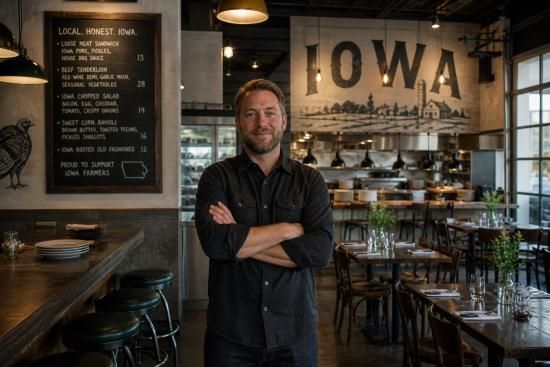
We know Des Moines's restaurant scene block by block
Des Moines' restaurant scene runs from a century-old warehouse district to a Tudor-brick residential corridor, with real Raccoon and Des Moines River flood history to plan around. Here's what we watch for across its neighborhoods.
East Village
Listed on the National Register on March 22, 2019, with 33 contributing buildings constructed between 1873 and 1959, tied to the city's Scandinavian and Eastern European Jewish immigrant merchants. Many of today's independent restaurants and boutiques occupy these century-old masonry storefronts, still standing after 150 years.
Court Avenue District
Anchored by individually National Register-listed buildings including the Des Moines Saddlery Company Building (1878-1920 construction phases) and the 1904 Boyt Company leather factory. This former warehouse district is now Des Moines' dining and entertainment core, dated industrial construction underneath a modern restaurant scene.
Sherman Hill
Listed on the National Register on January 25, 1979, with a 2012 boundary increase, covering 80 acres and 210 buildings. One of Des Moines' oldest neighborhoods, with houses dating from roughly 1880 onward and many converted to multi-unit or commercial use over the decades.
Beaverdale
Known for the "Beaverdale Brick," a distinctive Tudor Revival-influenced house type built largely in the 1920s through 1940s. Not a formal historic district, but a real, dated, single-era building stock that shapes the neighborhood's dining scene today.
Core coverage lines every Des Moines restaurant should evaluate
Restaurant insurance in Des Moines is a tailored bundle built around Iowa law, local licensing, and your lease. Here's what actually protects Des Moines food service businesses.
General Liability Insurance
Protects against third-party bodily injury and property damage claims. Responds when guests slip, suffer foodborne illness, or get injured during delivery. Most landlords require $1M/$2M before lease signing.
Commercial Property Insurance
Covers your kitchen equipment, refrigeration and HVAC, tenant improvements, inventory, and business personal property against fire, equipment breakdown, and theft.
Business Owner's Policy (BOP)
Bundles general liability, commercial property, and business interruption into one package. Works best for single-unit restaurants with annual revenue under $3 million.
Liquor Liability Insurance
Iowa's Dram Shop Act (Iowa Code § 123.92) requires on-premises licensees to carry dramshop insurance meeting statutory minimums of $50,000 per person / $100,000 cumulative for bodily injury.
Workers' Compensation Insurance
Covers medical expenses and lost wages for work-related injuries. Mandatory in Iowa from your very first employee; up to four corporate officers can file a formal rejection of coverage.
Business Interruption Insurance
Replaces lost income and covers ongoing expenses when covered events force shutdowns or reduced capacity. Limits should reflect 3 to 6 months of net income plus fixed expenses.
What restaurant insurance typically costs in Des Moines
A rough range based on real Iowa market data. Not a quote, just a starting point before you talk to an agent about your specific Des Moines location.
| Coverage Type | Typical Annual Range | Why It Varies |
|---|---|---|
| General Liability Insurance | $500–$3,000/yr | Scales with your landlord's required limits and your building's age, especially in Court Avenue's converted warehouse spaces. |
| Liquor Liability Insurance | $300–$2,500/yr | Iowa law sets a statutory minimum of $50,000 per person / $100,000 cumulative for bodily injury, plus $25,000 per person / $50,000 cumulative for loss of support, on top of the underlying dram shop exposure. |
| Commercial Property w/ Flood Endorsement | $1,000–$3,500/yr | Standard property policies exclude flood damage entirely. The Des Moines Water Works was submerged in the July 1993 flood, leaving roughly 250,000 people without drinking water for weeks, clear evidence of this river confluence's flood exposure. |
| Workers' Compensation | $0.40–$1.50 per $100 of payroll | Mandatory in Iowa from your very first employee; sole proprietors, LLC members, and partners are automatically excluded but can opt in, and up to four corporate officers can file a formal rejection of coverage. |
| Business Owner's Policy (BOP), Bundled | $3,000–$6,000/yr | Bundles general liability and commercial property at a discounted rate; a small cafe may pay as little as $750 to $1,200 annually. |
| Full-Service w/ Liquor License, Bundled | $8,000–$18,000/yr | High-volume, mid-sized restaurants near the downtown insurance-district corridor or river confluence should budget toward the higher end. |
Why Des Moines' 1993 flood and dram shop minimums change what your policy needs to do
Des Moines restaurant coverage has to account for documented Raccoon and Des Moines River flood risk and Iowa's actual statutory dram shop minimums, on top of century-old building stock in several neighborhoods.
The 1993 flood set a benchmark for this river confluence
The Des Moines Water Works was submerged by floodwaters in the early morning of July 11, 1993, when the Raccoon River overtopped it, leaving an estimated 250,000 people without running water for roughly 12 days and without certified drinking water for closer to 20, per documented history of the 1993 flood. Standard commercial property policies exclude flood damage entirely, a separate, distinct peril from fire or wind.
Iowa's dram shop law sets a real, specific statutory minimum, not just a general recommendation
Iowa Code § 123.92 requires on-premises licensees to carry dramshop liability insurance, and Iowa's statutory minimum is $50,000 per person and $100,000 cumulative for bodily injury, plus $25,000 per person and $50,000 cumulative for loss of support, per the statute itself. Written notice of a claim is required within six months of the injury, and the lawsuit itself must be filed within two years.
Heavy summer rain pushes the Raccoon and Des Moines Rivers toward flood stage near your restaurant.
A closer look at how Des Moines's documented risk factors actually play out.
Heavy summer rain pushes the Raccoon and Des Moines Rivers toward flood stage near your restaurant.
- The history: The July 1993 flood submerged the Des Moines Water Works itself and left roughly 250,000 people without drinking water for weeks, clear evidence this river confluence can flood hard and fast.
- The exclusion: Standard commercial property policies exclude flood damage entirely, regardless of how far your building sits from the river today.
- The building-age question: If your restaurant occupies an older building in a district like Court Avenue or East Village, confirm your property policy's replacement-cost basis actually reflects the building's real age and construction.
- The fix: NFIP or private flood coverage, confirmed and in place well before summer storm season, is the only mechanism that responds to a flood loss.
This is exactly why Des Moines-specific coverage matters. A generic Iowa policy doesn't automatically account for river-confluence flood risk this documented or dram shop minimums this specific.
Frequently asked questions
How much does restaurant insurance cost in Des Moines, Iowa?
Restaurant insurance in Des Moines typically runs $3,000 to $6,000 per year for a standard package, with a small cafe paying as little as $750 to $1,200 annually and a high-volume, mid-sized full-service restaurant running $8,000 to $18,000 per year. General liability runs $500 to $3,000 per year; commercial property runs $1,000 to $3,500 per year; workers' compensation, mandatory from your first employee, runs $0.40 to $1.50 per $100 of payroll. Liquor liability runs $300 to $2,500 per year, on top of Iowa's statutory dram shop minimums of $50,000/$100,000 for bodily injury.
Does Iowa's Dram Shop law set a minimum liquor liability coverage amount?
Yes. Iowa Code § 123.92 requires on-premises licensees to carry dramshop insurance meeting statutory minimums of $50,000 per person and $100,000 cumulative for bodily injury, plus $25,000 per person and $50,000 cumulative for loss of support. Written notice of a claim is required within six months of the injury, and any lawsuit must be filed within two years.
Does a restaurant near the Raccoon or Des Moines River need flood insurance?
Likely yes, confirm it rather than assume otherwise. The Des Moines Water Works was submerged during the July 1993 flood, leaving roughly 250,000 people without drinking water for weeks, a documented benchmark for this river confluence's exposure. Standard commercial property policies exclude flood damage entirely, so a separate NFIP or private flood policy is the only thing that actually responds to that kind of loss.
Do older buildings in East Village or Court Avenue cost more to insure?
Often, yes. East Village's building stock dates to 1873-1959 and Court Avenue's warehouse buildings include construction phases back to 1878, and insuring a building that age typically costs more than insuring new construction because of higher replacement costs for period materials and the likelihood of older electrical or plumbing systems. Confirm your property policy's stated replacement-cost basis actually reflects your building's real age.
Does a Farmers' Market vendor stall need separate insurance from a brick-and-mortar restaurant?
Yes. Des Moines' Downtown Farmers' Market draws an estimated 28,000 shoppers across 12 city blocks on a typical Saturday, and a temporary vendor stall carries a different risk profile than a standing restaurant lease, shorter setup, outdoor exposure, and often a different landlord (the market itself, not your usual property owner). Ask your agent directly whether your existing general liability and product liability coverage actually extends to a temporary outdoor vending arrangement, or whether it needs its own endorsement.
Get Des Moines restaurant coverage built around your actual neighborhood and real local risk.
Tell us your concept and your Des Moines neighborhood. We'll put together the coverage that actually applies.
Get Your Free Quote →