




Restaurant Insurance in Kailua-Kona, Hawaii
If you're a Kailua-Kona restaurant owner searching for insurance that actually understands a coffee-belt tourism economy anchored by Kona International Airport, a location on Hualalai's lava-flow hazard map, and a state where workers' comp starts with your first hire, Insurance Kitchen builds coverage around that reality. We build Kailua-Kona restaurant coverage around your actual neighborhood and real local risk.
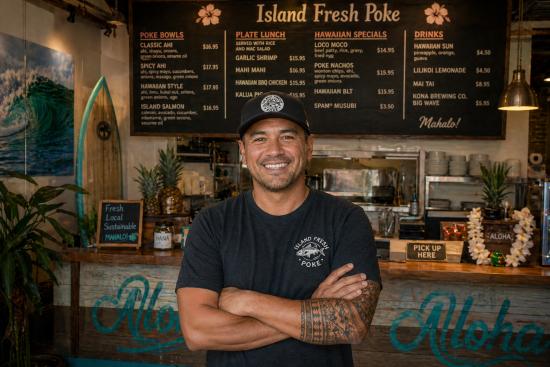
We know Kailua-Kona's restaurant scene block by block
Kailua-Kona's restaurant scene runs from an oceanfront strip built almost entirely around visitor traffic to an upcountry coffee-belt corridor with a distinctly different customer base and risk profile. Here's what we watch for across its neighborhoods.
Ali'i Drive
Kailua-Kona's oceanfront restaurant row runs largely on visitor traffic from Kona International Airport and cruise ships anchoring offshore, which means liquor-liability and premises-liability exposure track tourist volume more closely than local population.
Holualoa & Upcountry Kona
Restaurants and tasting rooms along the Kona coffee belt draw a farm-tour and agritourism crowd distinct from Ali'i Drive's beachfront visitors, and many sit on Hualalai's leeward slopes, where drought conditions run higher than the coastal strip below.
Core coverage lines every Kailua-Kona restaurant should evaluate
Restaurant insurance in Kailua-Kona is a tailored bundle built around Hawaii law, local licensing, and your lease. Here's what actually protects Kailua-Kona food service businesses.
General Liability Insurance
Protects against third-party bodily injury and property damage claims. Responds when guests slip, suffer foodborne illness, or get injured during delivery. Most landlords require $1M/$2M before lease signing.
Commercial Property Insurance
Covers your kitchen equipment, refrigeration and HVAC, tenant improvements, inventory, and business personal property against fire, equipment breakdown, and theft.
Business Owner's Policy (BOP)
Bundles general liability, commercial property, and business interruption into one package. Works best for single-unit restaurants with annual revenue under $3 million.
Liquor Liability Insurance
Hawaii has no dram shop statute, but the Hawaii Supreme Court's own case law fills that gap: Ono v. Applegate, 612 P.2d 533 (Haw. 1980), established that a vendor who serves an already-intoxicated patron can be held liable in negligence to a third party that patron later injures. Serving a visibly intoxicated person is also a licensing violation under HRS section 281-78. Standalone liquor liability coverage is essential, not optional, for any Hawaii establishment that serves alcohol.
Workers' Compensation Insurance
Hawaii requires workers' comp coverage from your very first employee, full time, part time, seasonal, or temporary, under HRS Chapter 386, administered by the Disability Compensation Division. Sole proprietors, partners, and corporate officers or stockholders owning at least 50% of the business may exempt themselves, but every other worker must be covered. Operating without it risks a fine of $100 per employee per day (minimum $500), a state stop-work order, and personal liability for the owner.
Business Interruption Insurance
Replaces lost income and covers ongoing expenses when covered events force shutdowns or reduced capacity. Limits should reflect 3 to 6 months of net income plus fixed expenses.
What restaurant insurance typically costs in Kailua-Kona
A rough range based on real Hawaii market data. Not a quote, just a starting point before you talk to an agent about your specific Kailua-Kona location.
| Coverage | Typical Range | Why |
|---|---|---|
| General Liability Insurance | $700-$3,000/yr | Hawaii doesn't legally require general liability coverage, but Kailua-Kona's commercial landlords and visitor-facing leases commonly make it a condition of occupancy anyway. |
| Liquor Liability Insurance | $540-$1,320/yr | Ono v. Applegate common-law exposure, combined with Ali'i Drive's visitor-driven bar and restaurant volume, makes standalone liquor liability coverage a real priority here, not a formality. |
| Commercial Property w/ Lava-Zone & Drought Review | $1,020-$1,740/yr | Kailua-Kona's Lava Zone 4 classification and its position on Hawaii Island's dry leeward side are two separate, documented reasons to confirm your specific address's wildfire and lava-flow coverage terms before renewing, not after a red-flag warning. |
| Workers' Compensation (mandatory from your first hire) | $600-$1,800/yr | Hawaii's HRS Chapter 386 mandate applies the moment you add staff for peak visitor season, not just your year-round crew, so Kailua-Kona's seasonal hiring swings don't come with any grace period. |
| Business Owner's Policy (BOP), Bundled | $1,680-$2,880/yr | Bundles general liability and commercial property at a discounted rate, the standard starting point for most single-unit Kailua-Kona cafes and plate-lunch concepts. |
| Full-Service, High-Volume, Bundled | $7,800-$13,200/yr | Ali'i Drive full-bar restaurants with 15+ staff should budget toward this range, reflecting both visitor-driven liquor-service volume and Kailua-Kona's resort-market cost of doing business. |
Why Kailua-Kona's lava-zone location and its visitor-driven economy change what your policy needs to do
Kailua-Kona restaurant coverage has to account for a lava-flow hazard classification most mainland insurance agents have never priced, layered against a visitor economy that concentrates real revenue and real liability exposure into Ali'i Drive's oceanfront strip.
Lava Zone 4 puts Kailua-Kona in a real, mapped hazard category, even without an active eruption nearby
USGS classifies most of Kailua-Kona as Lava Zone 4, on the flank of Hualalai, a volcano last active in 1801 but still classified as active by the U.S. Geological Survey. Zone 4 carries a moderate hazard rating with generally standard private-market insurance availability, unlike the highest-risk Zone 1 and 2 areas closer to Kilauea, but Kailua-Kona restaurant owners should still confirm their specific policy addresses lava-flow exposure explicitly rather than assume a standard fire policy automatically covers it, since some carriers write it as a distinct peril.
Ali'i Drive's visitor volume concentrates real liability exposure into one oceanfront strip
Kailua-Kona's restaurant economy runs largely on visitors arriving through Kona International Airport and cruise ship tenders, concentrated along Ali'i Drive's oceanfront strip in a way that pushes both premises-liability claim frequency and liquor-liability exposure well above what a comparable inland mainland town would see. Restaurants here should size their liability limits around real visitor-season volume, not a generic year-round local-population estimate.
Elevated fire danger and drought conditions on Hualalai's leeward slopes threaten a Kona coffee-belt restaurant during peak dry season.
A closer look at how Kailua-Kona's documented risk factors actually play out.
Elevated fire danger and drought conditions on Hualalai's leeward slopes threaten a Kona coffee-belt restaurant during peak dry season.
- The setup: A Holualoa-area restaurant assumes wildfire risk is a Maui problem, not a west Hawaii Island one.
- The direct impact: A red-flag fire-weather warning closes roads and cuts off customer access for days during the coffee belt's dry season, and smoke damage from a nearby brush fire affects inventory even without direct flame contact.
- The coverage question: Confirm your commercial property policy explicitly covers wildfire and smoke damage, and check whether your specific address needs the Hawaii Property Insurance Association as a backstop, before a red-flag warning, not during one.
- The fix: Treating leeward-side drought and wildfire risk as a real, standing part of a Kona coffee-belt restaurant's coverage plan, not a one-time Maui headline, is what keeps a dry-season closure from becoming an uninsured loss.
This is exactly why Kailua-Kona-specific coverage matters. Statewide wildfire coverage got real attention after the 2023 Maui fires, and that same leeward drought risk applies to Hawaii Island's west side too.
Frequently asked questions
How much does restaurant insurance cost in Kailua-Kona?
A comprehensive restaurant insurance package in Kailua-Kona typically runs $1,680 to $7,800 per year for most single-unit operators, with full-bar, high-volume restaurants running $7,800 to $13,200 or more. General liability runs roughly $700 to $3,000 per year; a bundled BOP runs $1,680 to $2,880 per year; liquor liability runs $540 to $1,320 per year, reflecting Ali'i Drive's visitor-driven bar volume.
Is workers' compensation required for a small Kailua-Kona restaurant?
Yes, and the requirement applies just as fully to seasonal hires brought on for Kailua-Kona's peak visitor months as it does to year-round staff. Hawaii's HRS Chapter 386 gives no grace period tied to how long an employee is expected to work, only sole proprietors, partners, and majority owners can exempt themselves from coverage.
Can a Kailua-Kona restaurant be sued for over-serving a customer?
Yes. Hawaii's courts, not its legislature, created this exposure: Ono v. Applegate (Haw. 1980) lets a third party injured by an intoxicated patron sue the vendor that served them, and HRS section 281-78 makes serving a visibly intoxicated person a separate licensing violation. With Ali'i Drive's visitor-heavy bar scene, standalone liquor liability coverage is a real priority for Kailua-Kona restaurants and bars.
Does lava-flow risk affect restaurant insurance in Kailua-Kona?
Yes, though less severely than areas closer to Kilauea. Most of Kailua-Kona falls in USGS Lava Flow Hazard Zone 4, a moderate classification tied to Hualalai's flank, and while private insurance generally remains available, restaurant owners should confirm their specific commercial property policy addresses lava-flow exposure directly rather than assume it's automatically bundled into standard fire coverage.
What kind of insurance does a Kailua-Kona restaurant actually need?
The core package is general liability, commercial property, and liquor liability if you serve alcohol, often bundled into a Business Owner's Policy for savings. Workers' compensation is legally required from your very first employee, and Ali'i Drive restaurants specifically should size liability and liquor liability limits around real visitor-season volume rather than year-round local population.
Get Kailua-Kona restaurant coverage built around your actual neighborhood and real local risk.
Tell us your concept and your Kailua-Kona neighborhood. We'll put together the coverage that actually applies.
Get Your Free Quote →