




Restaurant Insurance in Denver, Colorado
If you're a Denver restaurant owner searching for insurance that actually understands real hail-loss history on the Front Range, a genuinely strict rule separating alcohol and marijuana consumption, and neighborhoods from LoDo to RiNo, Insurance Kitchen builds coverage around that reality. A single May 2017 Denver-metro hailstorm caused a documented $2.3 billion in insured damage, the costliest hailstorm in Colorado history. We build Denver restaurant coverage around your actual neighborhood and licensing mix.
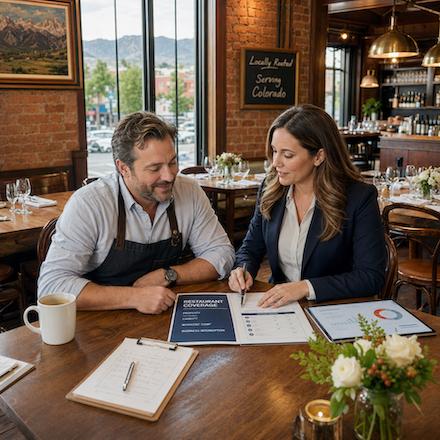
We know Denver's restaurant scene block by block
Denver's restaurant scene runs through century-old warehouse districts and dense nightlife corridors, all sitting on some of the most hail-exposed real estate in the country. Here's what we watch for across its districts.
LoDo (Lower Downtown)
Denver's original 1880s warehouse district, restored into a dense restaurant and bar corridor. Century-old brick-and-timber construction converted to commercial kitchen use raises fire spread and property replacement-cost exposure.
RiNo (River North Art District)
Former industrial blocks now packed with breweries, taprooms, and restaurants. Industrial-to-hospitality building conversions combined with dense liquor licensing raise both property and overserving exposure.
Capitol Hill
A neighborhood with an average building age dating to 1920, dense apartment stock, and a heavy late-night bar and restaurant scene along Colfax Avenue. Old building stock plus concentrated nightlife raises property and liquor liability together.
Five Points
One of Denver's most culturally significant historic neighborhoods, with deep jazz-era restaurant and bar history. Historic-district preservation rules can complicate commercial kitchen renovations.
Union Station / LoDo food hall corridor
A major transit hub redeveloped into a food hall and restaurant destination. Heavy tourist and commuter foot traffic raises slip-and-fall and general liability exposure.
Core coverage lines every Denver restaurant should evaluate
Restaurant insurance in Denver is a tailored bundle built around Colorado law, local licensing, and your lease. Here's what actually protects Denver food service businesses.
General Liability Insurance
Protects against third-party bodily injury and property damage claims. Responds when guests slip, suffer foodborne illness, or get injured during delivery. Most landlords require $1M/$2M before lease signing.
Commercial Property Insurance
Covers your kitchen equipment, refrigeration and HVAC, tenant improvements, inventory, and business personal property against fire, equipment breakdown, and theft.
Business Owner's Policy (BOP)
Bundles general liability, commercial property, and business interruption into one package. Works best for single-unit restaurants with annual revenue under $3 million.
Liquor Liability Insurance
Protects restaurants serving alcohol from dram shop claims. Restaurants with liquor licenses typically must carry liquor liability coverage to maintain their permit.
Workers' Compensation Insurance
Covers medical expenses and lost wages for work-related injuries. Coverage requirements are set at the state level and apply to restaurants with employees.
Business Interruption Insurance
Replaces lost income and covers ongoing expenses when covered events force shutdowns or reduced capacity. Limits should reflect 3 to 6 months of net income plus fixed expenses.
What restaurant insurance typically costs in Denver
A rough range based on real Colorado market data. Not a quote, just a starting point before you talk to an agent about your specific Denver location.
| Coverage Type | Typical Annual Range | Why It Varies in Denver |
|---|---|---|
| General Liability Insurance | $500–$1,800/yr | Scales with your landlord's required limits and your building's proximity to Colorado's most hail-intense corridors. |
| Commercial Property (Hail-Rated) | $1,500–$5,000/yr | Denver sits on the Front Range near the country's most hail-intense corridor. A single May 2017 metro-area hailstorm caused a documented $2.3 billion in insured damage, the costliest hailstorm in Colorado history. |
| Liquor Liability Insurance | $1,000–$3,500/yr | Colorado's year-round patio culture extends liability beyond the building envelope, and dram shop claims can be costly in dense entertainment districts. |
| Workers' Compensation | Payroll-class rated | Mandatory for every Colorado employer with one or more employees under CRS § 8-40-101, no minimum headcount, priced by payroll and job classification. |
| Mountain/Resort Wildfire Adjacency | 1.25x multiplier | Mountain and resort markets carrying wildfire adjacency and seasonal revenue concentration typically run toward the higher end of coverage cost. |
| Full-Service w/ Alcohol, Bundled | $8,000–$17,000/yr | Estimated annual range for a full Colorado coverage program, scaled by alcohol service and location. |
Why Denver's hail losses and cannabis rules both shape your coverage
Denver restaurant coverage has to account for genuinely severe, documented hail-loss history and a real, strict separation between alcohol and marijuana consumption licenses, on top of Denver's own liquor and food licensing framework.
Denver has produced some of Colorado's costliest hailstorms on record
The May 8, 2017 Denver-metro hailstorm caused a documented $2.3 billion in insured damage, the costliest in Colorado history. A separate June 2015 storm piled hail up to 4 feet deep on one city block, requiring more than 30 dump-truck loads to clear. Colorado sees 3 to 4 catastrophic hailstorms a year, and confirming your property coverage against this real history matters more here than almost anywhere else.
Alcohol and marijuana consumption can't legally mix on the same premises
Denver's marijuana hospitality licenses and liquor licenses are legally mutually exclusive on the same premises: a liquor licensee cannot allow marijuana consumption, and a marijuana hospitality licensee cannot allow alcohol or smoking. Colorado liquor licensing itself runs through the Colorado Liquor Enforcement Division on top of Denver's own local approval, a genuine dual-layer compliance line worth understanding clearly before you build a concept around either license type.
How a hail-prone address changes a LoDo restaurant's property coverage
Denver's real hail-loss history is a specific factor that a generic Colorado policy doesn't fully account for.
You're opening a restaurant in a converted 1880s warehouse in LoDo, with a roof and rooftop HVAC equipment exposed to Front Range weather.
- The history: Denver-area hailstorms have produced some of the costliest insured losses in Colorado history, including a documented $2.3 billion event in May 2017.
- The gap: A property policy with a standard flat deductible may not reflect how a percentage-based hail deductible works out in real dollars on an older, higher-replacement-cost building.
- The fix: Property coverage and your hail deductible structure are reviewed against your building's actual roof condition, age, and real Front Range hail history.
- The result: Coverage that reflects what a Denver hailstorm actually costs, not a generic national assumption.
This is exactly why Denver-specific coverage matters. A generic Colorado policy doesn't automatically account for hail losses this severe and this well documented.
Frequently asked questions
What insurance is required to open a restaurant in Denver, Colorado?
Colorado requires workers' compensation for every employer with one or more employees under CRS § 8-40-101, no minimum headcount, general liability to meet most lease agreements, and a food license through Denver Public Health & Environment. A City of Denver liquor license is required separately if you serve alcohol.
How bad is hail risk for a Denver restaurant, really?
Genuinely severe. The May 8, 2017 Denver-metro hailstorm caused a documented $2.3 billion in insured damage, the costliest hailstorm in Colorado history, and the region sees 3 to 4 catastrophic hailstorms most years. Confirming your property coverage's hail deductible structure matters more in Denver than in most U.S. cities.
Can a Denver restaurant serve alcohol and allow marijuana consumption in the same space?
No. Denver's marijuana hospitality licenses and liquor licenses are legally mutually exclusive on the same premises. A liquor licensee cannot allow marijuana consumption, and a marijuana hospitality licensee cannot allow alcohol or tobacco use, a genuine compliance line worth understanding before choosing a concept.
How much does restaurant insurance cost in Denver, Colorado?
Colorado restaurants typically pay $4,000 to $8,000 a year for a full insurance package, with general liability alone running $1,300-$4,800/yr and a bundled Business Owner's Policy around $600-$1,800/yr. Workers' compensation is mandatory statewide for any employer with an employee, and Colorado's construction-heavy Front Range market keeps commercial insurance rates somewhat elevated compared to neighboring states. Denver's own hail and severe-weather exposure (covered separately) pushes commercial property costs above the state average for many locations.
Is there a cap on liquor liability damages under Colorado's dram shop law?
Yes, and it adjusts over time. Colorado's dram shop statute (C.R.S. § 44-3-801) holds a restaurant financially liable for damages caused by a patron who was visibly intoxicated or under 21 when served, and statutory inflation adjustments have pushed the maximum court-ordered recovery to $465,730 per claimant. Standard general liability doesn't cover this exposure, which is why a dedicated liquor liability policy is essential for any Denver restaurant serving alcohol.
Get Denver restaurant coverage built around your actual neighborhood and licensing mix.
Tell us your concept and your Denver neighborhood. We'll put together the coverage that actually applies.
Get Your Free Quote →