




Restaurant Insurance in San Jose, California
If you're a San Jose restaurant owner comparing quotes, the three things that move your premium most are your alcohol program, your building's seismic profile, and your payroll classification. Santa Clara County permits your kitchen, the state licenses your bar, and California requires workers' compensation from your very first employee. Most South Bay landlords want to see $1 million per occurrence and $2 million aggregate general liability before they hand over keys. We build San Jose restaurant programs around the actual concept, from a Jackson Street counter to a Santana Row dining room.
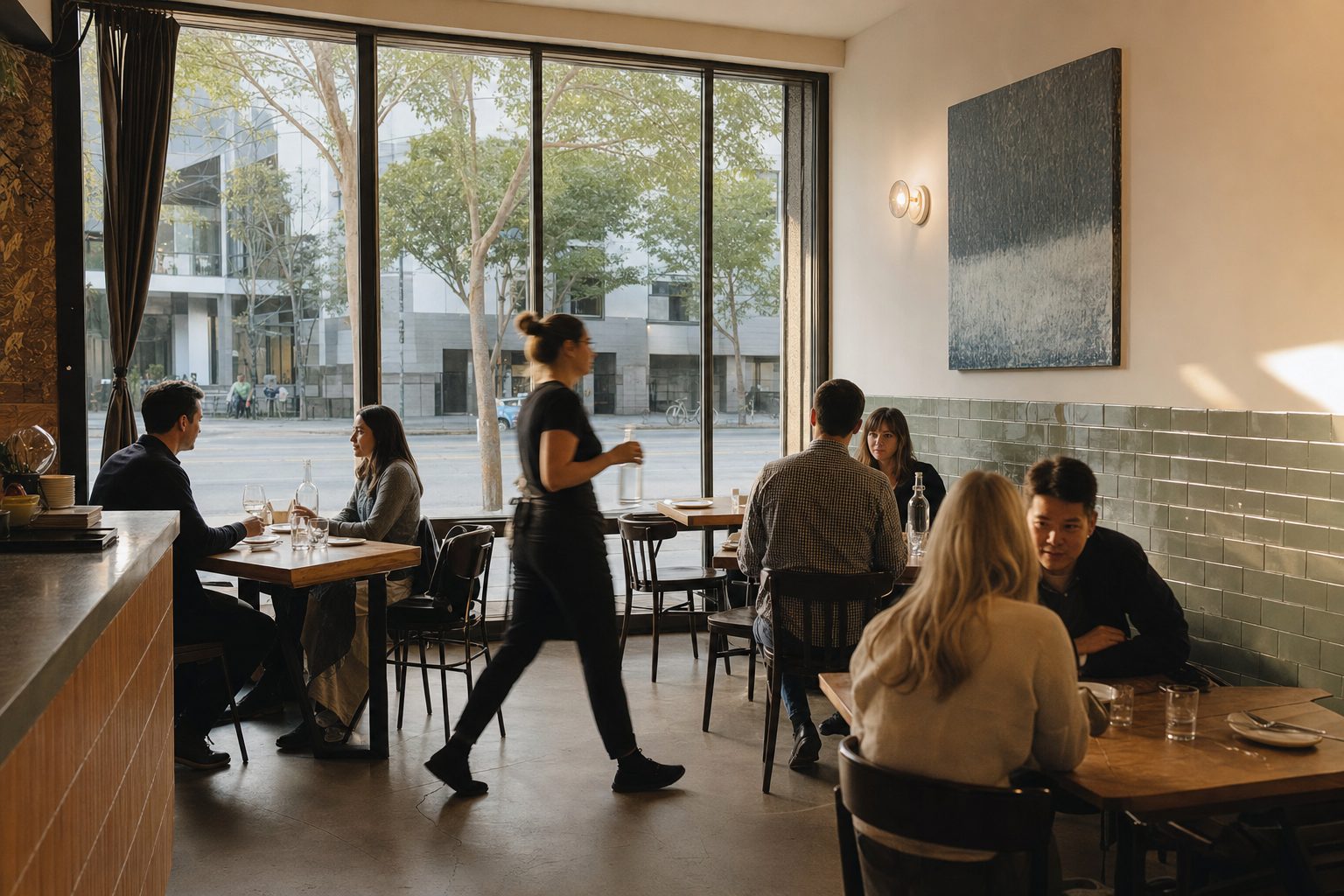
We know San Jose's restaurant scene block by block
San Jose is the largest city in Northern California and its dining economy is unusually spread out, running from a dense downtown core to suburban-scale retail districts and long immigrant commercial corridors. A policy written for one of those settings rarely fits another.
Japantown
Jackson Street holds one of only three surviving historic Japantowns in the United States, alongside San Francisco's Japantown and Little Tokyo in Los Angeles, with storefronts dating to around 1900. Century-old commercial buildings carry older wiring, unreinforced masonry questions and replacement-cost assumptions that a standard property quote tends to miss.
Santana Row
A high-traffic retail and dining district where patio seating, valet and late bar service run together under one landlord. High covers per night and a heavy alcohol mix raise both liquor liability and guest-injury exposure, and leases here usually dictate minimum limits and additional-insured wording.
Downtown and SoFA
The SoFA district and the blocks around Santa Clara Street carry San Jose's concentrated late-night bar trade. Carriers price this corridor on closing hour and security staffing, and assault-and-battery coverage is frequently sublimited or excluded outright rather than quietly included.
Little Saigon and Story Road
One of the largest Vietnamese dining corridors in the country, built largely on family-run kitchens with mixed full-time and part-time payroll. Classification accuracy matters here, because California counts the first employee and relatives are not automatically outside the payroll.
Willow Glen
Lincoln Avenue's walkable village of independent cafes and neighborhood restaurants sits in converted older storefronts with narrow kitchens and sidewalk seating. Trip-and-fall frequency on public walkways drives general liability pricing more than square footage does.
Core coverage lines every San Jose restaurant should evaluate
Restaurant insurance in San Jose is a stack of separate coverages, not one product. These six lines carry most of the risk for a South Bay operation, and the right mix depends on whether you pour alcohol, who owns your building, and how many people are on payroll.
General Liability Insurance
Willow Glen's sidewalk seating along Lincoln Avenue puts tables, servers and pedestrians on the same public walkway, which is where most San Jose guest-injury claims start. General liability responds to bodily injury and property damage to third parties on and around your premises.
Commercial Property Insurance
Japantown's pre-war Jackson Street storefronts and the converted buildings around downtown raise two property questions at once, what the structure would actually cost to rebuild and whether its masonry has been retrofitted. Property coverage written without confirming either tends to be underinsured at the worst moment.
Business Owner's Policy (BOP)
A single Willow Glen cafe or a one-location Story Road kitchen usually fits a business owner's policy, which packages property and general liability at a lower combined cost than buying the two separately. Growth past one site is normally where the bundle stops making sense.
Liquor Liability Insurance
California made server training mandatory under Assembly Bill 1221, the Responsible Beverage Service Training Program Act of 2017: anyone at an on-premises licensed San Jose restaurant who checks identification, takes orders or pours must hold a valid RBS certification, and servers and their managers have 60 days from their first day of employment to register, train and pass the ABC exam.
Workers' Compensation Insurance
Going without coverage in California is a criminal matter, not a billing one. The Division of Workers' Compensation states that Labor Code 3700.5 makes being illegally uninsured a misdemeanor punishable by a fine of not less than $10,000 or up to a year in county jail, with state penalties of up to $100,000 on top.
Business Interruption Insurance
A kitchen fire or a prolonged utility outage closes a Santana Row dining room for weeks, and the lease payments and payroll do not pause with it. Business interruption replaces the income the location would have earned while it is unable to trade.
What restaurant insurance typically costs in San Jose
Ranges reflect what South Bay operators commonly see rather than a quote. Your actual numbers depend on alcohol share of sales, building age and construction, payroll, and claims history.
| Coverage Type | Typical Annual Range | Why It Varies in San Jose |
|---|---|---|
| General Liability Insurance | $750-$2,300/yr | Higher in the late-night downtown and SoFA corridor and on patios with public-sidewalk frontage. |
| Commercial Property (seismic-rated) | $2,600-$8,500/yr | San Jose sits between active fault systems, and unretrofitted older Japantown and downtown masonry prices well above newer construction. |
| Liquor Liability Insurance | $1,200-$4,200/yr | Scales with alcohol share of revenue and closing hour; documented RBS compliance across the staff is a rating factor. |
| Workers' Compensation | Payroll-class rated | Required from the first employee in California, with restaurant class codes separating kitchen from front-of-house payroll. |
| Small Cafe, Bundled | $4,200-$7,800/yr | A baseline for a smaller Willow Glen or Japantown operation with limited or no alcohol service. |
| Full-Service w/ Alcohol, Bundled | $11,000-$24,000+/yr | The top of the range reflects late-night service, large patios and older unretrofitted buildings. |
Why Santa Clara County permitting and California's server rules shape a San Jose policy
Two separate agencies govern a San Jose restaurant before a carrier ever looks at it. The county handles the kitchen and the state handles the bar, and each produces documentation an underwriter will ask to see. Getting both in order usually improves the terms you are offered, not just your odds of passing inspection.
Santa Clara County permits the kitchen
San Jose restaurants are permitted and inspected by the Santa Clara County Department of Environmental Health rather than by the city, which is the office that issues the food facility permit and conducts routine inspections.
The state licenses and trains the bar
Alcohol licensing runs through California ABC, and under the Responsible Beverage Service Training Program Act of 2017 every server and their manager must hold a valid RBS certification obtained within 60 days of hire. Carriers increasingly treat documented RBS compliance as a liquor liability rating factor.
How an unretrofitted Japantown building changes a property quote
Japantown's commercial frontage is among the oldest continuously operating restaurant real estate in the state, which is exactly why the building, not the concept, drives the property conversation.
You're taking over a long-vacant Jackson Street storefront in Japantown
- The setting: Jackson Street's storefronts trace back to roughly 1900, and San Jose's Japantown is one of only three surviving historic Japantowns in the country, so much of the frontage is genuinely old commercial masonry.
- The gap: A property policy bound on square footage alone can insure the space for far less than it would cost to rebuild to current code, and seismic strengthening is frequently excluded unless it is specifically addressed.
- The fix: Coverage is written against the building's actual construction, retrofit status and code-upgrade exposure, with ordinance or law coverage added where the rebuild would trigger current requirements.
- The result: A limit that reflects what reconstruction would really cost in the South Bay, rather than a number that looked reasonable on the application.
This is the kind of detail that separates a San Jose policy from a generic California one, and it is cheaper to sort out before binding than after a loss.
Frequently asked questions
How much does restaurant insurance cost in San Jose, California?
A small San Jose cafe without alcohol commonly lands between $4,200 and $7,800 a year bundled, while a full-service restaurant with a bar typically runs $11,000 to $24,000 or more. Alcohol share of sales, building age and payroll move the number more than seating count does.
Who issues my restaurant's health permit in San Jose?
The Santa Clara County Department of Environmental Health permits and inspects San Jose food facilities, not the city. That is the agency that issues your food facility permit and performs routine inspections.
Do my servers need RBS certification in California?
Yes. Under the Responsible Beverage Service Training Program Act of 2017, anyone at an on-premises licensed establishment who checks identification, takes customer orders, or pours or delivers alcohol must hold a valid RBS certification from ABC. Servers and their managers must register, train with an approved provider and pass the ABC exam within 60 days of their first date of employment.
Does San Jose require workers' compensation for a small restaurant?
California requires it from the first employee, with no headcount threshold. The Division of Workers' Compensation notes that Labor Code 3700.5 makes being illegally uninsured a misdemeanor punishable by a fine of not less than $10,000 or up to a year in county jail, and the state can add penalties of up to $100,000.
What happens if an employee is hurt while I'm uninsured?
You become responsible for all bills related to the injury, and workers' compensation stops being the exclusive remedy. The Division of Workers' Compensation states that an employee of an illegally uninsured employer can file a civil action against you in addition to a workers' compensation claim, and the Uninsured Employers' Benefit Trust Fund pursues reimbursement including liens against your property.
Why does a Japantown or downtown building cost more to insure?
Older masonry commercial buildings raise both replacement cost and seismic retrofit questions. A policy written without confirming the building's retrofit status and code-upgrade exposure is commonly underinsured for what a rebuild would actually cost in the South Bay.
Get San Jose restaurant coverage built around your building and your bar.
Tell us the concept, the neighborhood and whether you pour. We'll put together a San Jose program that matches your actual exposure instead of a generic California template.
Get Your Free Quote →