




Restaurant Insurance in Napa, California
Napa restaurants sit on a fault and inside a wine economy, and both facts show up on the policy. The city took a magnitude 6.0 earthquake in 2014 that damaged more than a hundred structures, and the downtown soils made the shaking worse. Meanwhile tasting rooms count as on-premises licensees, so the state's server rules reach further here than owners expect. Landlords commonly require $1 million per occurrence and $2 million aggregate general liability.
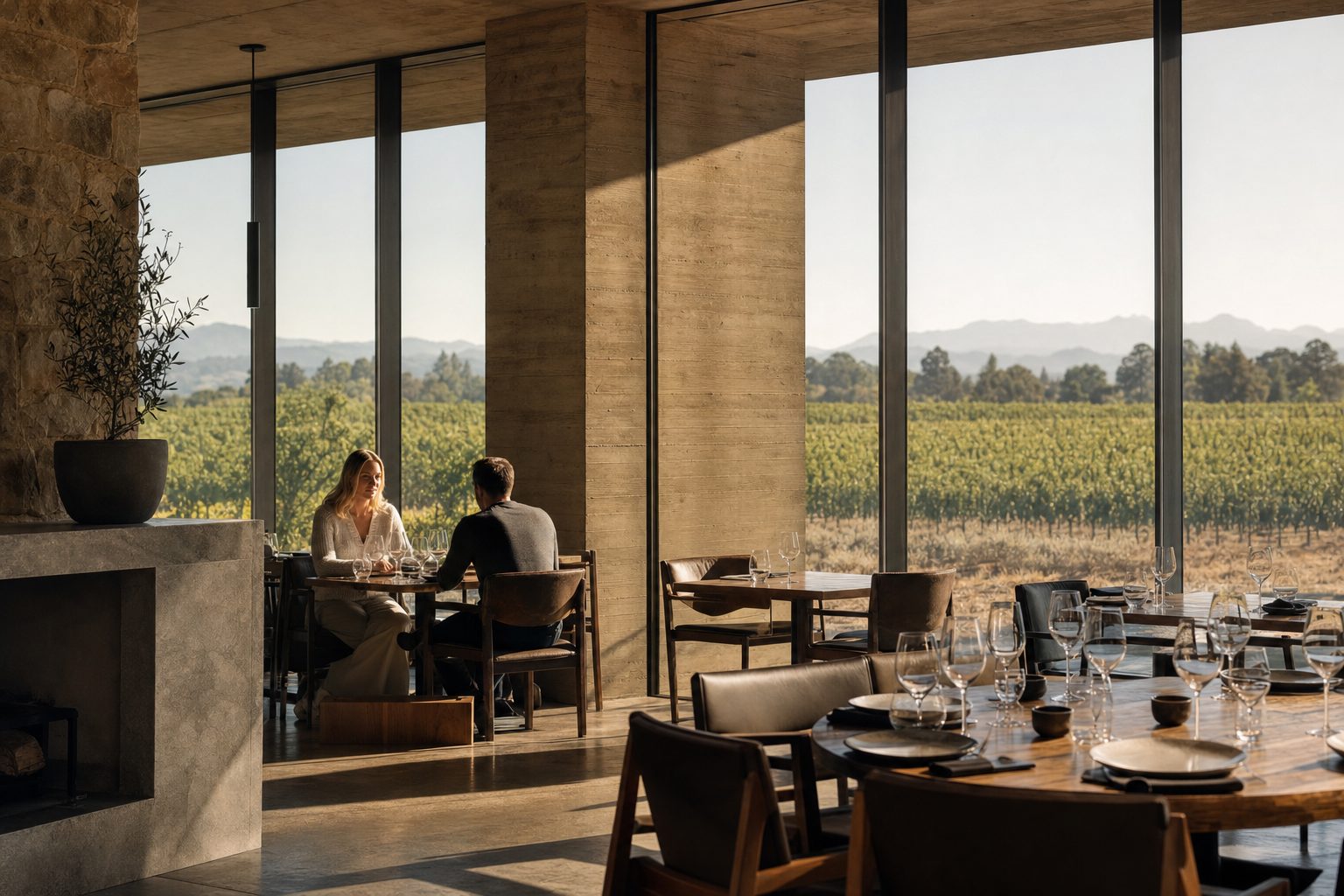
We know Napa's restaurant scene block by block
Napa is a small city carrying a disproportionately valuable hospitality economy, which means high property values, high guest expectations and a seismic question under all of it.
Downtown Napa
The commercial core that took the worst of the 2014 earthquake, where basin and alluvial deposits amplified ground motion beyond what the magnitude alone would suggest. Soil conditions, not just building age, belong in the property conversation here.
First Street and the Oxbow District
A dense cluster of tasting rooms, wine bars and restaurants where alcohol is frequently the primary product rather than an accompaniment. Classification turns on alcohol share of revenue, and it changes the premium substantially.
Silverado Trail and the valley floor
Destination restaurants with significant investment in kitchens, cellars and furnishings. Underinsurance is the common failure mode here, because replacement cost on a high-specification build runs far above a generic estimate.
Carneros and the western hills
Properties exposed to both wildfire and the smoke events that close a valley dining room without touching the building. Income protection matters as much as the property limit in this part of the market.
Napa Valley harvest season
Payroll in a valley restaurant swings hard around harvest and the tourist calendar. Swinging payroll with mixed classifications is exactly the pattern that produces a painful audit if reporting has been loose.
Core coverage lines every Napa restaurant should evaluate
A Napa policy is a stack of separate coverages, and two of them carry more weight here than almost anywhere else in California: earthquake exposure on the property side, and alcohol classification on the liability side.
General Liability Insurance
Oxbow District foot traffic and valley-floor restaurants with outdoor terraces put guests on varied surfaces throughout the day. General liability answers third-party bodily injury and property damage tied to your premises and operations.
Commercial Property Insurance
Downtown Napa's 2014 experience is the argument for reading the property section closely. Standard commercial forms typically exclude earthquake, which in a city that has already taken a damaging one is a gap worth pricing rather than assuming away.
Business Owner's Policy (BOP)
A single Oxbow District kitchen or one First Street cafe usually fits a business owner's policy, which combines property and general liability below the cost of separate placements.
Liquor Liability Insurance
Tasting rooms are not outside the server rules, which surprises a lot of Napa operators. ABC lists tasting rooms explicitly among the on-premises licensed locations subject to Responsible Beverage Service requirements, alongside bars, restaurants, clubs, stadiums, movie theaters, hotels and caterers, so pouring staff need certification exactly as a bartender does.
Workers' Compensation Insurance
The uninsured penalty is calculated from your own payroll. The Division of Workers' Compensation explains that under Labor Code 3722(b) the assessment is the greater of twice the premium the employer would have paid during the uninsured period, or $1,500 per employee employed during that period.
Business Interruption Insurance
Smoke, road closure and evacuation can empty a valley dining room without a mark on the building, and an earthquake can close it for much longer. Business interruption answers for the revenue missed while the doors stay shut.
What restaurant insurance typically costs in Napa
Napa prices above most of California on property because of what is at stake and what sits under it. The ranges below are typical rather than bindable.
| Coverage Type | Typical Annual Range | Why It Varies in Napa |
|---|---|---|
| General Liability Insurance | $850-$2,600/yr | Driven by guest volume and outdoor terrace exposure more than by neighborhood. |
| Commercial Property | $3,000-$10,000/yr | High replacement values on destination builds, with downtown soil conditions a specific concern. |
| Earthquake (separate or endorsed) | Separately rated | Usually excluded from standard property forms and priced on its own in a city that took a magnitude 6.0 in 2014. |
| Liquor Liability Insurance | $1,400-$4,600/yr | Tasting-room and wine-bar classification can move this sharply, because alcohol share of revenue drives it. |
| Workers' Compensation | Payroll-class rated | Required from the first employee, with harvest and tourist-season payroll swings needing accurate reporting. |
| Full-Service w/ Alcohol, Bundled | $12,000-$27,000+/yr | The upper end reflects high property values and alcohol-led revenue mixes. |
Why the 2014 earthquake still sets the property question in Napa
Most California cities discuss seismic risk in the abstract. Napa does not have that luxury, because the city has already run the experiment and the results are documented. What matters for a restaurant policy is that the damage was concentrated where the ground amplified the shaking, which is the same ground most of the commercial core sits on.
What actually happened, per USGS
The South Napa earthquake of August 24, 2014 was a magnitude 6.0 event at about 11 kilometers depth that caused significant damage to over 100 structures. Research published afterward found that the Napa basin and the historic alluvial deposits beneath downtown amplified the ground motions there.
Tasting rooms are on-premises licensees
ABC lists tasting rooms directly alongside bars and restaurants as on-premises licensed locations subject to Responsible Beverage Service requirements, so anyone pouring or checking identification must be certified within 60 days of their first day.
How soil amplification changes a downtown Napa property quote
Two buildings of the same age and construction can perform very differently in the same earthquake if one of them sits on basin sediment. Downtown Napa is the case study.
You're leasing a downtown Napa dining room a few blocks from the 2014 damage
- The setting: Your building sits in the commercial core on the alluvial deposits that researchers identified as having amplified ground motion during the 2014 event.
- The gap: Standard commercial property forms exclude earthquake. A restaurant that assumes its property policy responds to shake damage is uninsured for the peril the city has most recently proven it faces.
- The fix: Earthquake is priced deliberately as an endorsement or a standalone placement, the limit is set against a real replacement-cost figure for a high-specification kitchen, and the business interruption period is matched to how long a downtown rebuild realistically takes.
- The result: A decision made on the numbers, rather than a silent exclusion discovered after the next event.
Declining earthquake cover with open eyes is a legitimate business decision. Not knowing it was excluded is not.
Frequently asked questions
How much does restaurant insurance cost in Napa, California?
A full-service Napa restaurant with alcohol commonly runs $12,000 to $27,000 or more a year, with property representing a larger share than in most California markets because replacement values on destination builds are high. Earthquake cover, where purchased, is normally priced separately.
Is earthquake damage covered by my restaurant property policy?
Generally not. Standard commercial property forms typically exclude earthquake, so it has to be endorsed on or placed separately. In a city that took a magnitude 6.0 in August 2014, that is a decision worth making deliberately rather than by default.
Do tasting room staff need RBS certification?
Yes. ABC lists tasting rooms among the on-premises licensed locations subject to Responsible Beverage Service requirements, together with bars, restaurants, clubs, stadiums, movie theaters, hotels and caterers. Anyone pouring or checking identification must be certified within 60 days of their first date of employment.
What is the minimum penalty for operating without workers' comp in California?
The Division of Workers' Compensation explains that under Labor Code 3722(b) the Division of Labor Standards Enforcement assesses the greater of twice the amount the employer would have paid in premiums during the uninsured period, or $1,500 per employee employed during that period.
Why was downtown Napa hit harder in 2014 than the magnitude suggested?
Research following the August 24, 2014 South Napa earthquake found that the Napa basin and the historic alluvial deposits under downtown amplified the ground motions there. USGS recorded the event at magnitude 6.0 and about 11 kilometers depth, with significant damage to more than 100 structures.
Does smoke from a nearby wildfire trigger business interruption?
It depends entirely on the trigger wording. Many policies respond only to income lost from direct physical damage to your own property, which smoke drifting through a valley may not cause. Civil authority and ingress-egress extensions are the provisions worth reading closely in Napa.
Get Napa restaurant coverage that accounts for the ground under your dining room.
Tell us the location, the concept and how much of your revenue is wine. We'll build a Napa program that treats earthquake and alcohol classification as decisions rather than defaults.
Get Your Free Quote →