
One Claim Can Close A Restaurant. Don't Let That Be Yours.
Access Tailored Restaurant Insurance in Massachusetts
100%
Restaurant-Only Focus
12+
Carrier Markets
MA
Licensed Agents
Our Top A+ Rated Restaurant Insurance Carriers
Every carrier in our restaurant program holds an A+ rating from AM Best. We work with national carriers who write restaurant policies at volume, which means your coverage comes with the claims infrastructure, underwriting depth, and policy language that general business insurers do not offer. Our role is to match your specific concept, size, and risk profile to the carrier whose appetite fits, not just whoever has the lowest opening premium.
COVERAGE AREAS
What Makes Massachusetts Restaurant Insurance Different
First, Massachusetts makes liquor liability insurance a condition of licensure. Under Massachusetts law, no liquor license shall be issued or renewed until the applicant files a certificate of insurance demonstrating minimum liquor liability coverage of $250,000 per person and $500,000 per accident with the local licensing authority. This requirement, in effect since 2010, means that any Massachusetts restaurant serving alcohol that allows its liquor liability policy to lapse is simultaneously risking its license. Most states treat liquor liability as a recommended coverage. Massachusetts treats it as a licensing prerequisite.
Second, Massachusetts’s alcohol liability framework operates through General Laws Chapter 138 Β§ 69, which prohibits serving alcohol to an intoxicated person, combined with common law negligence principles. Unlike states with explicit dram shop statutes creating automatic civil liability, Massachusetts requires an injured party to prove that the establishment knew the patron was intoxicated and continued to serve them despite that knowledge. Massachusetts courts have held establishments liable in cases meeting this standard, including cases involving intoxicated patrons who later caused vehicle accidents. The $250,000/$500,000 statutory minimums are a floor, not a sufficient limit for operators with meaningful alcohol service volume.
Third, Boston’s coastal flood risk is accelerating in documented and measurable ways. The Seaport District, one of Boston’s most active restaurant markets, now floods approximately 12 times per year, compared to 2-3 times annually 50 years ago. State flood models show virtually the entire Seaport is projected to be within a flood zone by 2050. The Boston Globe documented that $7.6 billion in Seaport commercial real estate sits at least partially in the 100-year flood plain. Standard commercial property policies exclude flood damage entirely.
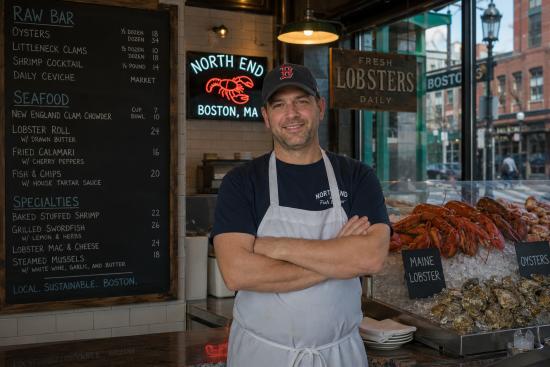
General liability covers bodily injury and property damage claims arising from restaurant operations.
Slip-and-fall incidents, customer injuries, and foodborne illness allegations all fall under general liability. Massachusetts food service operators should carry a minimum of $1 million per occurrence with a $2 million aggregate. Boston’s dense urban dining markets, including the Seaport, Back Bay, South End, and Cambridge, carry elevated foot traffic and premises liability exposure relative to suburban and rural markets.
Commercial property covers your building (if owned), kitchen equipment, furniture, signage, and inventory against fire, theft, vandalism, windstorm, and winter weather damage.
Massachusetts restaurants face nor’easter wind and rain damage, roof damage from heavy snow, frozen pipe water damage, and power outages from winter storms. Massachusetts waterfront restaurant operators must understand that flood damage from coastal flooding and storm surge is excluded from commercial property policies and requires separate flood coverage.
Β
Massachusetts requires workers compensation for any employer with one or more employees under Massachusetts General Laws Chapter 152.
Penalties for non-compliance include stop-work orders, fines starting at $100 per day escalating to $250 per day on appeal, and criminal exposure up to one year in prison. Restaurant kitchens produce burns, lacerations, slip-and-fall injuries, and repetitive motion claims at rates above most industries. Massachusetts also exempts restaurant workers from state overtime requirements β but federal FLSA overtime protections still apply, creating a compliance gap that warrants EPLI coverage.
Massachusetts law requires proof of liquor liability insurance at minimum limits of $250,000 per person and $500,000 per accident before any liquor license is issued or renewed.
These minimums are a statutory floor. Massachusetts restaurants with significant alcohol sales volume, late-night service, or high per-check liquor revenue should carry limits well above the minimums. Massachusetts General Laws Chapter 138 Β§ 69 prohibits serving intoxicated patrons, and common law negligence claims against licensees who violate this prohibition have resulted in significant verdicts in Massachusetts courts.
A commercial umbrella policy provides additional limits above your general liability, auto liability, and employer’s liability policies.
Massachusetts restaurants with alcohol service, delivery operations, and waterfront locations should carry at least $1 million in umbrella coverage, with $2 million to $5 million appropriate for higher-volume Boston, Cambridge, or Cape Cod operators.
Β
Standard commercial property policies exclude flood damage.
Massachusetts restaurants in Boston’s Seaport, South Boston waterfront, East Boston, Charlestown, the North Shore coast, South Shore coast, and Cape Cod face documented coastal flooding risk from nor’easters and storm surge events. The NFIP provides building coverage up to $500,000 and contents coverage up to $500,000. Private flood markets provide higher limits for restaurants in Boston’s high-value commercial markets that exceed NFIP capacity.
A Business Owner’s Policy bundles general liability, commercial property, and business interruption into a single contract at a combined premium typically lower than purchasing each separately.
Not every Massachusetts operation qualifies, as carriers apply eligibility based on revenue, square footage, and operation type. Boston’s high-density dining markets and coastal operators on Cape Cod, Martha’s Vineyard, and Nantucket frequently fall outside standard BOP eligibility due to premises liability and nor’easter exposure. A BOP does not replace workers’ compensation, liquor liability, or commercial auto. It is a foundation, not a finished program.
Massachusetts restaurants collect customer payment data through point-of-sale systems, online ordering platforms, and reservation systems.
Massachusetts has one of the country’s most comprehensive data security statutes β 201 CMR 17.00 requires businesses handling Massachusetts residents’ personal data to maintain a written information security program (WISP). A data breach triggers notification obligations and potential regulatory penalties. Standalone cyber liability coverage is important for any Massachusetts restaurant that has expanded digital ordering and payment infrastructure.
Β
Nor’easters and winter ice storms cause extended power outages across Massachusetts each year.
A multi-day outage can spoil entire walk-in cooler and freezer inventories. Food spoilage coverage pays for contaminated or spoiled inventory following a power outage or equipment failure. This endorsement is important for Massachusetts restaurants with high-value seafood or specialty food inventory.
Β
Standard commercial property policies cover equipment damaged by fire or theft but exclude mechanical breakdown.
Equipment breakdown coverage pays for repair or replacement of commercial refrigeration, ovens, fryers, dishwashers, and HVAC systems when they fail from mechanical or electrical causes. Massachusetts’s winter temperature extremes and power fluctuations during nor’easters stress commercial HVAC and refrigeration systems, and equipment failure during a busy winter or summer season produces both repair costs and lost revenue
Business interruption replaces lost revenue when a covered property loss forces closure.
Massachusetts’s seasonal restaurant markets β particularly Cape Cod, Martha’s Vineyard, Nantucket, and the North Shore β generate the majority of their annual revenue in a compressed summer window. A nor’easter or flood event during peak season is far more damaging than the same event in January. Business interruption coverage limits and indemnity periods should reflect peak-season revenue concentration, not average monthly income.
Massachusetts’s active labor enforcement environment, complex tip credit compliance obligations, and the distinction between state and federal overtime rules create meaningful EPLI exposure for restaurant operators.
EPLI covers claims arising from wrongful termination, discrimination, harassment, and wage-and-hour violations. Massachusetts restaurants with tipped employee populations and 15 or more employees should treat EPLI as a core coverage rather than an optional add-on.
WHO WE SERVE
Massachusetts Restaurant Insurance by Restaurant Type
π½οΈ
Full-service Massachusetts restaurants carry the broadest liability exposure of any restaurant type. Alcohol service, dine-in volume, kitchen complexity, and front-of-house staffing combine to produce slip-and-fall claims, dram shop exposure, foodborne illness allegations, and workers comp events at higher frequency than limited-service operations. Boston and Cambridge full-service operators should carry liquor liability limits well above the statutory $250,000/$500,000 minimums given the volume of alcohol service in those markets. Waterfront operators in the Seaport and Charlestown should carry flood coverage.
π₯‘
Massachusetts’s fast casual and quick-service segment is concentrated in Greater Boston, Worcester, Springfield, and the Route 128 suburban corridor. Counter-service staffing models produce workers comp claims from repetitive motion and slip-and-fall incidents. Drive-through operations add vehicle collision exposure. Hired/non-owned auto endorsements cover delivery drivers using personal vehicles for commercial purposes.
Β
π
Massachusetts food trucks operate under local board of health permits and require commercial auto coverage plus general liability for on-site interactions. Boston and Cambridge food truck operators serving summer festivals and farmers’ markets represent peak revenue periods where equipment breakdown and food spoilage coverage are important. Winter operating conditions in Massachusetts add meaningful slip-and-fall risk at service windows.
π±
Massachusetts catering businesses face off-premises liability at every event. Slip-and-fall claims at client venues, foodborne illness allegations, and liquor liability at events where alcohol is served are the primary risks. Off-premises liquor liability is critical for Massachusetts caterers providing bartending services. All alcohol service at catered events is subject to Massachusetts Chapter 138 Β§ 69 and the common law negligence framework.
Β
Β
β
Massachusetts cafes carry lower baseline risk than full-service restaurants. Equipment breakdown exposure is meaningful given winter temperature extremes and power fluctuation risk. Boston’s dense cafe market in neighborhoods like Beacon Hill, Cambridge’s Central Square, and Northampton’s downtown carry significant foot traffic and slip-and-fall exposure. Cafes adding wine or beer service must comply with the mandatory liquor liability insurance requirement immediately upon licensure.
π
Massachusetts pizzerias with delivery operations carry significant hired/non-owned auto exposure year-round, with winter driving conditions in Massachusetts adding meaningful accident risk. A delivery driver using a personal vehicle is typically not covered under their personal auto policy for commercial use. A hired/non-owned auto endorsement closes this gap. Product liability covers foodborne illness claims.
π₯
Boston’s fine dining market, anchored in the Back Bay, South End, Beacon Hill, and Seaport, is one of the most recognized in the country. High per-check alcohol sales and sophisticated beverage programs create liquor liability exposure above the statutory minimums. Seaport fine dining operators carry the dual exposure of high liquor liability and accelerating coastal flood risk. Custom fixtures, wine cellars, and specialized kitchen equipment require careful commercial property replacement cost valuation.
Β
Β
π»
Massachusetts ghost kitchen operators in Boston and Worcester depend entirely on third-party delivery platforms. Business interruption tied to equipment failure or winter power outages is especially important. Cyber liability is critical: ghost kitchens process customer payment data through multiple digital platforms and face data breach exposure under Massachusetts’s comprehensive 201 CMR 17.00 data security requirements.
π₯
Massachusetts bakeries carry significant equipment breakdown exposure from commercial ovens, proofing chambers, and refrigeration units. Winter power fluctuations are a documented cause of equipment failure and spoilage. Product liability coverage protects against allergen-related claims. Bakeries in the Boston metro and college-town markets like Amherst and Northampton carry high foot traffic and seasonal volume concentration around academic calendars.
Β
Β
π’
Massachusetts franchise restaurant operators must satisfy insurance requirements specified in their franchise agreement, which typically exceed state minimums. Franchisors commonly require general liability limits of $2 million or higher, umbrella coverage of $5 million or more, and specific workers comp structures. Massachusetts franchise operators must also ensure their liquor liability coverage meets or exceeds the statutory $250,000/$500,000 minimums as a license condition.
Β
ποΈ
Massachusetts restaurant groups operating multiple brands or locations need coverage structures that align corporate entity organization with insurance documentation. Groups with Seaport waterfront locations face distinct flood exposure relative to inland locations. A commercial umbrella with adequate limits, a workers comp program covering all Massachusetts locations, and EPLI coverage addressing the state’s complex tip credit and overtime compliance landscape are important for multi-concept operators.
Β
Β
Massachusetts-Specific Risk Factors Every Restaurant Owner Must Understand
Mandatory Liquor Liability β A License Condition, Not a Recommendation:
Massachusetts is one of the few states that gates liquor license issuance and renewal on proof of liquor liability insurance. The requirement β $250,000 per person and $500,000 per accident minimum β was established in 2010 and applies to every Massachusetts restaurant, bar, nightclub, and food service establishment holding a liquor license. A lapsed policy does not just create a coverage gap: it creates an immediate license compliance issue. Massachusetts restaurant operators should confirm that their liquor liability policy renewal dates are aligned with their liquor license renewal calendar, and that their broker is tracking both.
Massachusetts Dram Shop Liability β Chapter 138 and Common Law:
Massachusetts General Laws Chapter 138 Β§ 69 creates the statutory prohibition on serving intoxicated patrons. Civil liability is established through common law negligence, requiring an injured plaintiff to prove that the establishment knew the patron was intoxicated and continued serving. Massachusetts courts have imposed liability in cases involving visibly intoxicated patrons who later caused motor vehicle accidents, bodily injury to third parties, and property damage. Bartenders, wait staff, managers, and owners all share responsibility under Massachusetts’s framework for monitoring signs of intoxication including slurred speech, slowed reaction, and aggression. The $250,000/$500,000 statutory minimums are insufficient protection for restaurants with active alcohol service programs, and operators should structure liquor liability limits based on actual sales volume and risk exposure.
Boston Seaport and Waterfront Coastal Flood Risk:
Boston’s Seaport District is one of the fastest-growing restaurant markets in New England and one of the most flood-exposed. The Boston Globe’s 2025 flood modeling documented that Boston Harbor floods the Seaport approximately 12 times per year, up from 2-3 times annually in previous decades. Virtually the entire Seaport is projected to be within a FEMA flood zone by 2050. The February 2026 nor’easter, characterized by Boston officials as “historic,” activated flood barriers at the MBTA’s Aquarium Station and forced evacuations in low-lying waterfront areas. Seaport restaurants, South Boston waterfront concepts, Charlestown Navy Yard dining, and East Boston waterfront operators all face this accelerating exposure. Separate flood insurance is the only mechanism that covers this risk.
Nor’easter and Winter Storm Commercial Property Exposure:
Massachusetts experiences nor’easters with documented commercial property damage impact every winter season. Heavy snow accumulation creates roof collapse risk on older commercial buildings, particularly flat-roof structures common in urban Boston restaurant markets. Frozen pipe water damage is a recurring winter claim category across Massachusetts. Extended power outages from winter ice storms spoil food inventory and interrupt operations. Massachusetts restaurant operators should verify that their commercial property policy covers snow load damage and frozen pipe events, and that their food spoilage endorsement applies during utility outages.
Tip Credit, Minimum Wage, and EPLI Exposure:
Massachusetts maintains a tip credit system in which tipped employees receive a base wage of $6.75 per hour in 2026, with tip credits up to $8.25, bringing total compensation to the $15.00 state minimum wage. Massachusetts voters rejected Question 5 in November 2024, which would have eliminated the tip credit. The preservation of the tip credit maintains ongoing wage-and-hour compliance obligations: if tipped employees do not earn enough in tips to reach the $15.00 minimum in any given workweek, the employer must make up the difference. Massachusetts also exempts restaurant workers from state overtime requirements, but federal FLSA overtime protections still apply β a gap that creates compliance risk for restaurants applying only state law standards to scheduling and pay calculations. Employment practices liability insurance (EPLI) is the appropriate financial protection layer for wage-and-hour claims and other employment-related allegations.
WHY INSURANCE KITCHEN
Why Restaurant Owners Choose Us
We specialize exclusively in food service operations. Every carrier we access, every policy we place, is built around restaurant risk β not adapted from a general commercial template.
We shop 12+ carriers to find the right match for your operation β not just the first carrier who will write the policy. Your coverage should reflect your specific risk profile.
Fast Turnaround
Most restaurants get coverage options within 24 – 48 hours. Opening soon, renewing, or replacing a policy that’s not working β we move fast because your timeline matters.
COMMON QUESTIONS
Massachusetts Restaurant Insurance FAQs
What insurance does a restaurant need in Massachusetts?
Massachusetts restaurants need general liability, commercial property, workers compensation, and liquor liability as a baseline. Liquor liability is legally required to obtain or renew a Massachusetts liquor license. Boston Seaport, waterfront, and Cape Cod restaurants need separate flood coverage. Operators with tipped employees should carry EPLI given Massachusetts’s wage and hour compliance landscape.
Is liquor liability insurance required by law in Massachusetts?
Yes. Massachusetts law requires proof of liquor liability at minimum limits of $250,000 per person and $500,000 per accident before any liquor license is issued or renewed. A lapsed policy creates both a coverage gap and a license compliance violation. Policy renewal dates should be aligned with liquor license renewal calendars.
What is Massachusetts's dram shop law?
Massachusetts General Laws Chapter 138 Β§ 69 prohibits serving alcohol to an intoxicated person. Civil liability is established through common law negligence β an injured party must prove the establishment knew the patron was intoxicated and continued serving them. Massachusetts courts have imposed liability in cases meeting this standard. The $250,000/$500,000 statutory minimums are a floor, not a sufficient limit for high-volume alcohol service operations.
Is workers compensation required for Massachusetts restaurants?
Yes. Massachusetts requires workers compensation for any employer with one or more employees under Chapter 152. Non-compliance triggers stop-work orders, escalating daily fines, and potential criminal charges. Massachusetts exempts restaurant workers from state overtime rules, but federal FLSA overtime still applies β operators relying solely on state law guidance face wage-and-hour compliance exposure.
Do Massachusetts restaurants need flood insurance?
Boston’s Seaport floods approximately 12 times per year and is projected to be largely within a FEMA flood zone by 2050. Standard commercial property policies exclude flood damage. Seaport, waterfront, and Cape Cod restaurants should carry NFIP or private flood coverage. Nor’easters also create meaningful coastal flooding across the Massachusetts coastline.
How much does restaurant insurance cost in Massachusetts?
Massachusetts restaurant insurance costs depend on revenue, seating capacity, alcohol sales, location, flood zone status, and claims history. A small year-round fast casual operation may pay $5,000 to $10,000 per year. A full-service Boston restaurant with alcohol service, waterfront flood exposure, significant property values, and EPLI coverage will typically pay $18,000 to $40,000 or more depending on limits and loss history.
Get Your Restaurant Covered Today
Insurance Kitchen specializes exclusively in restaurants. No generalists, no boilerplate programs. Call (234) 271-4963 or start your custom quote online to build coverage calibrated to your operating environment.