




Restaurant Insurance in Wilmington, North Carolina
In September 2024 a storm did enough damage to New Hanover County to draw a federal disaster declaration, and it never got a name. The National Hurricane Center carried it as Potential Tropical Cyclone Eight and it was still unnamed when it dissipated. That matters because hurricane and named-storm deductibles are usually triggered by the naming, which leaves an unnamed system in a genuine grey zone. The other local trap is construction: subletting work without a certificate makes you liable for someone else's crew.
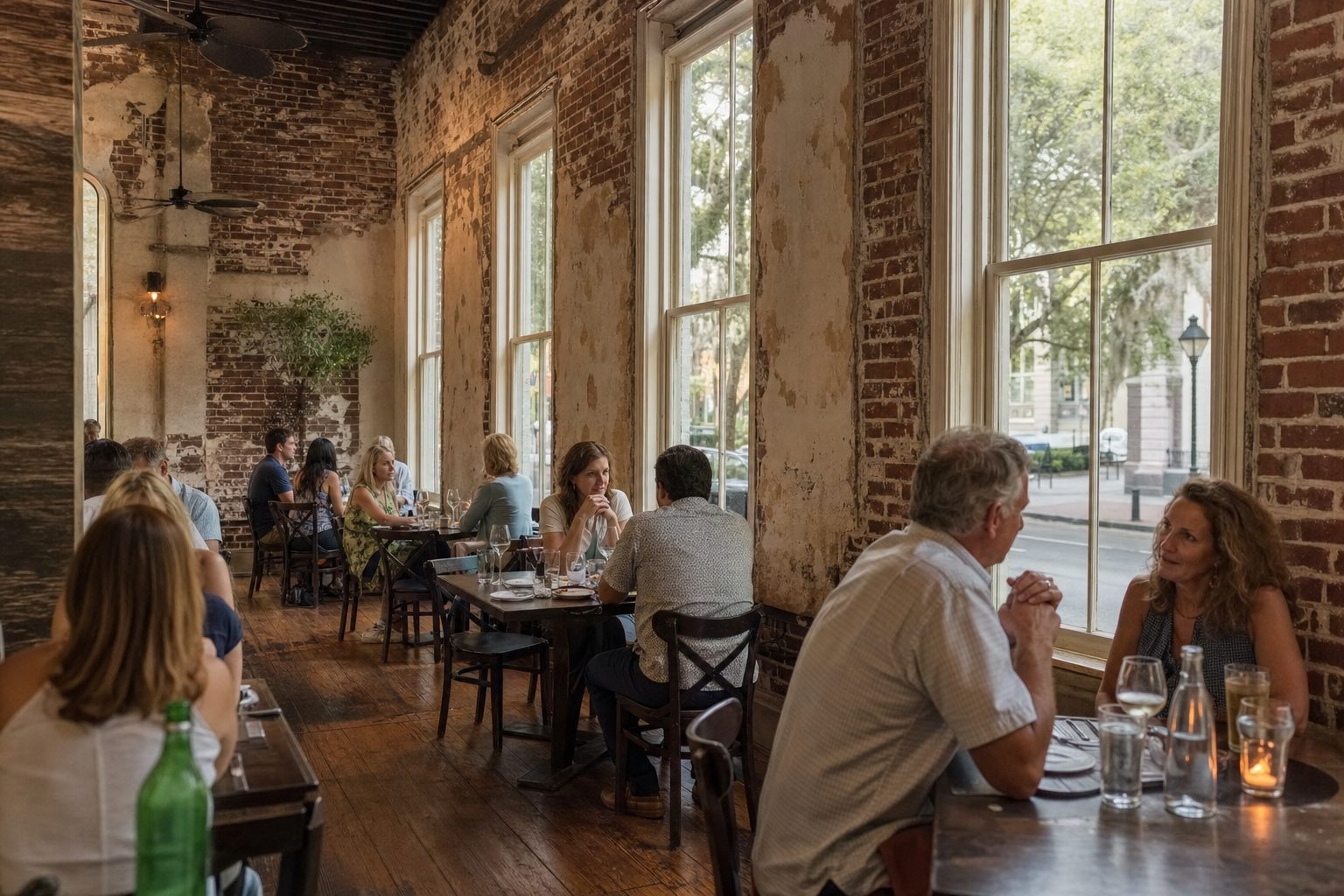
We know Wilmington's restaurant districts block by block
Wilmington carries a historic riverfront downtown, a beach economy a few miles east, and a storm record long enough that every operator has an opinion about deductibles.
Citywide, every policy
The clause that decides how much of a storm loss you keep. Whether it triggers can turn on whether a system was given a name, which is not a decision anyone local makes.
Front Street and the downtown district
Old masonry and timber buildings carrying modern kitchens, where reinstating to current code costs well beyond a generic estimate.
Wrightsville Beach and the approaches
Seasonal volume with high summer concentration, where a September storm lands at the end of the earning season and before the quiet one.
Post-storm, across the city
A market that is frequently under construction. Subletting work without the right certificate shifts a subcontractor's compensation liability onto the restaurant.
The low blocks near the river
Ground where the realistic loss is water. The property form answers wind and writes out flood, and the two arrive together.
Core coverage lines every Wilmington restaurant should evaluate
A Wilmington policy turns on two readings most owners never make: which deductible applies, and who carries the compensation risk on your build-out.
General Liability Insurance
Front Street pedestrian volume and beach-season crowds push a lot of guests across your floor. This line covers their injuries, damage to premises you occupy, and the defense that follows a claim.
Commercial Property Insurance
Read the deductible before the limit. Hurricane and named-storm deductibles are typically a percentage of insured value and are triggered by defined storm criteria, so the wording decides what an unnamed system costs you.
Business Owner's Policy (BOP)
A single downtown Wilmington dining room generally fits a business owner's policy, which places property and general liability together for less than buying them separately.
Liquor Liability Insurance
North Carolina recognizes a modern defense. It is a defense to an underage sale that the purchaser used a biometric identification system showing they were of age, where they had previously registered with the seller a driver's license, a state special identification card, a military identification card or a passport bearing their date of birth and a physical description.
Workers' Compensation Insurance
Subletting without a certificate is the expensive version. A contractor who sublets work without obtaining a certificate of the subcontractor's compliance is liable to the same extent as that subcontractor, and the statute says this applies irrespective of whether the subcontractor has fewer than three employees.
Business Interruption Insurance
A September closure costs the end of one season and the start of the quiet one. Business interruption answers for that income, subject to the peril behind the closure being covered.
What restaurant insurance typically costs in Wilmington
Wilmington prices above the Piedmont on property for obvious reasons, and the deductible structure matters at least as much as the premium. The figures below set expectations rather than a price.
| Coverage Type | Typical Annual Range | Why It Varies in Wilmington |
|---|---|---|
| General Liability Insurance | $600-$1,900/yr | Riverfront pedestrian volume and beach-season crowds drive this above inland comparables. |
| Commercial Property (coastal, wind-rated) | $1,800-$5,500/yr | Answers wind, not water, and the named-storm deductible is usually a percentage of insured value rather than a flat figure. |
| Flood (separate placement) | Separately rated | Bought on its own, and the peril most likely to do the damage on the low riverfront blocks. |
| Liquor Liability Insurance | $900-$3,100/yr | Downtown and beach-approach trade price above a neighborhood room. |
| Workers' Compensation | Payroll-class rated | Required at three or more employees, and the local trap is construction: sublet work without a compliance certificate and the subcontractor's exposure lands on you regardless of that subcontractor's own headcount. |
| Business Interruption | Rated by exposure | Sized against a storm landing at the close of the earning season. |
| Full Program w/ Alcohol | $5,000-$11,000/yr | The upper end reflects coastal exposure and historic construction. |
Why a storm with no name is a problem for your deductible
Coastal policies are built around named storms. The deductible, and sometimes the exclusion, hangs on a classification decision made by a federal agency. September 2024 showed what happens when a system does real damage and never crosses that line.
The storm that stayed unnamed
The National Hurricane Center's 2024 Atlantic tropical cyclone report index lists entry eight as "Eight", classified PTC for Potential Tropical Cyclone, over 15 to 17 September 2024, between Debby and Helene, and without a name. FEMA nonetheless declared DR-4837, Potential Tropical Cyclone Eight, with New Hanover County designated and an incident period of 16 to 20 September 2024. If your deductible or exclusion is written around a named storm, read it before the next one.
Sublet the work, inherit the liability
G.S. 97-19 makes any principal, intermediate or subcontractor who sublets work without obtaining a certificate of the subcontractor's compliance liable to the same extent as that subcontractor, "irrespective of whether such subcontractor has regularly in service fewer than three employees." Obtaining the certificate before subletting removes that liability for the term it covers.
How the same damage produces two very different retentions
Percentage deductibles are large by design. Whether one applies at all can depend on a naming decision made hundreds of miles away.
Your Front Street building is damaged by an unnamed September system
- The setting: The system that becomes DR-4837 crosses the area over 16 to 20 September 2024. It was carried as Potential Tropical Cyclone Eight throughout and never received a name.
- The gap: Coastal property policies commonly carry a hurricane or named-storm deductible expressed as a percentage of insured value, with a trigger defined by reference to a named system or to declared watches and warnings. An unnamed system may fall outside that trigger, leaving the ordinary deductible, or it may not, depending entirely on how your trigger is worded.
- The fix: The deductible trigger is read and understood before the season rather than argued after a loss, the difference between the percentage and the flat retention is quantified in dollars, and flood is placed separately so the water half of the loss has somewhere to go.
- The result: A retention you can predict, on wording you have actually read.
The naming decision is made by the National Hurricane Center. The wording that reacts to it is yours to negotiate.
Frequently asked questions
How much does restaurant insurance cost in Wilmington, North Carolina?
A full-service Wilmington restaurant with alcohol commonly runs $5,000 to $11,000 a year across property, general liability, liquor liability and workers' compensation, with flood priced separately. Coastal exposure and historic downtown construction are what lift it above Piedmont markets.
Does a named-storm deductible apply to an unnamed storm?
It depends entirely on how the trigger is written, which is why this is worth reading in advance. In September 2024 the National Hurricane Center carried a system as Potential Tropical Cyclone Eight without ever naming it, and FEMA still declared DR-4837 for New Hanover County over 16 to 20 September. A trigger drafted around a named storm may not catch that, for better or worse.
Am I liable for a contractor's injured worker during a restaurant build-out?
You can be. G.S. 97-19 makes a contractor who sublets work without obtaining a certificate of the subcontractor's compliance liable to the same extent as that subcontractor, and says so irrespective of whether the subcontractor has fewer than three employees. Obtaining the certificate before subletting removes that liability for the term specified.
What identification defends an underage sale in North Carolina?
A driver's license, a state-issued special identification card, a military identification card or a passport showing the purchaser to be of age and bearing a reasonable physical description. North Carolina also recognizes a biometric identification system defense, where the purchaser had previously registered one of those documents with the seller.
Is flood covered by my Wilmington property policy?
No, not under a standard commercial property form, which answers wind and excludes flood. On the low blocks near the river the water is frequently the larger half of a storm loss, so it has to be placed separately.
Should I schedule exterior signage and glass separately?
On the coast it is usually worth it. Signage, awnings and glass are the components most exposed to wind and the ones most often sub-limited, so a policy sized around the building can fall short on exactly the parts a storm removes first.
Get Wilmington coverage where you know the deductible before the storm is named.
Tell us where you sit relative to the river, what your deductible trigger says and whether you are mid-build. We'll build a Wilmington program with the retention quantified and flood placed properly.
Get Your Free Quote →