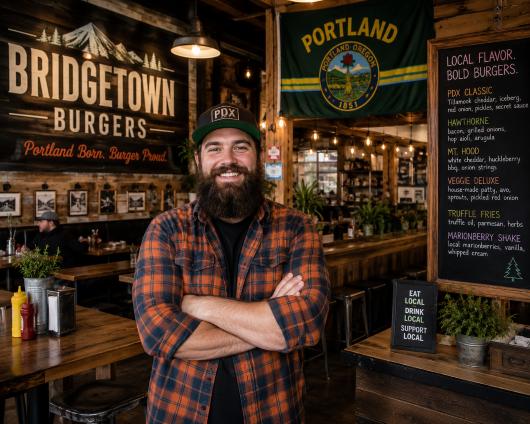
One Claim Can Close A Restaurant. Don't Let That Be Yours.
Access Tailored Restaurant Insurance in Oregon
100%
Restaurant-Only Focus
12+
Carrier Markets
OR
Licensed Agents
Our Top A+ Rated Restaurant Insurance Carriers
Every carrier in our restaurant program holds an A+ rating from AM Best. We work with national carriers who write restaurant policies at volume, which means your coverage comes with the claims infrastructure, underwriting depth, and policy language that general business insurers do not offer. Our role is to match your specific concept, size, and risk profile to the carrier whose appetite fits, not just whoever has the lowest opening premium.
COVERAGE AREAS
What Makes Oregon Restaurant Insurance Different
First, the Cascadia Subduction Zone is the most significant uninsured risk facing Oregon restaurant operators — a geologic threat capable of producing a magnitude 9.0 earthquake, a 100-foot tsunami along the coast, and months-long infrastructure disruption across the Willamette Valley — and standard commercial property insurance excludes earthquake damage entirely. With only 10 to 20 percent coverage penetration statewide, most Oregon restaurants are uninsured for their single largest physical catastrophe risk.
Second, ORS 471.565’s dram shop framework changed materially in October 2024 when the Oregon Supreme Court held in Bonner v. American Golf that the statute’s liability shield is unconstitutional as applied to involuntary intoxication — meaning restaurants that continue serving patrons past the point of obvious impairment now face ordinary negligence exposure without the elevated clear and convincing evidence standard the statute normally provides.
Covers third-party bodily injury, property damage, and advertising injury.
Oregon’s rainy winters create year-round wet-entryway and parking lot slip-and-fall exposure. Foodborne illness claims run through general liability alongside product liability. Portland and metro restaurants in high-density entertainment districts face elevated claim frequency from high foot traffic. Standard minimums run $1 million per occurrence and $2 million aggregate. Umbrella coverage above the GL floor is essential for restaurants with alcohol programs given ORS 471.565’s uncapped damages and the Bonner expansion.
Covers building, equipment, inventory, and furnishings against fire, wind, theft, and storm. Oregon’s property risk profile is anchored by three excluded perils that standard policies do not cover:
earthquake (Cascadia Subduction Zone), flood (coastal tsunami and inland river flooding), and volcanic mudflow/lahar from Mount Hood. Standard property covers wildfire, but southern and eastern Oregon restaurants in the wildland-urban interface may face non-renewals or surplus lines placement. Operators should confirm deductible structure, replacement cost valuation, and explicitly ask about earthquake and flood endorsement availability when obtaining property quotes.
Oregon requires coverage from the first employee under ORS Chapter 656.
Oregon is a competitive state — employers choose between SAIF Corporation (the state-chartered fund, 54% market share, carrier of last resort) and private admitted carriers. Penalties for non-compliance reach the greater of $1,000 or twice the premium owed, plus $250 per day ongoing, plus Class A misdemeanor exposure. Coverage must be in place before any employee starts work, including part-time and seasonal staff.
Oregon law requires a minimum of $300,000 in liquor liability coverage as a condition of any OLCC license — this is a statutory floor, not a recommendation.
ORS 471.565 applies when a patron is visibly intoxicated and the establishment served them; the standard is clear and convincing evidence. Bonner v. American Golf (2024) removed the statute’s shield at extreme intoxication, exposing restaurants to ordinary negligence liability when patrons lose reason and volition. No damage cap applies. Full-service bar programs should evaluate limits significantly above the $300,000 statutory minimum.
Oregon’s uncapped dram shop damages under ORS 471.565, expanded by Bonner’s ordinary negligence carve-out at extreme intoxication, make umbrella coverage essential for any full-service bar program.
A primary liquor liability policy at the $300,000 statutory minimum is inadequate for a catastrophic alcohol-related fatality claim. Umbrella coverage above primary general liability and liquor liability limits provides meaningful protection at modest incremental cost.
Standard commercial property excludes flood. Oregon’s flood exposures include coastal tsunami following a Cascadia event, Willamette River and tributary flooding in Portland, and post-CSZ subsidence that permanently increases flood zone exposure across the coast.
NFIP commercial coverage or private flood market alternatives are available. Coastal restaurant operators have compound exposure: tsunami damage, which NFIP does not cover, plus long-term subsidence-driven flooding.
Oregon restaurants in Portland’s entertainment districts — Pearl District, Division Street, Mississippi Ave — handle high cash and card volumes during peak service.
Employee dishonesty coverage protects against internal theft; crime coverage addresses robbery and check fraud. High-revenue bar operations under the Full On-Premises license carry elevated cash exposure during late-night service hours.
Portland metro restaurants processing high payment card transaction volumes face PCI DSS exposure from data breaches.
Oregon’s data breach notification law requires timely notification to affected individuals and the attorney general. Cyber liability coverage addresses forensic investigation, notification costs, and regulatory response. Digital ordering platforms and third-party delivery integrations expand the attack surface beyond the in-house POS system.
Pays for perishable inventory losses from power outages and refrigeration failures.
Oregon’s winter storms and wildfire-related power disruptions create multi-day outage exposure. Contamination coverage addresses foodborne illness incidents requiring professional sanitation and closure. Post-contamination health authority re-inspection under the mandatory county-based OHA licensing system can create a closure window beyond the initial incident.
The single most important coverage gap for Oregon restaurants is earthquake.
Standard commercial property excludes it. A separate earthquake endorsement or DIC policy is required for CSZ exposure. Much of this coverage is placed through surplus lines carriers. Portland and Willamette Valley operators should treat earthquake coverage as a required component of their property program, not an optional add-on, and evaluate extended indemnity periods on BI coverage alongside the earthquake endorsement.
Replaces lost revenue during covered closures.
Oregon’s dominant BI risks are wildfire-forced evacuations in southern and eastern Oregon, earthquake-caused structural damage, and winter storm events in the Cascades and coast. A Cascadia event could produce weeks to months of infrastructure disruption — utility restoration and building re-occupancy timelines in Portland after a full rupture are projected to far exceed standard 30-day BI waiting periods. Extended period of indemnity provisions of 180 to 360 days are advisable for Portland and Willamette Valley restaurants.
BOLI aggressively enforces Oregon’s wage and hour laws, including the no-tip-credit rule, the three-tier minimum wage, and the Fair Workweek Act for covered chains.
Wrongful termination, harassment, and wage calculation error claims generate significant EPLI frequency in Oregon’s restaurant sector. Oregon’s paid sick leave and paid family leave obligations create additional compliance complexity with corresponding claim exposure.
WHO WE SERVE
Oregon Restaurant Insurance by Restaurant Type
🍽️
Full-service Oregon restaurants carry general liability, OLCC-required liquor liability at minimum $300,000 with limits evaluated above the floor given Bonner’s expansion, workers’ comp from the first employee, commercial property with earthquake and flood endorsements evaluated, and business interruption with extended indemnity periods for Portland-area locations. All servers need OLCC Service Permits before their first shift under HB 4138. Umbrella coverage above liquor liability is essential.
🥡
Fast casual operations without liquor service focus on workers’ comp from the first employee, general liability, commercial property with earthquake gap evaluated, and food spoilage for storm outages. Oregon’s no-tip-credit minimum wage applies to all counter and kitchen staff. The three-tier wage determination depends on each location’s county classification.
🚚
Oregon food trucks need commercial auto, general liability, and product liability. Workers’ comp applies from the first employee including seasonal event workers. OHA food establishment licensing applies through the county of primary operation. Portland-area food trucks fall under Multnomah County Environmental Health for licensing.
🍱
Oregon caterers face product liability and off-premises general liability on every event. Hired-and-non-owned auto covers vehicles used in catering operations. Caterers with OLCC catering licenses carry ORS 471.565 dram shop exposure and the Bonner expansion at events where alcohol is served. HB 4138’s server permit requirement applies to all catering alcohol service staff.
☕
Oregon cafes without alcohol service focus on workers’ comp from the first employee, general liability, commercial property with earthquake gap evaluated, equipment breakdown for espresso and refrigeration, and food spoilage. Paid sick leave obligations apply from 10 employees statewide or 6 employees with a Portland location. The applicable minimum wage tier depends on location.
🍕
Pizzerias combine delivery auto risk, workers’ comp under ORS Chapter 656, and general liability. Commercial auto or hired-and-non-owned auto covers delivery drivers. Pizzerias with beer and wine service carry OLCC Limited On-Premises obligations and ORS 471.565 exposure. Oregon’s no-tip-credit rule applies to all tipped delivery and counter staff.
🥂
Oregon fine dining restaurants carry OLCC Full On-Premises licenses with full dram shop exposure under ORS 471.565 as modified by Bonner. High-value wine inventory should be scheduled specifically on the property policy. Earthquake endorsement is essential for Portland locations. Equipment breakdown for specialized kitchen equipment is important. Umbrella coverage above liquor liability is a baseline requirement given uncapped Oregon dram shop exposure.
👻
Oregon ghost kitchens need product liability for every delivered order and commercial property with earthquake and wildfire exposure evaluated by location. Workers’ comp applies from the first employee. OHA or county food safety licensing is required based on the kitchen’s county of operation. Oregon’s no-tip-credit wage applies to all kitchen staff at the applicable tier.
🥐
Oregon bakeries face product liability for allergen failures, workers’ comp for burn injuries, and commercial property with earthquake exposure evaluated. Equipment breakdown for commercial ovens and mixers is important. Operators at Portland’s Saturday Market or other outdoor venues need off-premises general liability. The Portland Metro minimum wage of $15.45 applies to all Portland bakery staff with no tip credit option.
🏢
Oregon franchise operators face one of the most complex labor compliance environments in the country: three-tier minimum wage, no tip credit, Fair Workweek Act obligations if the system employs 500 or more, paid sick leave, and Oregon Paid Leave contributions. Standard franchise insurance templates frequently underaddress the OLCC $300,000 minimum liquor liability requirement and the Bonner-expanded dram shop exposure. Earthquake endorsement requirements for Pacific Northwest locations may not be reflected in national franchise insurance programs.
🗂️
Oregon restaurant groups operating across Portland, Eugene, Salem, Bend, and rural markets must apply three different minimum wage tiers, track OLCC permit status for all alcohol service employees at each location, maintain separate food safety licensing relationships with each county’s Local Public Health Authority, and evaluate earthquake endorsements individually by location. A master commercial policy with scheduled locations and umbrella coverage applied uniformly is the most efficient structure for managing the OLCC minimum liquor liability requirement and the Bonner dram shop exposure statewide.
Oregon-Specific Risk Factors Every Restaurant Owner Must Understand
ORS 471.565 and Bonner v. American Golf: The Evolving Dram Shop Standard:
Oregon’s dram shop liability under ORS 471.565 imposes liability on licensees who serve a visibly intoxicated patron, using a clear and convincing evidence standard. A written notice of claim must be provided within 180 days of injury, or one year for wrongful death, and failure to give timely written notice bars the claim entirely. In October 2024, the Oregon Supreme Court’s decision in Bonner v. American Golf Corp. (S070183) significantly expanded exposure. The court held that when a patron’s intoxication becomes involuntary, eliminating reason and volition, the plaintiff can pursue ordinary negligence rather than the elevated statutory standard. This makes summary judgment harder to obtain and substantially increases litigation exposure for establishments that continue service to deeply impaired patrons. There is no statutory cap on damages.
The OLCC Licensing Structure and HB 4138’s 2025 Changes:
The Oregon Liquor and Cannabis Commission issues two primary license tiers for restaurants. The Full On-Premises Sales License at $800 per year authorizes distilled spirits, beer, wine, and cider by the drink. The Limited On-Premises Sales License at $400 per year covers beer, wine, and cider only. Oregon prohibits happy hours with discounted alcohol prices under OAR 845-006-0360. House Bill 4138, effective March 31, 2025, eliminated the 45-day temporary service permit. All servers and bartenders must now hold a current OLCC Service Permit before their first shift, with no option to work under a pending application. Restaurant owners who do not personally serve alcohol must designate a current permit holder with supervisory authority over alcohol service at the establishment.
The Cascadia Subduction Zone: Oregon’s Largest Uninsured Property Risk:
The Cascadia Subduction Zone is a 700-mile offshore fault system running from northern California to British Columbia. USGS estimates a 37 percent probability of a magnitude 7.1 or larger earthquake within the next 50 years, with the fault capable of generating a magnitude 9.0 or greater event. Standard commercial property insurance excludes earthquake damage entirely, requiring a separate endorsement or standalone Difference in Conditions policy. Only 10 to 20 percent of Oregon businesses carry earthquake coverage. Portland area operators should evaluate extended period of indemnity provisions of 180 to 360 days on business interruption coverage, as utility restoration and building re-occupancy following a Cascadia event could take months.
Oregon’s No-Tip-Credit Rule and Three-Tier Minimum Wage:
Oregon prohibits tip credits entirely under ORS 653.035. Every restaurant employee must be paid the full applicable minimum wage before any tips are counted. Oregon operates a three-tier minimum wage system adjusted annually on July 1. For July 1, 2025 through June 30, 2026: the Portland Metro rate within the Urban Growth Boundary is $15.45 per hour, the Standard rate covering Eugene, Salem, Bend, and Medford is $14.20 per hour, and the Nonurban rate for 18 rural counties is $13.20 per hour. Multi-location operators must identify and apply the correct tier at each location. Oregon’s no-tip-credit structure means payroll per service hour is substantially higher than in tipped-credit states, directly affecting business interruption calculations, workers’ compensation premiums, and EPLI exposure from wage calculation errors.
Oregon Wildfire and Mount Hood Volcanic Hazard:
Wildfire risk is concentrated in southern Oregon’s Rogue Valley, the Medford area, eastern Oregon, and the Cascades foothills. Restaurants in the wildland-urban interface face potential non-renewals by admitted carriers and referral to the Oregon FAIR Plan or surplus lines market at significantly higher premiums. Standard commercial property policies cover wildfire damage. Mount Hood, located approximately 30 miles east of Portland, is classified as a high-threat volcano by USGS. Restaurants in Hood River, Sandy, and Government Camp face disproportionate volcanic exposure. Standard property policies typically cover direct fire, explosion, and ash accumulation but treat lahars and mudflows as flood damage, which is excluded and requires NFIP or private flood coverage separately.
Workers’ Compensation, SAIF Corporation, and Oregon’s MCO System:
Oregon requires workers’ compensation from the first employee under ORS Chapter 656. SAIF Corporation, a state-chartered not-for-profit insurer, holds approximately 54 percent of the statewide market and cannot decline eligible employers, making it the effective carrier of last resort. Oregon’s no-tip-credit minimum wage structure means payroll per service hour is higher than most states, elevating workers’ comp costs relative to comparable restaurants in tipped-credit states. Oregon’s Managed Care Organization system allows restaurant employers to direct injured workers to approved MCO providers, reducing total claim costs through coordinated care. Non-compliance penalties are the greater of $1,000 or twice the premium owed, plus $250 per day for continuing violations, plus Class A misdemeanor criminal exposure.
Oregon Fair Workweek Act and the Paid Leave Stack:
The Oregon Fair Workweek Act under ORS 653.480 through 653.504 applies to employers in hospitality or food services with 500 or more total employees worldwide, including franchise affiliates counted at the system level. Covered employers must provide written work schedules at least 14 days in advance, effective July 1, 2025. Schedule changes made with less than required notice trigger predictability pay of at least one hour at the regular rate. Employers must guarantee 10 hours between shifts and compensate clopening violations at 1.5 times regular pay. BOLI enforces the Act with $2,000 fines per violation. Oregon also requires paid sick leave for employers with 10 or more employees statewide, accruing at one hour per 30 hours worked up to 40 hours per year.
OHA County-Based Food Safety Licensing:
Oregon food establishment licensing operates through Local Public Health Authorities at the county level under OHA authority. Portland restaurants are licensed and inspected by Multnomah County Environmental Health. ORS 624.060 mandates inspections at minimum once every six months for all licensed food establishments. After each inspection, the compliance notice must be posted at the public entrance and cannot be removed by the operator. New construction or significant remodeling requires plan review by the applicable county program before construction begins. Operators with locations in multiple Oregon counties must identify the correct local program for each location, as each county administers its own licensing and inspection process independently.
WHY INSURANCE KITCHEN
Why Restaurant Owners Choose Us
We specialize exclusively in food service operations. Every carrier we access, every policy we place, is built around restaurant risk — not adapted from a general commercial template.
We shop 12+ carriers to find the right match for your operation — not just the first carrier who will write the policy. Your coverage should reflect your specific risk profile.
Fast Turnaround
Most restaurants get coverage options within 24 – 48 hours. Opening soon, renewing, or replacing a policy that’s not working — we move fast because your timeline matters.
COMMON QUESTIONS
Oregon Restaurant Insurance FAQs
What did the Bonner v. American Golf decision change about Oregon dram shop liability?
Bonner v. American Golf (October 2024) held that ORS 471.565 is partially unconstitutional. The statute protects servers when a patron’s intoxication is voluntary. When intoxication becomes involuntary — the patron has lost reason and volition — the statute’s liability shield is unconstitutional, and ordinary negligence applies. This removes the elevated clear and convincing evidence standard at extreme intoxication, makes summary judgment harder, and increases litigation exposure for restaurants that continue service past visible impairment.
Does Oregon require restaurants to carry a minimum amount of liquor liability insurance?
Yes — $300,000 minimum as a statutory condition of any OLCC license. Loss of coverage triggers license jeopardy. The $300,000 is a floor. Given uncapped damages under ORS 471.565 and Bonner’s expansion of exposure at extreme intoxication, full-service bar programs should evaluate limits above the statutory minimum.
What changed for Oregon alcohol server permits under HB 4138 in 2025?
Effective March 31, 2025, the 45-day temporary service permit was eliminated. All servers must hold a current OLCC Service Permit — requiring the application, $23 fee, and a proctored exam — before their first shift of alcohol service. Licensees who don’t personally serve must also designate a current permit holder with supervisory authority over alcohol service.
Does Oregon allow a tip credit for tipped restaurant employees?
No. Oregon prohibits tip credits entirely under ORS 653.035. All employees including servers and bartenders must be paid the full applicable minimum wage before tips. Oregon’s three-tier rate runs from $13.20 per hour in nonurban counties to $15.45 in the Portland Metro UGB area, updated each July 1.
Does standard commercial property insurance cover Cascadia Subduction Zone earthquake damage?
No. Earthquake is excluded from standard commercial property policies. The CSZ carries a 37 percent probability of a M7.1+ event in the next 50 years. Only 10 to 20 percent of Oregon businesses carry earthquake coverage. A separate endorsement or DIC policy — often placed through surplus lines — is required.
What is Oregon's workers' compensation structure, and what is SAIF?
Coverage is mandatory from the first employee under ORS Chapter 656. Oregon is a competitive state — SAIF Corporation (state-chartered, 54% market share, carrier of last resort) and private carriers both write coverage. Penalties reach the greater of $1,000 or twice the premium owed, plus $250 per day, plus Class A misdemeanor exposure.
Which authority licenses and inspects restaurants for food safety in Oregon?
Most restaurants are licensed and inspected by their county’s Local Public Health Authority under OHA oversight. Portland restaurants fall under Multnomah County Environmental Health. Inspections are required at least twice per year under ORS 624.060. Compliance notices must be posted publicly at the entrance.
How much does restaurant insurance cost in Oregon?
Core packages typically run $3,500 to $11,000 per year. Earthquake endorsements, elevated property premiums for wildfire-exposed locations, the OLCC $300,000 liquor liability minimum, and Oregon’s high no-tip-credit minimum wage payroll base all push Oregon costs above most states. The Insurance Kitchen builds comparative quotes addressing the full Oregon risk and compliance landscape.
Get Your Restaurant Covered Today
Insurance Kitchen specializes exclusively in restaurants. No generalists, no boilerplate programs. Call (234) 271-4963 or start your custom quote online to build coverage calibrated to your operating environment.