




One claim can close a Hawaii restaurant. Don't let that be yours.
Hawaii restaurants face hurricane, volcanic, and tsunami exposure no mainland state matches, plus a statutory benefit stack found nowhere else in the U.S. Workers' comp is mandatory under HRS § 386-1 for every employer with one or more employees, and the Hawaii Prepaid Health Care Act requires employer-provided health insurance once staff cross the 20-hour-per-week threshold. Dram shop liability applies under HRS § 281-95 through four separate county Liquor Commissions.
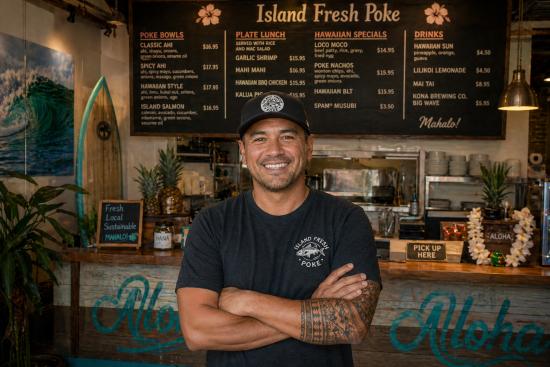
What does your Hawaii restaurant actually need protection against?
Answer a few questions and we'll show you which coverage lines typically matter most for your island operation — no quote form required to see it.
Coverage Finder
Select every option that applies to your business
Coverage lines that address Hawaii's specific exposures
Hawaii's legal environment and natural hazard profile create a set of exposures that mainland-calibrated policies are not built to handle.
General Liability Insurance
Covers customer slip-and-fall incidents, foodborne illness allegations, and third-party property damage. Hawaii's tourism-driven market means a large share of customers are visitors unfamiliar with local conditions, increasing premises liability exposure at beachside and open-air dining venues.
Commercial Property Insurance
Hawaii's island supply chain significantly elevates equipment replacement costs — a commercial range or refrigeration unit shipped to Oahu, Maui, or a neighbor island costs materially more than the same unit ordered domestically. Policies should be written at accurate replacement cost, not depreciated continental U.S. values.
Workers' Compensation Insurance
HRS § 386-1 requires coverage for all employers with one or more employees. Hawaii restaurants also carry mandatory Temporary Disability Insurance (TDI) obligations under HRS § 392, a short-term disability benefit that operates alongside workers' comp.
Liquor Liability Insurance
HRS § 281-95 establishes liability for licensees who serve a visibly intoxicated patron. Hawaii operates four separate county Liquor Commissions (Honolulu, Maui, Hawaii, Kauai), each with distinct licensing requirements and limits that should reflect the tourism market's elevated per-incident exposure.
Food Contamination Insurance
Island supply chains create cold-chain vulnerability at multiple points — a contaminated shipment after multi-day ocean transit, or a refrigeration failure during a tropical-storm power outage, can force closure and full inventory disposal at freight-amplified replacement costs.
Business Interruption Insurance
Hawaii's restaurant market is structurally dependent on visitor arrivals. A forced closure from a hurricane, volcanic event, or wildfire during peak visitor season can eliminate months of revenue; Maui operators near the 2023 Lahaina wildfire zone face compounded exposure from reduced regional tourism.
Why Hawaii's hazard stack changes what your policy needs to do
This isn't generic small-business risk — Hawaii's island geography and statutory mandates create exposures that only apply here.
Hawaii carries three catastrophic perils no other state combines
Hurricane and tropical storm wind damage, volcanic activity and lava flow on the Big Island, and Pacific tsunami risk across all coastal markets each require explicit coverage confirmation or standalone endorsements — standard property policies exclude or sub-limit all three, and a 5% named-storm deductible on a $1 million build-out means $50,000 out of pocket before insurance responds.
The Prepaid Health Care Act is a compliance layer mainland programs miss entirely
Hawaii's Prepaid Health Care Act requires employers to provide health insurance to employees working 20 or more hours per week for four consecutive weeks — unique to Hawaii, and combined with mandatory workers' comp and TDI, it creates a three-layer statutory benefit obligation that non-compliance turns into both regulatory penalty and EPLI exposure.
What might Hawaii restaurant coverage cost you?
A rough range based on your setup — not a quote, just a starting point before you talk to an advisor.
How a named-storm deductible actually plays out in Hawaii
A hurricane season closure is a scenario Hawaii operators face on a recurring basis — here's how it typically unfolds.
A named storm damages your beachfront dining room and forces a multi-week closure during peak visitor season.
- The damage: Wind damage to the structure triggers a commercial property claim — but a named-storm deductible structured as a percentage of insured value, not a flat dollar amount, can mean tens of thousands out of pocket before coverage responds.
- The closure: Repairs during peak visitor season force a temporary closure, eliminating a disproportionate share of tourism-driven annual revenue.
- The spoilage: A multi-day power outage during the storm spoils walk-in and reach-in inventory, triggering a separate food contamination and spoilage claim.
- The recovery: Business interruption coverage with a tourism-suppression provision addresses lost revenue not just during the physical closure, but through the slower visitor-return period that follows.
This is why Hawaii operators need named-storm deductible structure, wind sub-limits, and business interruption triggers confirmed explicitly before binding, not discovered after a loss.
Frequently asked questions
Is restaurant insurance required in Hawaii?
Workers compensation is mandatory for all Hawaii restaurants with one or more employees under HRS § 386-1. Hawaii also uniquely requires employer-provided health insurance for employees working 20 or more hours per week under the Prepaid Health Care Act. General liability and liquor liability are required by most commercial landlords and the relevant county Liquor Commission as conditions of lease and licensing.
Does Hawaii have a dram shop law?
Yes. Hawaii Revised Statutes § 281-95 establishes liability for licensees who serve liquor to a visibly intoxicated person. Each of Hawaii's four counties operates its own Liquor Commission with distinct licensing requirements. Any Hawaii restaurant or bar serving alcohol should carry standalone liquor liability insurance, as general liability policies exclude alcohol-related injury claims.
Do Hawaii restaurants need hurricane or volcanic activity coverage?
Hurricane and tropical storm coverage should be confirmed explicitly, as carriers may apply separate named-storm deductibles or exclusion zones. Volcanic activity and lava flow are typically excluded from standard property policies and require standalone endorsements or surplus lines coverage. Big Island restaurants in active volcanic zones and all island operators in hurricane corridors should verify coverage terms at binding, not after a loss.
What is the Hawaii Prepaid Health Care Act and how does it affect restaurant insurance?
Hawaii's Prepaid Health Care Act requires employers to provide health insurance to employees working 20 or more hours per week for four consecutive weeks. This is unique to Hawaii and applies directly to restaurant operators. Non-compliance creates regulatory penalties and EPLI exposure. Combined with mandatory workers comp and TDI, Hawaii restaurants carry a three-layer statutory benefit obligation that mainland-calibrated policies do not address.
How does the 2023 Lahaina wildfire affect restaurant insurance on Maui?
The August 2023 Lahaina wildfire destroyed a significant portion of Maui's historic restaurant corridor and demonstrated that wildfire risk in Hawaii is not limited to volcanic zones. Maui operators rebuilding or opening new locations should confirm wildfire coverage terms, business interruption provisions, and business income limits that reflect Hawaii's elevated reconstruction costs driven by island logistics.
What does Insurance Kitchen provide for Hawaii restaurant owners?
Insurance Kitchen builds restaurant-specific coverage programs for Hawaii operators across all islands, from Honolulu's Waikiki and Kakaako dining districts and Maui's post-Lahaina recovery market to the Big Island's Kona coast and Kauai's Poipu resort corridor. Every program addresses Hawaii's specific risk profile: hurricane and volcanic activity exposure, the Prepaid Health Care Act, county-specific liquor licensing, EPLI in a high-cost labor market, and island supply chain considerations.
Hawaii Cities We Serve
Restaurant insurance built around Hawaii's real island geography, from Oahu's urban core to the Big Island and Maui.
Honolulu
Oahu's urban core and Waikiki resort corridor, and Honolulu's fire-code and import-driven risk.
Hilo
Big Island's bayfront, twice rebuilt after Pacific tsunamis, and its Lava Zone 3 location on Mauna Loa's flank.
Kailua-Kona
Big Island's west side, anchored by Ali'i Drive's visitor economy and the Kona coffee belt.
Kahului
Maui's commercial and airport hub, navigating the post-2023 county-wide insurance market.
Get your Hawaii restaurant covered today.
Tell us about your restaurant and we'll find the right coverage at the right price — no pressure, no obligation.
Get Your Free Quote →